

Key takeaways
- Wood: Choose straight-grained, properly finished hardwood for better rigidity. Inspect joints, screws, and glued corners rather than judging only by the finish.
- Metal: Aluminum is light and corrosion-resistant; steel is heavier but can be more rigid. Powder-coated surfaces are easier to clean than unfinished metal.
- Hardware: Large knobs and threaded adjustment posts are easier to operate with paint-stained hands than tiny wing nuts.
- Contact points: Foam, cork, or rubber padding protects canvas stretchers and reduces slipping.
- Base: Wide feet and a low center of gravity matter more than a tall maximum height.
Best Art Easels for Every Skill Level
The best art easels are a compact tabletop easel for beginners and small spaces, a sturdy studio easel for frequent painters, and a height-adjustable field easel for artists who work between rooms or outdoors.
Your choice should depend less on appearance than on five practical questions: how large a canvas you use, whether you need adjustable height, how much wobble you can tolerate, where supplies will be stored, and whether you prefer wood or metal. A decorative easel can display a finished painting, but it may be frustrating for actual painting.
Our top picks
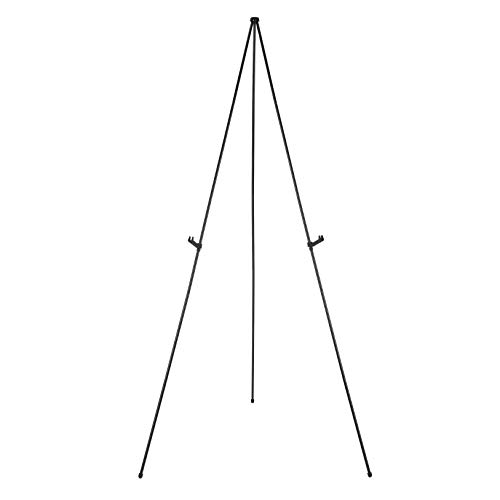


As an Amazon Associate we earn from qualifying purchases at no extra cost to you. Ratings are shown as listed on Amazon.
Tabletop vs. standing easels: the head-to-head
| Easel type | Typical canvas capacity | Height adjustment | Typical weight | Best for | Main compromise |
|---|---|---|---|---|---|
| Tabletop A-frame | Up to 16 x 20 in | Usually 2–4 angle settings | 1.5–4 lb | Beginners, small paintings, limited rooms | Needs a stable table and offers little storage |
| Tabletop H-frame | Up to 24 x 30 in | Adjustable tray or mast on better models | 4–12 lb | Detailed work and heavier panels | Occupies substantial desk space |
| Field or French easel | Up to 24 x 30 in | Standing height and viewing angle | 8–16 lb | Outdoor painting and portable studios | Folding hardware needs regular tightening |
| Studio H-frame | Up to 48 x 60 in or more | Often 20–40 in of vertical travel | 20–70 lb | Frequent painting and large canvases | Expensive, heavy, and difficult to move |
| Convertible or hybrid easel | Up to 30 x 40 in | Seated and standing positions | 10–30 lb | Artists who switch formats and posture | More hinges and adjustment points to maintain |
Best easels by situation
Best for a first-time painter: tabletop A-frame
A tabletop A-frame is usually the least intimidating starting point. It is inexpensive, light enough to store in a cupboard, and suitable for paper, canvas boards, and small stretched canvases. Choose one with a front ledge at least 1.5 inches deep and rubber feet that do not slide on a smooth table.
This design works particularly well for acrylics, watercolors, and small oil studies. Its limitation is leverage: when you press firmly while blending or drawing, a light easel can shift. If you expect to progress quickly into canvases larger than 16 x 20 inches, a tabletop H-frame is a better long-term purchase.
Best for small spaces: adjustable tabletop H-frame
A tabletop H-frame gives considerably more stability without requiring a full standing easel. Its broad base resists side-to-side movement, while a movable mast or canvas tray accommodates different panel thicknesses. A model weighing 6–10 pounds is generally a sensible balance between stability and portability.
Measure your desk before buying. Many H-frames need approximately 18–24 inches of front-to-back space, and the top of a canvas may rise 30–40 inches above the table. A unit that technically fits can still block a lamp, monitor, or shelving.
Best for outdoor work: French or field easel
A French easel combines a folding tripod, canvas box, and storage compartments. It is the most practical choice for artists who want to carry wet panels, brushes, and a limited paint selection in one case. Look for solid brass or steel hinges, adjustable leg locks, and a palette area that can be cleaned without soaking the wood.
Field easels are convenient rather than exceptionally rigid. Uneven ground, wind, and a full paint box can make the structure sway. Set the legs wide, keep the center of gravity low, and use a panel no larger than the manufacturer’s recommended capacity. For remote locations, a lighter aluminum tripod easel may be preferable, but it usually has less integrated storage.
Best for serious studio use: H-frame studio easel
A studio H-frame is the strongest choice for regular painting, especially when working on large or heavy canvases. A ratchet or crank mechanism lets you raise the support without lifting the entire artwork. Choose a maximum canvas height at least 25 percent greater than your largest planned canvas; this leaves room for the top and bottom supports.
For example, if you paint canvases up to 40 inches high, a 50-inch capacity gives useful adjustment space. A 48-inch canvas on a 48-inch easel may technically fit but can leave no room to position the painting comfortably.
Studio easels are commonly made from beech, oak, or other hardwoods. Wood absorbs vibration well and looks attractive, but it can swell if exposed to water or solvent. Metal easels are often lighter for their strength and easier to wipe clean, although thin tubing and loose joints can introduce wobble.
How to choose height and viewing angle
For standing work, position the center of the canvas close to your natural eye level, then adjust according to the subject. You should be able to step back without the easel rocking and reach the lower edge without bending repeatedly. For seated work, the bottom ledge should support the canvas without forcing your shoulders upward.
Angle adjustment matters as much as height. A nearly vertical position is useful for many acrylic and oil paintings, while a modest backward tilt can help with drawing and water media. Avoid a steep backward angle for watery washes, because liquid can collect at the lower edge or run unpredictably.
Storage: integrated compartments or separate organization?
Tabletop easels usually provide no meaningful storage, so plan for a separate brush cup, palette, and drying area. This is often better in a small room because you can pack away each item independently.
French easels offer built-in compartments, but those compartments are easy to overfill. Brushes can be crushed, paint tubes can leak, and wet panels may touch clean supplies. Use a sealed tube pouch and keep wet paintings in a separate carrier whenever possible.
Some studio easels include a shelf or tray, but a tray is not a substitute for storage. It can accumulate dust and dried paint, increasing the chance that a tube or brush will fall. A narrow rolling cart beside the easel often provides more useful organization than a larger easel shelf.
Material and construction checklist
- Wood: Choose straight-grained, properly finished hardwood for better rigidity. Inspect joints, screws, and glued corners rather than judging only by the finish.
- Metal: Aluminum is light and corrosion-resistant; steel is heavier but can be more rigid. Powder-coated surfaces are easier to clean than unfinished metal.
- Hardware: Large knobs and threaded adjustment posts are easier to operate with paint-stained hands than tiny wing nuts.
- Contact points: Foam, cork, or rubber padding protects canvas stretchers and reduces slipping.
- Base: Wide feet and a low center of gravity matter more than a tall maximum height.
Decision matrix for buying with confidence
| Your situation | Recommended design | Target specifications | Why it fits |
|---|---|---|---|
| Budget-conscious beginner, occasional use | Tabletop A-frame | 1.5–4 lb; up to 16 x 20 in; rubber feet | Low cost and easy storage while skills develop |
| Small apartment, weekly painting | Tabletop H-frame | 6–10 lb; adjustable tray; up to 24 x 30 in | More stability without permanent floor space |
| Outdoor painting several times a month | French or field easel | 8–16 lb; locking legs; wet-panel provision | Combines transport and supply storage |
| Large canvases and frequent studio use | Studio H-frame | 20–70 lb; 40–60 in capacity; ratchet or crank | Reduces vibration and lifting effort |
| Mixed seated and standing practice | Convertible easel | 20–40 in of adjustment; locking joints | Adapts to different media and working positions |
Ownership realities: what wears first
Adjustment threads, leg locks, hinges, and rubber feet usually wear before the main frame. Check knobs every few sessions and tighten them before movement becomes noticeable. Do not over-tighten: stripped threads and crushed wood are harder to repair than a loose knob.
Remove acrylic or watercolor residue with a damp cloth before it hardens. For oil paint, wipe the surface with a compatible artist’s cleaner rather than flooding unfinished wood. Keep solvents away from foam pads and rubber feet. If a wooden easel is stored in a damp garage, let it acclimate indoors before loading a large canvas; changing humidity can loosen joints or distort shelves.
A common mistake is buying for today’s canvas instead of the next canvas size. Another is placing a tall easel on an uneven floor and compensating by tightening one leg aggressively. Level the base first, then secure the artwork. For a standing studio easel, test it with the heaviest canvas and painting board you expect to use, not an empty frame.
Bottom line
Choose a tabletop A-frame for inexpensive entry-level work, a tabletop H-frame when stability matters in a small room, a field easel for portable painting, and a studio H-frame for large or frequent work. The right easel is the one that supports your largest realistic canvas, adjusts without strain, stays stable when you make firm marks, and can be cleaned and stored without becoming another obstacle in your workspace.

Write Your Review
No reviews yet. Be the first to share your experience!