

Key takeaways
- Under 34 inches: particularly useful for narrow hallways, small lifts, and compact kitchens.
- About 35 to 40 inches: a good compromise between indoor maneuverability and outdoor stability.
- Over 40 inches: better suited to open spaces; allow extra room for reversing and repositioning.
The best 3 wheel mobility scooter depends on whether you value the tightest indoor turning circle, the easiest lifting weight, longer outdoor range, or a more supportive seat: the Pride Go-Go Elite Traveller 3-Wheel is a strong all-round travel choice, the Drive Medical Scout 3 Wheel suits budget-conscious buyers, and the Golden Buzzaround EX 3-Wheel is the better comfort-and-range option.
Three-wheel scooters are usually more maneuverable than four-wheel models because the single front wheel allows a tighter turning radius. That advantage matters in hallways, kitchens, lifts, shops, and narrow stable-yard paths, but it can reduce stability on steep cambers, rough ground, or sharp side slopes. Before choosing one, consider where it will actually be used rather than comparing range alone.
Our top picks

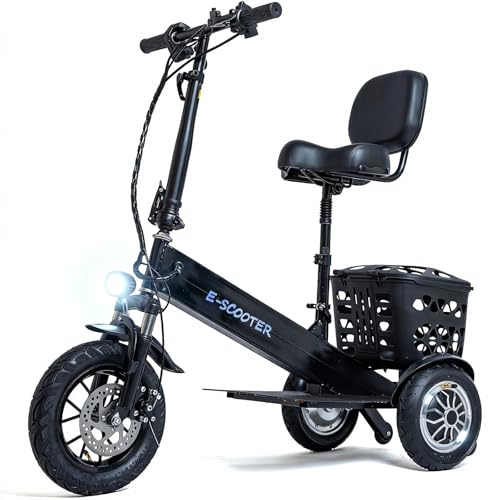
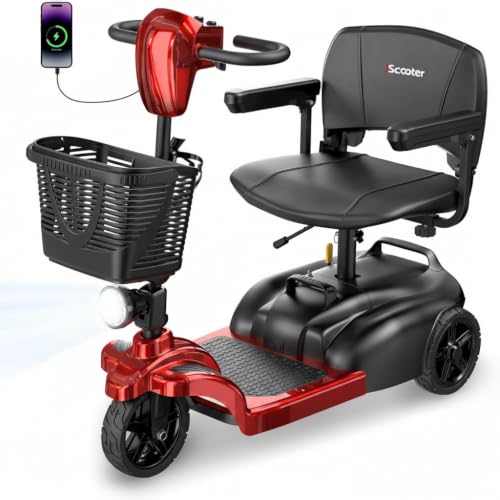
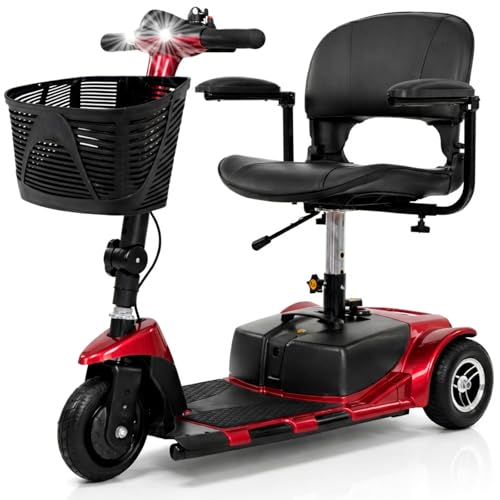
As an Amazon Associate we earn from qualifying purchases at no extra cost to you. Ratings are shown as listed on Amazon.
Best 3 wheel mobility scooters compared
| Model | Turning radius | Weight capacity | Maximum range | Approx. scooter weight | Best suited to |
|---|---|---|---|---|---|
| Pride Go-Go Elite Traveller 3-Wheel | About 33.5 in | 300 lb | Up to about 7.9 miles | About 86 lb with battery; heaviest piece about 29.5 lb | Frequent car travel and indoor use |
| Drive Medical Scout 3 Wheel | About 45 in | 300 lb | Up to about 9.3 miles | About 94 lb with battery | Lower-cost everyday trips |
| Golden Buzzaround EX 3-Wheel | About 37 in | 330 lb | Up to about 18 miles | About 77 lb without battery | Longer outings and a roomier ride |
| EV Rider Transport AF 3-Wheel | About 31 in | 250 lb | Up to about 10 miles | About 49 lb without battery | Maximum portability and storage |
Specifications can change with battery size, model revision, and regional configuration. Treat the figures as comparison points and confirm the exact version, battery, warranty, and charger before ordering.
Our picks by situation
Best for a compact travel scooter: Pride Go-Go Elite Traveller 3-Wheel
The Go-Go Elite Traveller is a sensible choice for users who need a scooter that separates into manageable sections for a vehicle boot. Its relatively tight turning radius makes it more useful inside a home than many entry-level scooters, while the removable battery and modular construction simplify transport.
The compromise is range. A quoted maximum of roughly 7.9 miles is measured under favorable conditions, usually with a lighter rider on level ground. Hills, cold weather, frequent stops, soft tires, and heavier loads can reduce practical distance. It is best for shopping centers, appointments, short neighborhood trips, and indoor mobility rather than all-day sightseeing.
Best budget-oriented option: Drive Medical Scout 3 Wheel
The Scout 3 Wheel is worth considering when purchase price and basic functionality matter more than the smallest possible footprint. It has a 300-pound capacity, a padded swivel seat, adjustable tiller, and a range commonly listed around 9 miles. Its larger turning circle is noticeable in tight rooms, but it remains practical in open shops, paved paths, and wider corridors.
Because it is not among the lightest scooters, check how each section will be handled before buying. A scooter that is affordable but too heavy to lift safely can become an expensive item that stays in the garage.
Best for longer range and seat comfort: Golden Buzzaround EX 3-Wheel
The Buzzaround EX is the stronger choice for users who want to travel farther between charges and prefer a more substantial seat. Depending on the battery configuration, the advertised range can reach approximately 18 miles, and the weight capacity is commonly listed at 330 pounds. Its larger frame and pneumatic or solid tire configuration, depending on version, make it more suitable for extended outdoor use than ultra-light travel scooters.
This extra capability affects portability. It occupies more storage space, and its battery or heaviest section may require two-person handling or a vehicle hoist. Measure the boot opening, not just the boot’s internal length.
Best for the lightest lift: EV Rider Transport AF 3-Wheel
The EV Rider Transport AF 3-Wheel appeals to users who prioritize a lightweight folding design. At approximately 49 pounds without the battery, it is easier to store in a car than most conventional dismantling scooters. Its tight turning circle also suits apartments and lifts.
Its 250-pound capacity is lower than the other choices in this comparison, and its compact seat and shorter wheelbase may feel less relaxed on longer journeys. It is most appropriate for occasional trips, indoor venues, and users who have limited storage or lifting ability.
Turning radius: the number that changes everyday use
Turning radius is the space needed for the scooter to turn around. A smaller figure is useful, but it does not tell the whole story. The tiller angle, front basket, rear anti-tip wheels, seat width, and steering sensitivity also affect whether the scooter feels easy in a room.
- Under 34 inches: particularly useful for narrow hallways, small lifts, and compact kitchens.
- About 35 to 40 inches: a good compromise between indoor maneuverability and outdoor stability.
- Over 40 inches: better suited to open spaces; allow extra room for reversing and repositioning.
Three wheels do not automatically make a scooter safer or more suitable. If your routes include sloped pavements, uneven farm tracks, gravel, or frequent side hills, discuss whether a four-wheel model would provide a more appropriate platform.
How to choose the right capacity and range
Do not compare your body weight with the maximum capacity alone. Add clothing, shopping, a full basket, and any equipment carried on the tiller. For example, a 220-pound rider carrying 20 pounds of supplies has a 240-pound operating load. A 250-pound scooter leaves only 10 pounds of stated capacity, whereas a 300-pound model leaves 60 pounds. That margin can help the scooter maintain performance, but it is not a guarantee on hills or rough surfaces.
For range, plan around 60 to 70 percent of the advertised maximum unless your route is flat and your load is light. A scooter rated for 10 miles may therefore be planned around 6 to 7 miles of dependable use. Keep enough reserve to return home rather than treating the published maximum as a target.
Portability and seat comfort are trade-offs
A scooter that separates into four pieces may be easier to lift than a folding scooter overall, but one section can still weigh 30 pounds or more. Ask for the weight of the heaviest removable piece, not just the total scooter weight. Also check whether the battery can be removed without tools and whether the folded or dismantled parts fit through your vehicle’s boot opening.
For comfort, look for a swivel seat, adjustable seat height, sufficient seat width, a tiller that can be brought close enough without stretching, and a footboard that allows natural leg positioning. A soft seat is not necessarily supportive if it places the hips too low or encourages the knees to remain cramped. If you have posture, balance, joint, or transfer concerns, an occupational therapist or mobility specialist can help assess fit.
Ownership details that listings often omit
- Battery aging: sealed lead-acid batteries commonly last around 12 to 24 months with regular use, while lithium batteries may last longer but cost more to replace. Actual life depends on charging habits, storage temperature, and use.
- Tyres and punctures: solid or foam-filled tires reduce puncture risk but can transmit more vibration. Pneumatic tires ride more softly but need pressure checks.
- Charging: recharge after use according to the manual, keep the charger dry, and avoid storing a discharged battery for weeks.
- Cleaning: wipe mud and salt from the chassis, controls, and wheel hubs with a damp cloth. Do not hose down the electronics.
- Common mistake: carrying heavy bags on the tiller can affect steering and balance. Use the basket only within its stated limit.
- Storage: prolonged exposure to rain, frost, or direct sun can damage upholstery, batteries, and control components.
Bottom line
Choose the Pride Go-Go Elite Traveller 3-Wheel for a balanced, portable design and tight indoor turning. Choose the Drive Medical Scout 3 Wheel when a straightforward lower-cost scooter is the priority and you have adequate storage space. Choose the Golden Buzzaround EX 3-Wheel for greater range, capacity, and a more substantial seat. Choose the EV Rider Transport AF 3-Wheel when lifting and car storage are the deciding factors.
Before purchase, measure your narrowest doorway, lift, turning area, and vehicle opening; calculate your realistic route distance; and confirm the scooter’s exact battery and weight configuration. General product information cannot replace an assessment of your mobility, posture, or transfer needs by a qualified professional.

Write Your Review
No reviews yet. Be the first to share your experience!