

Key takeaways
- USB: dependable, inexpensive, and easy to use with downloaded designs. Format the drive as the manual specifies and keep designs in the machine’s supported file type, commonly PES for Brother models and JEF for Janome models.
- Wireless transfer: convenient for supported Brother workflows, especially when the machine is near a computer or phone. It adds setup steps and depends on compatible applications and network permissions.
- On-machine editing: useful for lettering, rotation, mirroring, color changes, and placement. It does not replace proper digitizing; enlarging a dense design can produce puckering and thread breaks.
- Computer software: helpful when you need custom logos, lettering in unusual fonts, appliqué planning, or precise multi-section layouts. Budget separately for software, since a machine’s included editor may be basic.
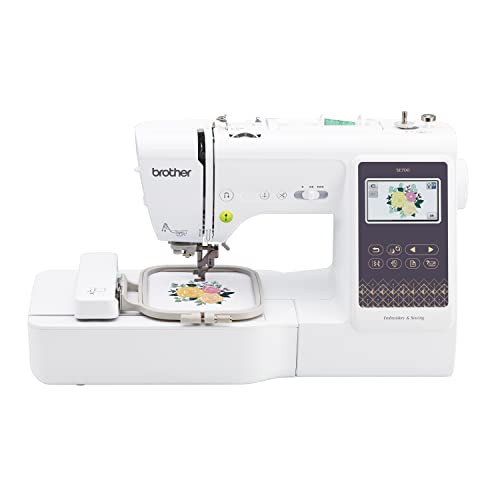
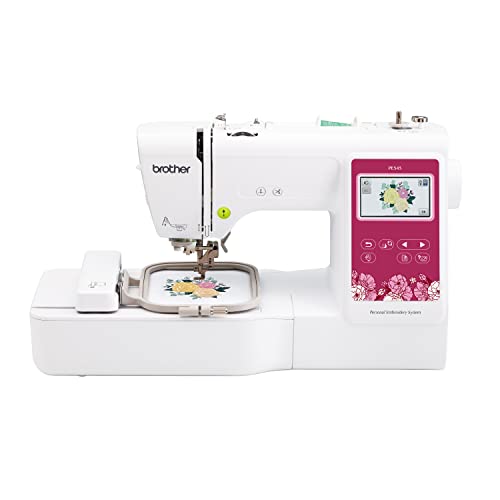
The best embroidery machines for most buyers are the Brother PE900 for easy 5-by-7-inch personalization, the Janome Memory Craft 550E for large equestrian designs, and the Brother PE545 for an affordable first machine.
Your ideal choice depends less on the number of decorative designs than on the largest hoop you can use, how you will transfer files, and whether you want embroidery only or sewing and embroidery in one machine. For horse clothing, saddle pads, show shirts, blankets, and stable gifts, a larger hoop can save considerable time and prevent awkward design splitting.
Our top picks


As an Amazon Associate we earn from qualifying purchases at no extra cost to you. Ratings are shown as listed on Amazon.
Best embroidery machines by situation
| Situation | Best fit | Why it makes sense | Typical market range in 2026 |
|---|---|---|---|
| First machine, small names and logos | Brother PE545 | Simple 4-by-4-inch hoop, touchscreen, USB transfer, compact footprint | $350–$550 |
| Beginner wanting more room | Brother PE900 | 5-by-7-inch hoop, wireless transfer support, automatic needle threading | $700–$1,000 |
| Sewing and embroidery in one machine | Brother SE725 | Combination machine with a 4-by-4-inch embroidery field | $350–$650 |
| Large saddle-pad, jacket, and blanket designs | Janome Memory Craft 550E | 7.9-by-14.2-inch maximum hoop and dedicated embroidery layout | $2,000–$3,000 |
| Frequent home or small-business use | bernette b70 | 6.3-by-10.2-inch hoop, faster workflow, broad built-in design selection | $1,500–$2,300 |
Brother PE545: the best low-cost starting point
The Brother PE545 is a sensible choice for a new embroiderer who mainly wants initials, small horse-head motifs, pocket logos, and gifts. Its 4-by-4-inch embroidery area is enough for many caps, breast pockets, towels, and small clothing panels, but it limits large designs and long names.
It includes roughly 135 built-in embroidery designs and 10 lettering fonts, depending on the regional version and software updates. A color touchscreen handles positioning, resizing, rotation, and simple edits. Designs are transferred by USB, so the machine does not require a wireless network.
Its main limitation is not stitch quality; it is scale. A 4-by-4-inch hoop cannot produce a single-piece design across the center of a saddle pad or the back of a jacket. You can split a design into sections, but alignment becomes more demanding and the stabilizer must remain perfectly secure. Choose the PE545 when compact size and low entry cost matter more than large-format work.
Brother PE900: the easiest step up to a 5-by-7 hoop
The Brother PE900 is one of the best embroidery machines for beginners who expect their projects to grow. Its 5-by-7-inch field accommodates larger monograms, grooming-club logos, shirt backs, and many horse portraits without the complexity of a multi-hoop layout.
The machine has about 193 built-in designs and 13 embroidery lettering fonts, with editing functions for resizing, mirroring, rotation, lettering, and combining designs. It supports USB transfer and wireless features compatible with Brother’s connected design ecosystem, although a USB drive remains the more dependable method when working away from a strong home network.
Its maximum embroidery speed is approximately 650 stitches per minute. That is adequate for home use, but the advertised maximum is not a promise that every design should run at that speed. Dense satin columns, metallic thread, and stretchy garments often need slower settings to reduce thread breaks and fabric movement.
Brother SE725: choose it only if you also need a sewing machine
The Brother SE725 combines a computerized sewing machine with embroidery functions. That makes it attractive for someone who wants to sew repairs, hems, tack-room accessories, and garments as well as add embroidery. The trade-off is a smaller 4-by-4-inch embroidery field than the PE900.
It offers approximately 135 built-in embroidery designs and 10 lettering fonts, plus USB and wireless design-transfer options in supported regions. The touchscreen makes basic positioning straightforward, but combination machines involve more setup changes: you must attach the embroidery unit, install the hoop, lower the feed dogs, and switch between sewing and embroidery modes.
Pick the SE725 when two machines would be impractical. If embroidery is your only priority, a dedicated model is usually easier to organize and quicker to convert from an idea to a finished design.
Janome Memory Craft 550E: the large-hoop choice for equestrian projects
For large embroidery, the Janome Memory Craft 550E is the strongest choice in this group. Its maximum hoop measures approximately 7.9 by 14.2 inches, giving it substantially more usable area than a 4-by-4 or 5-by-7 machine. That difference matters for saddle pads, blanket corners, jacket backs, stable signage, and long horizontal names.
The 550E includes roughly 180 built-in designs and four embroidery fonts, with USB file transfer and editing controls for scaling, rotation, placement, and combining motifs. Its maximum speed is about 860 stitches per minute. The machine weighs around 20 pounds, so it is portable enough to move occasionally but not ideal for putting away after every small project.
A large hoop does not automatically make every project easy. Thick blankets, quilted saddle pads, and coated fabrics can exceed the practical thickness of the hoop or resist smooth movement. You still need the correct cutaway or tear-away stabilizer, a sharp embroidery needle, and a design digitized for the material rather than merely enlarged on-screen.
bernette b70: a capable middle ground for frequent users
The bernette b70 suits an embroiderer who wants more capacity than a beginner machine but does not need the 14-inch reach of the Janome. Its embroidery area is approximately 6.3 by 10.2 inches, and it runs at up to about 850 stitches per minute. The machine weighs roughly 14.3 kilograms, or 31.5 pounds, so plan for a permanent table or sturdy cart.
It includes approximately 208 embroidery designs and seven lettering fonts, with USB transfer and built-in editing for layout, lettering, resizing, and combining elements. This capacity is useful for a home business producing repeated names or club logos, especially when a 5-by-7 hoop would require frequent rehooping.
The b70 costs more than entry-level models, but the larger hoop can reduce labor. Before buying, check the cost and availability of replacement hoops, bobbins, presser feet, and local servicing in your area.
Hoop size is the most important comparison
Manufacturers usually quote the maximum hoop dimensions, but the usable design area can be slightly smaller because the needle needs clearance around the boundary. A simple comparison shows why the numbers matter:
| Hoop size | Approximate maximum area | Good for | Likely limitation |
|---|---|---|---|
| 4 × 4 in | 16 square inches | Chest logos, cuffs, initials, small patches | Large names and saddle-pad designs need splitting |
| 5 × 7 in | 35 square inches | Shirt fronts, medium motifs, larger monograms | Still restrictive for jacket backs and wide pads |
| 6.3 × 10.2 in | 64.3 square inches | Long names, larger logos, many blanket placements | Higher cost and larger workspace |
| 7.9 × 14.2 in | 112.2 square inches | Large equestrian graphics and broad lettering | Heavy fabrics may still need careful handling |
For example, moving from a 4-by-4 hoop to a 5-by-7 hoop provides 35 square inches instead of 16—more than twice the nominal area. That is a much more meaningful upgrade than gaining a few extra built-in motifs.
Built-in designs, editing, and file transfer
Built-in designs are convenient for learning, but they should not decide the purchase by themselves. The more important questions are whether the machine reads common embroidery formats, how easily you can reposition lettering, and whether design files can be transferred without proprietary restrictions.
- USB: dependable, inexpensive, and easy to use with downloaded designs. Format the drive as the manual specifies and keep designs in the machine’s supported file type, commonly PES for Brother models and JEF for Janome models.
- Wireless transfer: convenient for supported Brother workflows, especially when the machine is near a computer or phone. It adds setup steps and depends on compatible applications and network permissions.
- On-machine editing: useful for lettering, rotation, mirroring, color changes, and placement. It does not replace proper digitizing; enlarging a dense design can produce puckering and thread breaks.
- Computer software: helpful when you need custom logos, lettering in unusual fonts, appliqué planning, or precise multi-section layouts. Budget separately for software, since a machine’s included editor may be basic.
Setup and ownership realities
Allow about 20 to 40 minutes for a first setup, including unpacking, bobbin winding, needle installation, threading, hooping a test fabric, and transferring a small design. On later projects, a simple name may take only five to ten minutes to prepare before stitching.
- Choose a design that fits inside the machine’s actual usable area.
- Match the stabilizer to the fabric: cutaway for stretchy garments, tear-away for stable woven fabric, and wash-away or specialty support where the surface requires it.
- Hoop the stabilizer flat without stretching the garment unnaturally.
- Use a fresh embroidery needle and thread the machine with the presser foot raised.
- Run a test on a similar fabric before stitching the final item.
- Clean lint from the bobbin area regularly and follow the manual’s lubrication instructions rather than adding oil automatically.
The first consumables to wear out are usually needles, bobbins, thread, and stabilizer—not the machine itself. Common causes of poor results include loose hooping, an unsuitable needle, excessive design density, cheap or brittle thread, and pulling the fabric while it is stitching. A larger, more expensive machine still needs routine cleaning and careful hooping.
Final recommendation
Choose the Brother PE545 for occasional small personalization, the PE900 for the best beginner-friendly balance, and the SE725 if sewing matters as much as embroidery. Select the bernette b70 for frequent medium-sized work, and the Janome Memory Craft 550E when large equestrian designs are central to your plans. If you are uncertain, spend the budget on hoop capacity and reliable support before paying extra for hundreds of decorative designs you may never use.
Write Your Review
No reviews yet. Be the first to share your experience!