

Key takeaways
- Sizing: Measure from the center of the chest to the point of the buttock in a straight line, and follow the maker’s size chart. Brands cut differently, so a size in one brand may not match another.
- Shoulder gussets: Present on models such as the WeatherBeeta PLUS Dynamic and ComFiTec Essential, they allow the shoulder to move and reduce rubbing.
- Wither protection: The PLUS Dynamic lists a memory foam wither pad to reduce pressure.
- Neck covers: Detachable necks let you adapt to the weather, and the ComFiTec Ultra includes fleece on the neck.
- Leg straps and tail cord: Keep the blanket from riding up or twisting in the wind.
- Liner compatibility: Models that accept liners, such as the Amigo Plus and Storm-Tek, let you add warmth without buying a second blanket.
The best winter horse blanket for most horses is a waterproof, breathable turnout in the medium to heavy fill range, around 220 to 360 grams, with a shell of 1200 to 1800 denier for durability, and the right choice depends on your climate, whether your horse is clipped, and how rough your horse is on blankets. A horse with a full natural winter coat and shelter often needs only a sheet or a light fill, while a clipped, older or thin horse in sub-freezing weather may need a heavy blanket with a liner. This guide explains how to read the specs, compares models that tack-shop buying guides and equestrian outlets highlight, and sets out fit and safety notes.
Our top picks


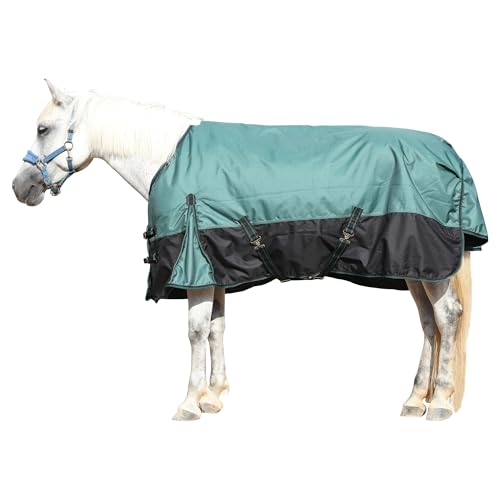

As an Amazon Associate we earn from qualifying purchases at no extra cost to you.
Winter Blankets at a Glance
| Blanket | Best for | Stated specs | Limits |
|---|---|---|---|
| WeatherBeeta ComFiTec Ultra | Moderately cold weather | 1800D shell, 220 g fill, detachable neck with fleece, leg straps | Heavier fill needed for extreme cold |
| WeatherBeeta PLUS Dynamic | Extreme, sub-freezing weather | 1200D, 360 g fill, memory foam wither pad, shoulder gussets, detachable neck | Can overheat horses in mild conditions |
| Horseware Rambo 1680D Plus | Horses hard on blankets | 1680D ballistic nylon, 250 g fill, detachable neck, tail cord | Heavy-duty construction is a premium-tier purchase |
| Horseware Amigo 1200D Plus | Mild weather or a base layer | 1200D, 50 g fill, detachable neck, tail cord, liner compatible | Light fill, not for hard freezes alone |
| WeatherBeeta ComFiTec Essential | Light layering | 1200D, 50 to 100 g fill, shoulder gussets, leg straps, liner compatible | Light fill |
| LeMieux Arika Storm-Tek | Medium cold, self-righting panel | 1200D, 200 g fill, liner compatible, tail cord | Medium fill only |
| Equinavia Norse 600D | Budget, light use | 600D, fill from 0 to 200 g, adjustable front, shoulder gussets | Lower denier means less tear resistance |
How to Read the Numbers
Denier measures the shell, not the warmth
Denier describes the thickness and toughness of the outer fabric. Tack-shop guides list shells from 600D for lighter use up to 1680D ballistic nylon and 1800D for the most durable blankets. A higher denier generally resists tears from fences, rolling and playful pasture mates, but it says nothing about warmth.
Fill weight is the warmth rating
Fill is measured in grams of polyfill. One buying guide treats 180 to 250 g as medium weight and 275 to 300 g and up as heavy, with some heavy blankets carrying 400 g or more. Horse and Rider says a horse with a natural coat likely needs only a sheet or a light-fill blanket, and that a clipped horse is more comfortable in a light to medium weight up to about 180 g in moderate conditions. Another guide suggests a 50 g fill as a base layer in temperatures under 50 degrees Fahrenheit, a 220 g medium weight below 40 degrees and a heavy 360 g for the roughest winter weather. Treat these as starting guides rather than rules.
Waterproof and breathable
A winter turnout must keep rain and snow out while letting sweat vapor escape. Look for sealed or taped seams and a breathable lining as described on the maker’s page. Waterproof ratings are best read from the maker’s own specification.
Choosing by Horse and Climate
Clipped horses
Clipped horses lose their natural insulation and usually need a heavier blanket or a combination of a lighter shell with a liner. Horse and Rider notes that a clipped horse is more comfortable in light to medium weights up to about 180 g in milder cold, and heavier fills as temperatures drop.
Unclipped horses in shelter
Horses with a full coat, free access to forage and shelter often need little more than a sheet. Over-blanketing can cause sweating, which then chills the horse. Many owners prefer to start light and add layers.
Seniors, thin horses and hard keepers
Older horses and those with trouble holding weight may need extra warmth, but their owner and vet should agree on the plan. If your horse is shivering, losing weight or has health concerns, talk to your veterinarian rather than relying on a blanket alone.
Horses that destroy blankets
For horses that tear rugs, a 2026 tack-shop buying guide points to the Horseware Rambo 1680D Plus, with ballistic nylon at 1680D and 250 g fill. Leg straps and a tail cord also affect how well a blanket stays in place under rough play.
Fit and Features That Matter
- Sizing: Measure from the center of the chest to the point of the buttock in a straight line, and follow the maker’s size chart. Brands cut differently, so a size in one brand may not match another.
- Shoulder gussets: Present on models such as the WeatherBeeta PLUS Dynamic and ComFiTec Essential, they allow the shoulder to move and reduce rubbing.
- Wither protection: The PLUS Dynamic lists a memory foam wither pad to reduce pressure.
- Neck covers: Detachable necks let you adapt to the weather, and the ComFiTec Ultra includes fleece on the neck.
- Leg straps and tail cord: Keep the blanket from riding up or twisting in the wind.
- Liner compatibility: Models that accept liners, such as the Amigo Plus and Storm-Tek, let you add warmth without buying a second blanket.
Budget, Mid-Range and Premium Tiers
Budget
Budget blankets, such as the Equinavia Norse 600D, offer adjustable fronts and gussets at a lower denier. They suit light use, protected paddocks and horses that are not rough on rugs.
Mid-range
The WeatherBeeta ComFiTec line and LeMieux Arika Storm-Tek offer 1200D to 1800D shells, medium fills and practical features. One 2026 review site calls the ComFiTec 220 g its best value pick, with a 1200D ripstop shell and liner compatibility.
Premium
Premium models such as the Rambo Plus and the PLUS Dynamic use heavier ballistic fabrics, high fills and refined fit details. The Rambo Optimo Plus is sold as a bundle with an outer shell, a 400 g liner and a hood, according to a review site.
Pick X If… Decision Table
| Pick this | If your horse… |
|---|---|
| WeatherBeeta ComFiTec Ultra | lives out in moderately cold weather and needs a durable, medium-weight blanket |
| WeatherBeeta PLUS Dynamic | faces sub-freezing temperatures and needs a heavy fill |
| Horseware Rambo 1680D Plus | destroys blankets and needs ballistic nylon |
| Horseware Amigo Plus | needs a light layer or a base for a liner system |
| LeMieux Arika Storm-Tek | needs medium fill with liner compatibility and a self-righting panel |
| Equinavia Norse | is lightly used and you need a lower-cost option |
Layering Instead of Buying a Heavier Blanket
Many owners build warmth in layers rather than owning several blankets of different weights. A light turnout of around 50 g, such as the Horseware Amigo Plus or the WeatherBeeta ComFiTec Essential, can serve as a base, and a liner is added underneath when the temperature drops. Because the models above are listed as liner compatible, this approach lets you respond to a cold snap without buying a new blanket. It also helps when the daily weather swings from mild afternoons to freezing nights, since you can remove or add a layer in minutes.
The trade-off is handling. A layered system has more straps and more pieces to keep clean and dry, and a liner that slips can bunch under the shell and cause rubs. Follow the maker’s instructions for attaching liners, and only combine pieces that the maker lists as compatible. Fit the outer shell first, then check that the layers lie flat across the withers and shoulder.
Spotting a Poor Fit
- Rubbed hair or bald patches at the shoulder, withers or hip point to a blanket that is too tight or too loose.
- A blanket that slides back and pulls on the throat suggests the size is too small or the cut does not suit your horse’s shoulder.
- Chest straps that dig in mean the front is too narrow, so look at brands that offer adjustable fronts.
- Gaps behind the shoulder let in cold air and rain, and often mean the blanket is too large.
Safety and Care
Check your horse daily under the blanket for rubs, sweating, weight change and fit. Remove the blanket on warm days to avoid overheating, and swap layers as the weather changes. Make sure straps are adjusted according to the maker’s instructions, with no sharp hardware rubbing, and replace damaged straps promptly. Wet blankets lose warmth, so have a spare to rotate. Clean and re-waterproof the blanket following the label instructions. If your horse shows signs of colic, lameness or distress, call your veterinarian.
Alternatives to Consider
- Stable blankets: Without a waterproof shell, they suit indoor use only.
- Liners and neck covers: Layer onto an existing blanket for extra warmth.
- Coolers and rain sheets: Useful after exercise or in wet, mild conditions.
Frequently Asked Questions
How many grams of fill does my horse need?
It depends on coat, clipping, shelter and temperature. Guides suggest roughly 50 g for mild cold, about 200 to 250 g for medium cold and 300 g or more for severe cold. Watch your horse and adjust.
What does denier mean on a horse blanket?
Denier measures the thickness and toughness of the shell fabric. Higher numbers such as 1680D or 1800D resist tearing better, but they do not make the blanket warmer.
Does my horse need a blanket at all?
Many unclipped horses with shelter and forage do well without one, or with a sheet. Clipped, older or thin horses are more likely to need one. Ask your veterinarian if you are unsure.
How do I tell if my horse is too hot?
Feel under the blanket at the chest and shoulder for dampness or heat. Sweat marks and restlessness suggest too much blanket. Remove or lighten it.
How do I measure for a blanket?
Measure from the center of the chest around the side to the point of the buttock, and compare with the maker’s size chart. If your horse is between sizes, check the brand’s fit advice.
Can I use a liner under a turnout?
Only if the turnout is listed as liner compatible. Models such as the Amigo Plus, Storm-Tek and ComFiTec Essential are listed that way.


Write Your Review
No reviews yet. Be the first to share your experience!