

Key takeaways
- Resolution: Reolink recommends at least 1080p for facial and plate detail, and 4K models such as the Argus PT Ultra give more room to zoom.
- Night vision: Infrared for the stalls, color night vision for outdoor security.
- Local storage: microSD slots (128 GB on the Reolink cameras, up to 512 GB on the Tapo) allow recording when the internet drops. Cloud plans add off-site backup but cost a subscription.
- Motion alerts: Person and animal detection reduces false alarms from cats, birds and swinging cobwebs.
- Two-way audio: Handy for calming a horse or telling a farrier you are on the way, though not all animals respond.
- Privacy and security: Use a strong, unique password and two-step verification on the camera app, and keep firmware up to date.
- Cable protection: Run wiring in conduit or above rafters so animals cannot reach it.
For a barn with reliable power and Wi-Fi, a pan-and-tilt indoor-outdoor camera such as the TP-Link Tapo C500 or the Reolink Argus PT Ultra is the simplest way to watch stalls and aisles; for a barn without internet, a 4G cellular camera such as the Reolink Go PT Ultra, the eufy 4G LTE Cam S330 or a stall-focused model like the Amouu is the better fit; and for several buildings on a farm, a wired PoE system with a recorder, such as the Reolink RLK16-1200D8-A or the eufy PoE NVR S4 Max, is the most dependable. Barns are hard on electronics, with dust, hay chaff, damp, cold and curious animals, so weather rating, power plan and mounting position count as much as resolution.
Our top picks


As an Amazon Associate we earn from qualifying purchases at no extra cost to you.
At a glance: barn camera options
| Camera or system | Best for | Maker or reviewer-stated specs | Main limit |
|---|---|---|---|
| TP-Link Tapo C500 | Barns with power and Wi-Fi | The maker lists 1080p, 340 degree pan and 132 degree tilt, 98 foot infrared range, IP65, operating range of -22 to 140 F, microSD up to 512 GB, siren, RTSP and ONVIF | Needs outlet power and Wi-Fi coverage |
| Reolink Argus PT Ultra | Wireless battery or solar camera on Wi-Fi | The maker lists 4K, 21.6 Wh battery, about four months per charge, solar panel option, 355 degree pan, 140 degree tilt, IP65, 14 to 131 F, microSD up to 128 GB, Wi-Fi 6 | Needs Wi-Fi signal in the barn |
| Reolink Go PT Ultra | Barns without Wi-Fi | The maker lists 4K, 4G and 3G networks via nano SIM, 21.6 Wh battery, about two months per charge, solar option, IP64, 14 to 131 F, spotlight color night vision | Requires a cellular data plan; no 5G support |
| eufy 4G LTE Cam S330 | Remote off-grid sites | eufy lists dual 4G and Wi-Fi, 360 degree pan and tilt, solar panel with a 9,400 mAh battery, 4K | Cellular plan needed |
| eufy SoloCam S340 | Solar-powered barn exterior | eufy lists dual-lens 3K video, solar power, AI motion detection | Needs a Wi-Fi signal |
| Amouu 4G LTE stable camera | Stall and foaling watch without Wi-Fi | Thomas Acres lists a 5,000 mAh battery and cellular connectivity | Battery life depends on use |
| Reolink RLK16-1200D8-A | Large facilities | Reolink lists a wired multi-camera recorder system | Needs Ethernet cabling |
| eufy PoE NVR S4 Max | Multi-barn properties | eufy lists triple-lens cameras, PoE power and storage expandable to 16 TB | Higher cost and wiring |
Start with the barn, not the camera
Power
Every camera needs a power plan. Outlet-powered cameras such as the Tapo C500 offer continuous recording and no battery maintenance, but they need an outlet and a cable route that horses cannot chew. Battery cameras like the Argus PT Ultra and Go PT Ultra avoid cable runs, and Reolink lists solar panels as options. Solar suits an exposed north-facing barn wall poorly and a south-facing roof overhang well. For any new outlet or cable run in the barn, hire a licensed electrician; hay, dust and bedding make wiring mistakes riskier than in a house.
Connectivity
Many barns sit far from the house router. Roundups divide the choices neatly: Wi-Fi cameras for barns with strong signal, 4G cellular cameras for no Wi-Fi, and wired PoE for multi-building properties. One reviewer reports that the Swann MaxRanger, which uses Wi-Fi HaLow, held a stable signal across about 1,400 feet of tree line and open pasture to a far barn. Cellular cameras such as the Reolink Go PT Ultra need a SIM and a data plan, and the maker notes the camera works on 4G and 3G networks but not 5G, so check coverage by carrier before choosing.
Environment
Look for a weather rating of IP65 or IP66, because dust, cobwebs and hosing are routine, and for an operating temperature range suited to your winters. The Tapo C500 lists -22 to 140 F, the Reolink cameras list 14 to 131 F, and Thomas Acres cites other models with ranges of about -4 to 122 F. In dusty barns, wipe the lens and housing regularly; build-up can trigger false alerts and blur the picture. The Go PT Ultra carries an IP64 rating, which is lower than IP65, so shelter it from direct hosing.
Best for stalls and foaling
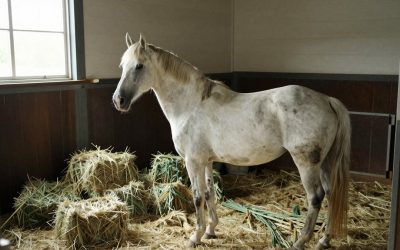
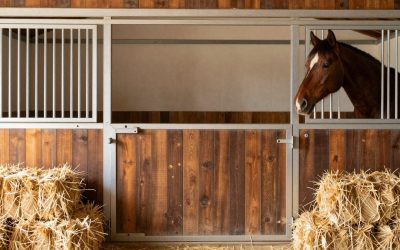
For watching a mare or a sick horse at night, a pan-and-tilt camera with infrared night vision is the common choice. The Tapo C500 reaches about 98 feet of infrared range and offers color night vision up to roughly 30 meters in low light, and its microSD slot supports continuous recording. Thomas Acres advises mounting a stall camera high in the corner opposite the door, out of reach of a horse on its hind legs, looking down across the bedding. It also suggests using infrared night vision in place of spotlights, because color night vision from a spotlight can startle a horse. That is a useful reminder when considering the Reolink models, which offer a spotlight mode; leave it off in a stall unless you need it.
For a stall without Wi-Fi, the Amouu 4G camera is described as built for stalls and foaling watches on a large battery. Cellular cameras can send alerts to a phone, but remember that no camera replaces regular in-person checks and that a barn is a fire-risk environment. A camera is not a smoke detector, and its siren is not a fire alarm. Install proper smoke or heat detection as recommended by your local fire authority.
Best for perimeter and security
For doors, driveways and tack rooms, you want a wider view and reliable motion alerts. A pan-tilt unit such as the Argus PT Ultra can cover a yard with presets and can switch to color night vision with its spotlights; the maker lists up to 32 preset positions and a guard position. The Tapo C500 includes a siren and adjustable spotlights. For deterrence, one guide picks the Ring Floodlight Cam Wired Plus for its bright LED floodlights on motion, though floodlights in a barn can disturb animals, so aim them at the yard and not the stalls.
A common installation tip from roundups is to mount cameras eight to ten feet above the ground so intruders cannot reach or cover the lens. In barns, use that height to your advantage: it also puts the camera out of reach of animals.
Best for large farms: PoE systems
Wired power-over-Ethernet systems run power and data on one cable and record to a local recorder. The Reolink RLK16-1200D8-A is listed in Reolink’s own guide for large farms, and eufy lists its PoE NVR S4 Max for properties with multiple barns, with expandable storage up to 16 TB and cross-camera tracking. One reviewer calls a Reolink PoE kit the most reliable system among those tested, if Ethernet runs are possible. The downside is installation effort: you need to trench or run cable between buildings, protect it from rodents and animals, and place a switch or recorder in a clean, dry, ventilated spot.
Features that matter in a barn
- Resolution: Reolink recommends at least 1080p for facial and plate detail, and 4K models such as the Argus PT Ultra give more room to zoom.
- Night vision: Infrared for the stalls, color night vision for outdoor security.
- Local storage: microSD slots (128 GB on the Reolink cameras, up to 512 GB on the Tapo) allow recording when the internet drops. Cloud plans add off-site backup but cost a subscription.
- Motion alerts: Person and animal detection reduces false alarms from cats, birds and swinging cobwebs.
- Two-way audio: Handy for calming a horse or telling a farrier you are on the way, though not all animals respond.
- Privacy and security: Use a strong, unique password and two-step verification on the camera app, and keep firmware up to date.
- Cable protection: Run wiring in conduit or above rafters so animals cannot reach it.
Budget tiers
- Budget: Tapo C500-class wired Wi-Fi cameras for barns with power and signal.
- Mid-range: battery or solar 4K cameras such as the Argus PT Ultra and eufy SoloCam S340, plus stall-focused cellular cameras.
- Premium: 4G pan-tilt solar systems like the Go PT Ultra and eufy S330 with data plans, and multi-camera PoE kits.
Pick X if… decision table
| If your barn… | Pick | Why |
|---|---|---|
| Has power and strong Wi-Fi | Tapo C500 | Pan and tilt, continuous recording, large microSD support |
| Has Wi-Fi but no outlet | Reolink Argus PT Ultra | Battery or solar, 4K, Wi-Fi 6 |
| Has no Wi-Fi | Reolink Go PT Ultra or eufy S330 | Cellular connection |
| Is used for foaling | Amouu 4G or a pan-tilt infrared camera | Stall coverage with phone alerts |
| Is one of several buildings | PoE system with recorder | Reliable wired links and local storage |
| Is far from the house | Wi-Fi HaLow or cellular option | Long-range coverage |
Alternatives
Baby-monitor style stall cameras
Some owners use inexpensive indoor Wi-Fi cameras in a protective housing. They may lack dust and weather ratings, so mount them well out of reach and replace them if they fail.
Trail cameras
Cellular trail cameras suit a gate, hay field or water tank, and the Barn Owl RangeCam 2 is listed by Thomas Acres for gates and tanks with a 5W solar panel and carrier flexibility.
Floodlight cameras
Wired floodlight cameras give a visible deterrent on a barn exterior, though they need a mains connection that an electrician should install.
Frequently Asked Questions
Can I run a barn camera without Wi-Fi?
Yes. Cellular 4G cameras such as the Reolink Go PT Ultra, eufy S330 and Amouu work without barn Wi-Fi, and a wired PoE system can record locally with no internet. You will need a data plan for cellular models, and the Reolink maker notes its camera supports 4G and 3G but not 5G.
What weather rating do I need?
IP65 or IP66 is the usual advice for barns, because of dust, damp and cleaning. IP64 models should be sheltered from direct hose spray. Always check the operating temperature range against your coldest and hottest days.
Where should I mount a stall camera?
High in a corner, out of reach of a horse standing on its hind legs, and looking down across the bedding. Keep cables in conduit or above rafters. Avoid pointing spotlights into stalls at night.
How long do battery cameras last in a barn?
Reolink lists about four months per charge for the Argus PT Ultra and about two months for the Go PT Ultra under normal use, and says life varies with settings and temperature. Cold weather and frequent motion triggers shorten it, so add a solar panel if the site gets sun.
Do barn cameras replace fire detection?
No. Cameras can show a problem, but they are not a smoke or heat alarm. Install proper detection recommended by your fire authority, keep wiring tidy and have an electrician inspect the barn’s electrical system.
Is cloud storage necessary?
Not always. Many cameras record to a microSD card or a local recorder, and cloud plans add off-site backup and easier clip sharing for a recurring fee. If you worry about theft of the camera, cloud or off-site backup preserves footage.



Write Your Review
No reviews yet. Be the first to share your experience!