

Our Top Picks
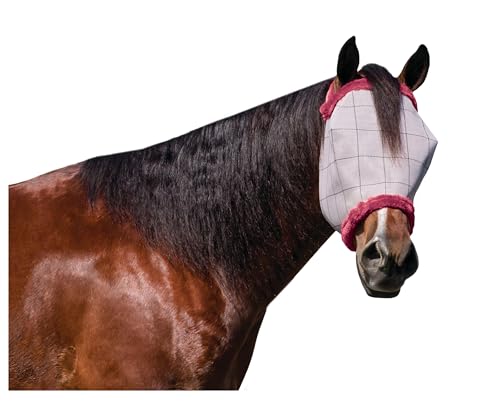 Farnam SuperMask II Horse Fly Mask Without EarsAverage Horse2.75 x 7 x 7 inches0.42 poundsCheck on Amazon
Choosing the best fly mask for a horse with sensitive eyes comes down to eye space first, coverage second and price a distant third, and among these eight listings the ones whose titles promise large eye space and UV protection are the best starting points. The Harrison Howard CareMaster Pro Luminous and the Fornyk with ears both name large eye space, UV claims and ears in their titles. If your horse hates anything near its ears, the Farnam SuperMask II and the Cashel Crusader both leave the ears out. You can also compare against our broader horse fly mask roundup, then come back here to narrow by eye comfort.
One honest limitation before the list: a fly mask is a physical barrier and, on some models, a UV filter. It cannot diagnose or treat anything. A horse that squints, tears up constantly, shows cloudiness or swelling, or has a known eye condition needs a veterinarian, not a different mesh. Everything below is drawn from the listing titles, and where a title is silent, the text says to check the listing.
Eight masks at a glance
Farnam SuperMask II Horse Fly Mask Without Ears For Eyes, Regular Size | Bug mask for mosquitoes, gnats & flies, for extended coverage, protects eyes from insects and debris, adjustable throat latch


As an Amazon Associate we earn from qualifying purchases. Product prices and availability are accurate as of the date/time indicated.

Harrison Howard CareMaster Horse Fly Mask Large Eye Space Half Face with Ears Moonlight Silver Large Full Size
As an Amazon Associate we earn from qualifying purchases. Product prices and availability are accurate as of the date/time indicated.

Tough1 Novelty Fly Mask for Horse, Lady Bug
As an Amazon Associate we earn from qualifying purchases. Product prices and availability are accurate as of the date/time indicated.

Cashel Crusader Standard Fly Mask No Ears or Nose,Gray,Horse


As an Amazon Associate we earn from qualifying purchases. Product prices and availability are accurate as of the date/time indicated.

Fornyk Horse Fly Mask with Ears, UV Block Breathable Mesh (Blue, L) | Large Eye Space, No Rub, Writable Name Tag, High-Vis Color, Stay-in-Place Strap, Durable Mesh, Turnout Pasture & Daily Use


As an Amazon Associate we earn from qualifying purchases. Product prices and availability are accurate as of the date/time indicated.

Harrison Howard CareMaster Pro Luminous Horse Fly Mask Large Eye Space Standard with Ears UV Protection for Horse Light Pink Full Size


As an Amazon Associate we earn from qualifying purchases. Product prices and availability are accurate as of the date/time indicated.

Harrison Howard Stretch Fly Mask with Forelock Opening and Patterns Comfortable Breathable Snug Fitting Horse Fly Mask Luminous Stars L


As an Amazon Associate we earn from qualifying purchases. Product prices and availability are accurate as of the date/time indicated.

Harrison Howard Super Comfort Stretchy Fly Mask Large Eye Space with UV Protection Soft on Skin with Breathability Azure Blue M Cob


As an Amazon Associate we earn from qualifying purchases. Product prices and availability are accurate as of the date/time indicated.
Price tier is relative within these eight listings: Budget covers the three lowest, Mid-range the next three, Premium the top two.
| Model | Key spec (from title) | Price tier | Best for |
|---|---|---|---|
| Harrison Howard Super Comfort Stretchy | Large eye space, UV protection, soft on skin, M Cob | Budget | Smaller or cob-type faces |
| Harrison Howard Stretch with Forelock Opening | Snug stretch fit, forelock opening, luminous stars, L | Budget | Horses with a forelock to free |
| Fornyk with Ears, UV Block | Large eye space, ears, no-rub, writable name tag, L | Budget | All-round turnout use |
| Tough1 Novelty, Lady Bug | Novelty design | Mid-range | Fun look, check fit details |
| Harrison Howard CareMaster | Large eye space, half face with ears, full size | Mid-range | Ear coverage in a half-face shape |
| Farnam SuperMask II | No ears, extended coverage, adjustable throat latch | Mid-range | Horses that dislike ear covers |
| Harrison Howard CareMaster Pro Luminous | Large eye space, ears, UV protection, full size | Premium | Bright pasture, UV concern |
| Cashel Crusader Standard | No ears or nose, gray | Premium | Simple eye-and-face cover |
The masks, one by one
Harrison Howard CareMaster Pro Luminous
The title packs in the claims a sensitive-eyed horse’s owner looks for: large eye space, a standard cut with ears, UV protection for the horse, light pink color and full size. Luminous in the product name hints at a visible color, which can help you spot the horse in a big pasture or at dusk, though the title does not describe any reflective feature, so treat that as a color choice only.
Large eye space means the fabric is meant to sit away from the eyelid instead of resting on the lashes. For horses that blink hard or rub their faces on fences, that gap matters. The UV protection claim is a manufacturer statement and the title gives no percentage or testing standard, so check the listing text before you rely on it. Ears add stability and keep gnats out of the ear opening, but they raise a question: some horses object to anything around the ears. Introduce this mask for short periods first.
The title does not mention the closure type, fastener strength, whether the mesh is replaceable, or which sizes sit beside full, so check the listing for those. It is one of the higher-priced masks in the set, hence the Premium tier.
Pros
- Large eye space and UV protection both appear in the title
- Ears included for coverage and stability
- Bright color is easy to spot at a distance
Cons
- Premium tier cost compared with the stretch masks
- UV claim has no figure in the title
- Closure, material details and warranty need checking on the listing
Who it’s for: owners of horses that squint in strong sun and tolerate ear covers, who want eye space and a UV claim in the same mask.
Check your own horse’s face against the size chart. Full size is the label here, and brand labels differ, so do not assume that full on this mask equals full on another brand. Use the fit-checking section below before you order, and ask your vet if the horse has any history of eye problems.
Fornyk Horse Fly Mask with Ears, UV Block Breathable Mesh
Fornyk’s title reads like a feature list: ears, UV block, breathable mesh, large eye space, no rub, a writable name tag, a high-visibility color, a stay-in-place strap and durable mesh for turnout, pasture and daily use. The size shown is L in blue. For a sensitive-eyed horse, the phrases that count are large eye space, no rub and breathable mesh, because they speak directly to contact and heat.
The writable name tag is practical in a barn with many identical masks. When ten horses own near-identical blue masks, a name that survives a wash saves arguments and mix-ups; it also avoids the temptation to share a mask between horses, which can spread skin issues. The stay-in-place strap is meant to stop the mask drifting; a mask that slides sideways can press on an eye or let flies sneak under the edge.
It lands in the Budget tier, which makes it a low-risk way to test whether a horse accepts ears at all. The title does not give the strap material, the stitching type or the UV rating, so check the listing. If your horse has sensitive skin, run a hand around the mask’s inner edge before the first fitting to feel for rough seams.
One more point on the high-visibility color: a bright mask makes it easier to see from across a field whether the mask is still in place, which is a quick daily sanity check. If you spot a horse with a mask pushed up onto the forehead or hanging by one strap, walk out and fix it promptly.
Pros
- Large eye space, no-rub design and breathable mesh named in the title
- Writable name tag helps in shared barns
- Budget tier with ears and UV block claimed
Cons
- Only the L size is shown; confirm which size your horse needs
- UV blocking is a claim without a stated rating
- Ears may bother a horse that dislikes head contact
Who it’s for: an owner who wants ears, UV block and eye space at the lowest tier and is willing to confirm fit carefully.
Harrison Howard CareMaster Horse Fly Mask, Half Face with Ears
This one is described as a large-eye-space half-face mask with ears in moonlight silver, full size. Half face means the mask covers the upper part of the face and stops before the muzzle, which keeps the nostrils and mouth clear. Horses that eat with a mask on, or that overheat when more of the face is covered, often do better with a shorter shape. The trade-off is that flies aimed at the nose and lips are not blocked.
The title does not mention UV protection, unlike the Pro version in this family. If sunlight sensitivity is part of your concern, compare the two listings line by line; the Pro name suggests a more featured sibling, though the titles are the only evidence on this page. The silver color is a design choice; lighter colors are commonly preferred in warm weather, but check what the listing says about material and heat.
The mid-range price places it between the budget stretch masks and the premium eared options. For a sensitive horse, the large eye space is the main reason to consider it. Confirm the ear shape, the closure and whether the edges are softly bound, because fabric edge quality is what actually touches the face. Because the title says “Large Full Size”, measure your horse against the brand’s chart rather than assuming.
Compare this against the Pro Luminous variant if you can: put the two titles side by side and note the differences in claims. If the extra UV wording matters to your vet’s advice for your horse, the higher-tier sibling may justify its price. If sun is not the issue, this one can be enough.
Pros
- Large eye space and ears in a half-face shape
- Muzzle stays free, which suits grazing horses
- Mid-range tier
Cons
- UV protection is not mentioned in the title
- Does not cover the nose
- Edge finish and closure details are not in the title
Who it’s for: horses that need ear coverage and eye space but do better without anything on the muzzle.
Harrison Howard Super Comfort Stretchy Fly Mask, Azure Blue M Cob
The title is built around comfort: stretchy, large eye space, UV protection, soft on skin and breathable. The size is M Cob, which signals a smaller frame; confirm with the brand’s chart whether your horse actually fits a cob label instead of assuming from breed. Stretch fabric gives some forgiveness across face shapes, but too much stretch can let the mask creep, so a snug-but-not-tight check matters.
For a sensitive-eyed horse, soft-on-skin materials can make the difference between a mask that is accepted and one that gets rubbed off on the fence. The title does not say whether the mask has ears, so look at the photos. If it is an earless design, a separate ear net may suit a horse bothered by gnats around the ears. UV protection is claimed again, with no figure.
It sits in the Budget tier, the lowest price in the set. A mask this affordable invites buying two so one can dry while the other is on the horse. That rotation is worth considering with any mask, because a damp or dirty mask can irritate skin around the eyes. Watch the first few days for hair loss, rubbing or watery eyes, and contact your vet if the eyes look wrong.
Because this is the cheapest listing in the set, it is also the one most worth buying in pairs. Keep the second mask clean and dry in a bag so you can swap it in after a sweaty or muddy day, and wash both following the care label.
Pros
- Soft, stretchy, breathable fabric described in the title
- Large eye space and UV protection both named
- Lowest price tier
Cons
- Size is M Cob only; fit for larger horses must be checked
- Ears are not mentioned in the title
- Stretch fabric can shift if sized loosely
Who it’s for: smaller or cob-type horses with sensitive skin whose owners want an inexpensive, soft mask with UV protection claimed.
Farnam SuperMask II Horse Fly Mask Without Ears
Farnam’s title is unusually informative about purpose: it is a bug mask for mosquitoes, gnats and flies, offering extended coverage, protecting eyes from insects and debris, and fitted with an adjustable throat latch. It is a regular size and, importantly, explicitly without ears. For a horse that does not tolerate ear covers, that is the selling point. Extended coverage hints at more of the face being covered than a minimal eye cup, but the title gives no detail, so view the photos.
The adjustable throat latch is a notable detail: it lets you tune how the mask sits on the head and neck, which helps keep it from sliding onto an eye. Because a mask that migrates is a hazard for sensitive eyes, adjustability earns real points. The title does not mention large eye space or UV protection, so there is no title-based claim on either. Check the listing for eye-area construction.
Debris protection is worth thinking about too: wind-blown dust and pollen can irritate eyes just as flies do, and a mask can help with both. It remains a mid-range price. If your horse is easily upset by touch around the ears, this style also lets you work on the ears separately, perhaps with an ear net, without losing eye protection.
A practical tip: when you adjust the throat latch, make the change in small steps and recheck the eye area from the front each time. A latch tightened to stop slipping can pull the mask snug against the face and defeat the clearance you were hoping for.
Pros
- No ears, a calmer choice for ear-sensitive horses
- Adjustable throat latch for a steadier fit
- Insect and debris protection described in the title
Cons
- No UV claim or eye-space claim in the title
- Regular size only; confirm against your horse
- Does not protect the ears from gnats
Who it’s for: horses that dislike ear covers and need an adjustable, extended-coverage mask against insects and debris.
Cashel Crusader Standard Fly Mask, No Ears or Nose
Cashel’s title is the shortest of the group: a standard fly mask with no ears and no nose, in gray, for horses. That clarity helps. It is an eyes-and-face cover without extras, so it avoids the two areas, ears and muzzle, that some horses object to. There are no UV, eye-space or comfort claims in the title, which is a reason to read the listing text before ordering for a sensitive-eyed horse.
“Standard” could mean standard fit or standard cut; the title does not clarify. Because the title is this short, check what the seller says about fabric, the shape of the eye cups and the closure. Notice also that this mask sits in the Premium tier, the most expensive in the set, which means you should expect to find extra value in the listing, such as durability or a replacement policy.
For horses that are simply bothered by flies around the eyes and have no known sensitivity, a plain mask can be enough. For truly sensitive eyes, compare it against the large-eye-space options and ask a vet whether a UV mask would help.
Think of it as a baseline: if you buy this and your horse still rubs its eyes, flinches in sunlight or has watery eyes, that is information to take to your vet, and a sign the next step is a different style or professional advice rather than another identical mask.
Pros
- Plain design without ears or nose
- Clear title with no ambiguity about what it covers
- Gray color is easy to match with different horses
Cons
- Premium tier despite fewer title claims
- No UV or eye-space claim in the title
- Material and closure details need checking
Who it’s for: horses and owners who want a simple eye-and-face mask with no ears or nose coverage and who have confirmed the fit details on the listing.
Harrison Howard Stretch Fly Mask with Forelock Opening
The title describes a stretch mask with a forelock opening and patterns, comfortable, breathable and snug fitting, in a luminous stars design, size L. The forelock opening is the most distinctive item. It lets the forelock sit outside the mask instead of being pressed under it, which can reduce tugging and rubbing at the brow. For a horse with a thick forelock, that matters.
Snug fitting is double-edged. A tight mask can reduce slipping, but it can also press on the face if the horse is between sizes. The title says nothing about eye space or UV, so it makes no sensitive-eye claims. If your horse’s eyes are particularly sensitive, treat this as a comfort mask for general use and compare against the options that name large eye space before relying on it.
The patterned design is mostly cosmetic. Take care that dyes and prints do not shed and that the inside surface of the mask is smooth; check the listing for the fabric description. Placed in the Budget tier, it is also easy to keep as a backup that can be swapped while another mask is washed. If you buy it, test the fit with the horse calm and still, and look at the eye area from the front to make sure the fabric stays clear of the lashes.
Brush the forelock out before fitting so no hair is trapped inside the mask, and check after the first turnout that the forelock sits through the opening cleanly instead of being folded back against the brow.
Pros
- Forelock opening reduces brow pressure
- Breathable, stretchy and snug per the title
- Budget tier with fun patterns
Cons
- No eye-space or UV claim in the title
- Snug fit can press if the size is wrong
- Ears and nose coverage are not mentioned
Who it’s for: horses with a forelock that the owner wants free, and a general-use mask rather than a dedicated sensitive-eye solution.
Tough1 Novelty Fly Mask, Lady Bug
This listing is a novelty fly mask with a lady bug design, and that is nearly everything the title says. There is no mention of eye space, UV, ears, breathability or size. That makes it difficult to recommend for a horse with sensitive eyes on the title alone. It may be a perfectly good mask, but the page cannot say so without guessing, and guessing is not the standard here.
Novelty masks appeal for photos, shows and children’s horses, and they can brighten a barn. The risk is that decorative elements, such as printed fabric, appliqué or raised shapes, may add stiffness or rough spots close to the eyes. Run your fingers over the inside before fitting. The mid-range price puts it above several budget masks that actually name large eye space and UV protection, so the value case depends on whether you want the design.
If you buy a novelty mask for a horse with delicate eyes, treat it as a trial. Watch for rubbing, watering and discomfort during the first supervised hours, remove it if anything looks wrong, and ask your vet if the eyes remain irritated. Check the listing for size labels, the material, ear coverage and the closure type before ordering.
If a child will be handling or leading the horse, a bright novelty mask can help others spot the horse, but the mask is still gear on a large animal, so adults should supervise fitting and removal.
Pros
- Fun design that makes a horse easy to spot and photograph
- Mid-range tier
- Useful as a secondary mask for casual use
Cons
- Title offers no eye-space, UV, size or ear information
- Decorative features may be stiff near the eyes
- Not an obvious fit for a horse with specific eye needs
Who it’s for: an owner who wants a novelty look and will verify fit and materials on the listing, not a first choice for a horse with known sensitivity.
How we picked these
This page is written by the Editorial team. Nobody on the team used or measured these units. The testbench is published specifications, manufacturer documentation and buyer reviews, so the information here comes from listing titles and manufacturer descriptions, not from putting masks on horses. No horse was fitted, and no UV, airflow or durability figure on this page was measured by us.
We started with listings that name a fly mask for horses and then sorted by what the title claims about the eye area: large eye space, UV protection, no-rub design, stretch fit or an earless cut. Next we covered range: eared and earless, half face and extended coverage, stretch and structured, budget and premium. We also included one novelty design, because owners will find it in search results and deserve a plain explanation of what the title does and does not say.
The order of the descriptions reflects how directly each title addresses sensitive eyes, not a performance ranking. If your horse has any eye condition, the right order of operations is: ask your vet, then pick a style that matches the advice, then check the listing for material and size.
What a mask can and cannot do for sensitive eyes
A fly mask is a physical barrier between flies, gnats, debris and the eye. It cuts down on the buzzing and crawling that makes horses toss their heads, and it can reduce contact with dust and pollen. A mask with a UV claim may also filter some sunlight. That is the extent of it. A mask does not treat infection, relieve pain or fix an underlying condition.
Signs that call for a vet visit rather than a new mask include squinting that persists in shade, watering that does not clear, thick or colored discharge, cloudiness, swelling around the lids, rubbing that starts suddenly, and light sensitivity that seems new. Some horses have conditions that make bright light uncomfortable, and a vet can advise whether a UV-filtering mask is part of the plan. Do not swap masks repeatedly hoping the problem disappears.
Also keep in mind that a mask can cause trouble when it does not fit. A mask that presses on the lashes, rubs the skin or slides over the eye can create the very irritation owners are trying to avoid. That is why the eye-space claim in a title matters and why a mask must be checked on the horse, not on the shelf.
Fit check: a measure-and-test routine
Brand size labels such as Cob, Full, Large, Standard and Regular do not line up across makers, so the first step is the brand’s own chart. A simple routine for the day the mask arrives:
- Calm horse, quiet place. Let the horse sniff the mask. Never force it on a nervous animal.
- Eyes first. With the mask on, look from the front and the side. The fabric should clear the lashes and lids; you should be able to see a gap in the eye area. If you cannot, the mask is too small or poorly shaped.
- Two-finger rule for straps. As a common rule of thumb, you should be able to slip a couple of fingers under the strap or throat latch. Too tight can rub; too loose lets the mask shift.
- Head toss test. Have the horse lower and raise its head. The mask should stay centered and the eye holes should not drift.
- Short trial. Start with an hour of supervised turnout, then check the eyes and face for redness or wet hair.
The first-week plan below turns this into a schedule.
| Day | What to do | What to look for |
|---|---|---|
| 1 | One hour supervised | Fabric clear of lashes, mask centered |
| 2 | Half day in turnout | Rub marks, wet hair, discharge |
| 3 | Remove and inspect after a full turnout | Redness, heat, hair loss near the eyes |
| 4-5 | Normal turnout, check at feeding | Mask position, strap wear |
| 6 | Wash the mask per instructions | Shape after washing, dye or mesh changes |
| 7 | Decide: keep, re-size or call the vet | Any persistent eye issue goes to the vet |
Safety in turnout
Anything on a horse’s head in a field deserves thought. Check that the mask cannot catch on fences, branches or buckets, and follow the manufacturer’s instructions on closures and breakaway features. If the horse wears a halter under or alongside the mask, make sure the combination is safe for unsupervised turnout, and ask your trainer or vet if you are unsure. Remove and inspect the mask every day: look at the eyes, check the face for rubs, and confirm that mesh has not torn into sharp or loose threads.
Avoid leaving a wet mask on a horse for long periods, as damp fabric against the skin can cause irritation. In very hot weather, watch for sweating under the mask. Dark colors soak up heat, so lighter colors can be more comfortable, but the real test is how your horse behaves. A horse that rubs its face constantly, stands with its head low and away from the sun, or tries to shed the mask is telling you something.
What a mask costs across a fly season
This is an estimate with assumptions, not a quote. Suppose a 15-dollar mask lasts one summer and a 25-dollar mask lasts two summers under the same use. Over two summers the cheaper option costs 30 dollars and the sturdier one 25 dollars, so durability can beat price if the assumption holds. Now add rotation: two masks of the cheaper kind, one in use and one drying, cost 30 dollars for the first summer. Owners with sensitive-eyed horses often value a clean spare more than a one-year saving, because a dirty mask worsens irritation.
The calculation breaks if the lifetimes are different from the assumption, so keep a note of when each mask goes on and what its condition is at season end. Masks that tear, sag or lose shape are cheap to replace compared with the cost of an irritated eye and a vet visit.
Mistakes owners make with fly masks
Buying by color alone is the first mistake, because the best color in the world cannot fix a poor fit. The second is skipping measurements and ordering the size you think your horse should be; brand labels differ. The third is leaving a mask on without checking underneath, which allows rubs and skin problems to develop. The fourth is treating UV protection as a medical treatment instead of a comfort feature; ask your vet. The fifth is washing with harsh detergents that leave residue near the eyes; follow the care label. The sixth is ignoring wear: frayed edges and stretched mesh get worse, not better.
Verdict
For a horse that squints in bright sun and tolerates ears, the Harrison Howard CareMaster Pro Luminous or the Fornyk with ears give you the most sensitive-eye claims in the titles. If budget matters most, the Harrison Howard Super Comfort Stretchy names large eye space and UV protection in the lowest price tier, provided the M Cob size suits your horse. For an ear-sensitive horse, the Farnam SuperMask II adds an adjustable throat latch without ears. Treat the Tough1 novelty mask as a fun extra, not a sensitive-eye pick, and confirm the Cashel’s details before paying for the Premium tier. Whatever you choose, watch your horse’s eyes daily and call your vet at the first sign of trouble.
Frequently asked questions
What makes a fly mask suitable for a horse with sensitive eyes?
Look for generous eye space so fabric does not touch the eyelid or lashes, soft edges, breathable mesh and a fit that stays put without rubbing. Some listings also claim UV protection, which may matter for horses that squint in bright sun. None of this replaces veterinary advice. If your horse has watering, swelling, cloudiness, squinting or a history of eye disease, call your vet first and ask which mask style, if any, suits that horse’s condition.
Should a sensitive-eyed horse wear a mask with ears?
Ears help keep flies and gnats off the ear canal and keep the mask more stable, and several listings here have ears. Some horses dislike anything around their ears and may toss their heads or rub. Introduce an eared mask for short periods under supervision. If your horse is head shy, a mask without ears is a reasonable alternative, but then consider a separate ear net or fly spray approved for horses.
Can my horse wear a fly mask all day and night?
Many owners leave masks on during turnout, but the mask should be removed and the face checked every day. Look for rubbing, hair loss, discharge, heat or swelling around the eyes, and wash the mask regularly because dirt and sweat can irritate skin. Check the manufacturer’s instructions about overnight wear. Horses wearing masks should have a halter or arrangement that is safe in turnout, and any sign of trouble means taking the mask off and calling a vet.
How do I choose the right size?
Sizes are labeled differently between brands, with terms such as Cob, Full, Large or Standard, so use each brand’s own size chart rather than assuming your horse matches a label. Measure your horse’s face as the chart instructs, compare the numbers, and read the listing for the stated size. If a horse falls between sizes, a stretch design may be more forgiving, but a loose mask can slip onto the eye, so check the fit with the horse standing still.
How often should a fly mask be replaced?
There is no fixed rule. Replace a mask when mesh tears, stitching loosens, the edging goes rough, the strap loses its grip or the eye area no longer holds its shape. A damaged mask can scratch or snag, which defeats the purpose for sensitive eyes. Washing per the manufacturer’s directions and rotating two masks can extend life, but a stained, stiff or misshapen mask should be retired, and an eye problem should always go to your vet.





Write Your Review
No reviews yet. Be the first to share your experience!