

Key takeaways
- 4K/30p: the practical default for most vlogs, with detailed footage and manageable storage.
- 4K/60p: useful for smoother movement, riding footage and modest slow motion, but it often increases heat, battery use and file size.
- 4K/120p: valuable for dramatic slow motion, not necessary for ordinary talking-head clips.
- 5.7K and higher: helpful when cropping or reframing in editing, provided your computer and storage can handle the files.
The best video cameras for most vloggers are the DJI Osmo Pocket 3 for effortless travel footage, the Sony ZV-E10 II for the best upgradeable all-round setup, and the Canon EOS R50 V for creators who want strong autofocus and simple controls at a moderate cost.
Your ideal choice depends less on the highest headline resolution than on where you film, how much equipment you will carry, whether you need interchangeable lenses, and how reliably the camera can record usable sound. A compact camera that stays in your bag is often more valuable than a larger model that remains at home.
Our top picks
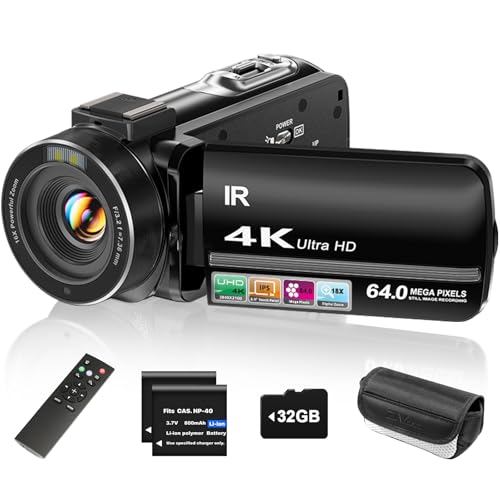
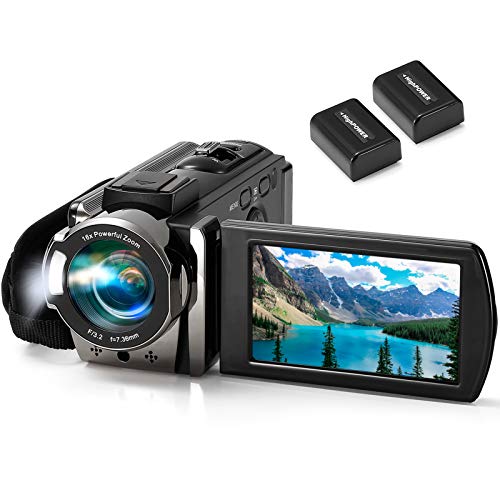


As an Amazon Associate we earn from qualifying purchases at no extra cost to you. Ratings are shown as listed on Amazon.
Quick comparison of the leading choices
| Camera | Maximum video | Autofocus and stabilization | Microphone input | Approx. body weight | Best for |
|---|---|---|---|---|---|
| DJI Osmo Pocket 3 | 4K/120p | 3-axis mechanical gimbal; face tracking | USB-C; DJI wireless microphone support | 179 g | Walking tours, family clips and fast travel vlogging |
| Sony ZV-1 II | 4K/30p | Fast phase-detect autofocus; electronic stabilization | 3.5 mm | 292 g | Compact sit-down and handheld vlogging |
| Sony ZV-E10 II | 4K/60p | Phase-detect autofocus; electronic stabilization | 3.5 mm | 377 g | Creators who want interchangeable lenses |
| Canon EOS R50 V | 4K/60p crop; 4K/30p oversampled | Dual Pixel CMOS autofocus; digital stabilization | 3.5 mm | Approximately 370 g | Beginner-friendly home, travel and family video |
| DJI Osmo Action 5 Pro | 4K/120p | Electronic stabilization; horizon functions | USB-C; wireless microphone support | 146 g | Outdoor, rain, riding and action footage |
| Panasonic Lumix GH7 | 5.7K/60p; 4K/120p | Phase-hybrid autofocus; in-body stabilization | 3.5 mm, 2.5 mm headphone, optional XLR system | Approximately 805 g with battery and card | Serious production and multi-microphone recording |
Weights are approximate camera-body figures and do not include lenses, cages, tripods or microphones. Battery life also varies substantially with screen brightness, stabilization, temperature, frame rate and wireless connections.
Best video camera by filming situation
Best for travel and walking vlogs: DJI Osmo Pocket 3
The Pocket 3 is the easiest recommendation when portability and smooth footage matter most. Its built-in 3-axis gimbal physically steadies the image, producing a more natural walking shot than ordinary electronic stabilization. The rotating 2-inch screen can face you for a selfie or turn outward for scenery, and 4K/120p provides slow-motion flexibility.
Its limitations are important: the built-in lens is not interchangeable, the small sensor is less capable than a mirrorless camera in dim interiors, and the gimbal mechanism needs protection from knocks, grit and tight pockets. Use a protective cover when it is not recording, and avoid placing it loose in a bag with sand or keys.
Best compact camera for family and indoor video: Sony ZV-1 II
The ZV-1 II combines a pocketable body with a wide 18–50mm-equivalent lens, making it easier to frame yourself at arm’s length or include several people in a room. Sony’s face and eye detection is useful when children or pets move unpredictably, while the built-in directional microphone and supplied windscreen are convenient for casual clips.
Electronic stabilization crops the image and cannot match a gimbal while walking. Its battery is also modest, so frequent users should budget for at least one spare battery or a USB-C power bank. It is a strong choice when you want better control than a phone without carrying interchangeable lenses.
Best upgradeable vlogging system: Sony ZV-E10 II
The ZV-E10 II is the better long-term option for creators who expect their filming to grow. Its APS-C sensor gives you more control over background blur and usually cleaner results in low light than compact-camera sensors. Sony’s E-mount also offers a large selection of wide, portrait, telephoto and stabilized lenses.
There is no mechanical in-body stabilization, so a wide lens, monopod, tripod or gimbal becomes more useful for moving shots. The body is light, but a bright zoom lens can make the complete kit much larger. Choose this model if you will record regularly and are prepared to learn exposure, lens selection and file management.
Best beginner-friendly interchangeable-lens camera: Canon EOS R50 V
The EOS R50 V is aimed directly at creators who want a familiar, approachable camera with strong subject detection. Canon’s Dual Pixel autofocus is particularly useful for presentations, family footage and moving subjects. The vertical-video controls and front-facing screen also suit short-form publishing.
Its video specifications depend on the recording mode: 4K/30p is the cleaner oversampled option, while 4K/60p uses a crop. Digital stabilization can narrow the field of view, so a wide lens is helpful for handheld self-recording. Canon’s RF-S lens range is growing, although it is not as broad as Sony’s established E-mount ecosystem.
Best for horses, weather and action: DJI Osmo Action 5 Pro
For riding, stable-yard work and filming in rain or dust, an action camera is easier to risk than a mirrorless setup. The Action 5 Pro is compact, rugged and designed for strong electronic stabilization. Its wide view can capture a horse and rider from a helmet, chest mount or fence post, while wireless microphone support improves spoken commentary.
Wide-angle action-camera footage can make distant subjects look smaller than expected. Mount it closer to the action only when the position is safe and permitted, and use a secure tether. Check the lens cover for dust, hair and water droplets before every recording; a tiny mark becomes very visible against bright sky or arena lighting.
Best for controlled professional work: Panasonic Lumix GH7
The GH7 is excessive for occasional family clips but compelling for planned productions. It offers high-bitrate recording, broad frame-rate choices, effective in-body stabilization and audio expansion through Panasonic’s optional XLR microphone adapter. Headphone monitoring is valuable when dialogue quality matters more than convenience.
The trade-offs are weight, cost and a steeper learning curve. A GH7 with a fast lens, spare batteries, a microphone and support can become a substantial shoulder or tripod kit. It makes sense for frequent creators, instructional films, interviews and carefully staged equestrian coverage rather than spontaneous pocket video.
Resolution is only one part of image quality
- 4K/30p: the practical default for most vlogs, with detailed footage and manageable storage.
- 4K/60p: useful for smoother movement, riding footage and modest slow motion, but it often increases heat, battery use and file size.
- 4K/120p: valuable for dramatic slow motion, not necessary for ordinary talking-head clips.
- 5.7K and higher: helpful when cropping or reframing in editing, provided your computer and storage can handle the files.
Autofocus matters most when you cannot operate the camera while filming. Face and eye detection is helpful for presenters, children and riders moving toward the camera, but no autofocus system is infallible in low contrast, backlight or cluttered scenes. For a static interview, manual focus can be more dependable once the subject’s position is fixed.
Audio, low light and battery decisions
A camera with a 3.5mm microphone input gives you more flexibility than a built-in microphone alone. A small on-camera microphone improves speech in quiet conditions; a wireless system is better when the speaker moves away from the camera. Headphone output, available on more advanced bodies such as the GH7, lets you detect crackling or clothing noise before finishing a recording.
For low light, sensor size and lens aperture matter more than resolution. APS-C cameras such as the ZV-E10 II and EOS R50 V generally offer more latitude than small action-camera sensors, while a fast lens can help indoors. Keep shutter speed appropriate for the frame rate, add soft light where possible, and avoid relying on extreme digital brightening, which makes noise more obvious.
As a planning estimate, a compact camera battery may provide roughly 60–125 minutes of active recording, while action cameras can approach or exceed two hours in favorable conditions. For a four-hour family event, do not buy only “four hours” of battery capacity: allow for setup, menus, standby, retakes and cold-weather losses. Two spare batteries or a USB-C power bank with a short cable is a safer plan.
A practical decision matrix
| Your situation | Most suitable type | Why | What to accept |
|---|---|---|---|
| Occasional user, minimal setup | Pocket gimbal camera | Fast start-up, smooth walking footage, very small kit | Limited lens choice and weaker dim-light performance |
| Weekly vlogger, wants to improve | APS-C mirrorless camera | Better image control, lenses and microphone options | Extra cost, lens weight and learning time |
| Outdoor or equestrian filming | Rugged action camera | Weather resistance, compact mounting and strong stabilization | Wide perspective and less background separation |
| Interviews or frequent paid production | Advanced mirrorless camera | Audio monitoring, robust recording choices and lens flexibility | Large, heavy kit and higher storage requirements |
Ownership details that affect the real cost
Memory cards, batteries, wind protection, a small tripod and a camera bag can add a noticeable amount to the initial purchase. High-bitrate 4K footage also fills storage quickly: 100 Mbps uses about 45 GB per hour, before allowing for multiple takes and backups. Keep two copies of important family or travel footage, and format cards in the camera after confirming the files are safely transferred.
The parts most likely to cause trouble are batteries, USB-C ports, lens surfaces, card contacts and moving gimbal mechanisms. Keep equipment dry before sealing it in a case, let condensation clear gradually after moving between cold and warm environments, and clean lenses with a blower before using a microfiber cloth. For most buyers, the best video camera is the one whose stabilization, audio workflow and carrying size match how they actually film—not the one with the longest specification list.

Write Your Review
No reviews yet. Be the first to share your experience!