

Key takeaways
- Small bore, around 0.445–0.450 inches: tends to feel quick and focused, with relatively low air demand. It can suit lead jazz playing and players who value immediate response.
- Medium-large bore, around 0.459 inches: the most versatile choice for school, concert band, orchestral excerpts, and general playing.
- Large bore, around 0.462–0.470 inches: can produce a broad, powerful sound but usually requires more controlled airflow and endurance.
The best trumpets for beginners, jazz players, and concert musicians are different: choose a durable medium-large-bore Bb trumpet for learning, a responsive medium-bore instrument for jazz, and a stable, projecting medium-large-bore trumpet for concert work.
For most first-time players, the Yamaha YTR-2330 is the safest all-round recommendation. Jazz players should compare instruments such as the Yamaha YTR-6335 or a Bach Stradivarius 180 with their mouthpiece and playing style. For serious concert performance, the Yamaha YTR-8335R or Bach Stradivarius 180 series offers the control, intonation, and projection that advanced players usually need.
Our top picks

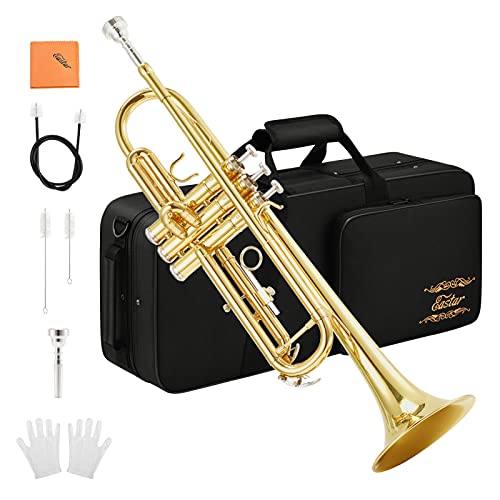


As an Amazon Associate we earn from qualifying purchases at no extra cost to you. Ratings are shown as listed on Amazon.
Quick picks by playing situation
| Player or situation | Best type | Example models | Typical new-price range |
|---|---|---|---|
| Child or first-time student | Bb trumpet, medium-large bore, lacquered brass | Yamaha YTR-2330, Jupiter JTR700 | $700–$1,200 |
| Adult beginner wanting long-term value | Reliable student trumpet with adjustable third-valve ring | Yamaha YTR-2330, Bach TR300H2 | $800–$1,400 |
| Jazz student or doubling player | Medium bore, fast response, clear upper register | Yamaha YTR-6335, Bach Stradivarius 180 | $1,500–$4,000 |
| Concert band or orchestral player | Medium-large bore, broad sound, strong intonation | Bach Stradivarius 180, Yamaha YTR-8335R | $2,500–$4,500 |
| Limited budget | Used professional or upper-student Bb trumpet from a known maker | Previously owned Yamaha, Bach, or Jupiter model | $300–$1,500 used |
What matters most when choosing a trumpet
Bore size affects resistance and sound
The bore is the inside diameter of the trumpet’s tubing. Common Bb trumpet sizes range from approximately 0.445 inches to 0.470 inches.
- Small bore, around 0.445–0.450 inches: tends to feel quick and focused, with relatively low air demand. It can suit lead jazz playing and players who value immediate response.
- Medium-large bore, around 0.459 inches: the most versatile choice for school, concert band, orchestral excerpts, and general playing.
- Large bore, around 0.462–0.470 inches: can produce a broad, powerful sound but usually requires more controlled airflow and endurance.
Bore size is not a quality ranking. A larger bore will not automatically make a player sound better, and a smaller bore is not automatically easier. The mouthpiece, leadpipe, bell design, bracing, and the player’s airflow all affect the result.
Materials and finish change feel more than basic durability
Most modern trumpets use yellow brass tubing, often with a brass bell and leadpipe. Brass is normally finished with either clear lacquer or silver plating.
- Clear lacquer: generally gives a slightly warmer or smoother feel and is easy to maintain. It is a practical choice for beginners and marching or school use.
- Silver plate: often feels more direct and can produce a bright, centered response. It requires careful drying because tarnish develops when moisture and skin oils remain on the surface.
- Gold brass: contains more copper and is often used for bells or leadpipes. It may contribute to a broader, darker tonal character, though the effect depends on the entire design.
- Monel or stainless-steel valves: are common in quality instruments. The important issue is accurate fit and smooth machining, not simply the label on the valve material.
Best trumpets for beginners
Yamaha YTR-2330: the dependable first choice
The Yamaha YTR-2330 is a Bb student trumpet with a medium-large bore of about 0.459 inches. Its design prioritizes consistent intonation, a manageable response, and durable construction rather than specialized color. The lacquered finish is practical for regular lessons and school ensemble use.
It is especially suitable when the student may play for several years before deciding whether to upgrade. A useful feature is the adjustable third-valve finger ring, which helps accommodate different hand sizes. The main limitation is that it is not designed to provide the highly individualized resistance or tonal palette expected from a professional jazz or orchestral horn.
Jupiter JTR700: a sensible alternative
The Jupiter JTR700 is another student Bb trumpet commonly selected for school programs and private lessons. It typically uses a medium-large bore and lacquered brass construction, with an emphasis on accessible response and straightforward maintenance. Availability and exact specifications vary by version and market, so confirm the model number before buying.
Bach TR300H2: student design with familiar ergonomics
The Bach TR300H2 is a student trumpet intended to provide a comfortable transition toward the playing feel associated with Bach instruments. It is a reasonable option for a student whose teacher prefers Bach mouthpieces or who may later move to a Bach professional model. Compare the individual instrument carefully, because valve alignment and compression matter more than the badge alone.
Avoid choosing a beginner trumpet solely because it is the cheapest. A leaking valve or poorly aligned slide can make correct technique feel impossible. A teacher or repair technician should inspect a used instrument before purchase.
Best trumpets for jazz
Yamaha YTR-6335: versatile jazz and commercial option
The Yamaha YTR-6335 is a Bb trumpet with an approximately 0.459-inch bore and a professional design aimed at flexibility and projection. It is not restricted to one jazz sound: the player can shape it toward a focused lead tone, a round section sound, or a cleaner commercial style through mouthpiece choice, articulation, and air support.
For jazz, response in the upper register and clean slotting are often more useful than maximum bore size. A trumpet that feels effortless at soft dynamics can be more valuable than one that simply produces a loud sound.
Bach Stradivarius 180: the adaptable standard
The Bach Stradivarius 180 series is available in multiple bell, leadpipe, bore, and finish configurations. Many versions use a medium-large 0.459-inch bore, while specific models may differ. This range is popular because players can choose a more centered, brilliant, or broad setup rather than buying a single fixed specification.
For jazz, do not assume that a professional trumpet must have a lacquer finish or a particular bell metal. Try the exact instrument with the mouthpiece you use. Two trumpets with identical advertised bore sizes can feel noticeably different because of leadpipe taper, bell thickness, bracing, and valve response.
Best trumpets for concert band and orchestral playing
Yamaha YTR-8335R: control and projection
The Yamaha YTR-8335R is a professional Bb trumpet associated with a strong, centered response and substantial projection. Its approximately 0.459-inch bore makes it versatile enough for concert band, ensemble work, and demanding solo passages. The reverse leadpipe design on this model family can provide a different resistance profile from conventional student trumpets; whether that feels better is a personal matter.
Bach Stradivarius 180: broad model choice
The Bach Stradivarius 180 remains a major reference point for concert players. Different versions use different bells and leadpipes, so the model number matters. A larger bell can support a broader sound, while a lighter or more focused configuration may respond faster. For orchestral work, listen for stable pitch across registers, secure soft attacks, and a sound that blends with the section rather than simply cutting through it.
Decision matrix: match the trumpet to your real use
| Your situation | Prioritize | Most sensible choice |
|---|---|---|
| Practice two or three times per week | Low maintenance, reliable valves, moderate price | New student trumpet |
| Daily school-band practice | Durability, repair support, adjustable hand position | Yamaha YTR-2330 or Jupiter JTR700 |
| Small apartment or shared home | Quiet practice equipment and compact storage | Any well-fitting Bb trumpet plus a practice mute; do not buy by bore alone |
| Jazz gigs and frequent lead playing | Fast response, secure high register, comfortable resistance | Try a Yamaha YTR-6335 or suitable Bach 180 configuration |
| Concert band or orchestral auditions | Intonation, blend, tonal consistency, dynamic control | Professional Bach 180 or Yamaha YTR-8335R configuration |
| Budget under $600 | Condition over appearance | Inspected used instrument from a recognized maker |
Maintenance costs and habits that protect the instrument
A trumpet is inexpensive to operate compared with many instruments, but neglect can create expensive repairs. Plan for valve oil, slide grease, a mouthpiece brush, a snake brush, and a soft polishing cloth. These consumables usually cost roughly $20–$60 initially, with replacement supplies costing about $15–$40 per year for a regular player.
- Oil the valves before practice. Apply a few drops to the valve stems and lower casings. Dry valves create friction and can damage precision surfaces.
- Grease the tuning slides sparingly. Slides should move with controlled resistance, not fall out when the instrument is tilted.
- Empty water keys during playing. Moisture left inside contributes to odor and deposits.
- Flush the trumpet every few weeks. Use lukewarm water, mild dish soap, and a cleaning snake. Never use hot water, which can damage lacquer or loosen adhesives.
- Dry before reassembly. Reinsert valves in their numbered casings and check that each one locks into its guide.
The parts that commonly wear first are valve felts, corks, water-key pads, slide stockings, and mouthpiece shanks. Do not force a stuck slide or valve. Penetrating oil and household lubricants can contaminate the instrument and may make professional cleaning harder. A repair technician should handle dents, solder joints, compression problems, and severely stuck slides.
Final buying advice
Choose a well-adjusted student trumpet if you are learning, even if a professional model is available within your budget. Upgrade when your teacher identifies a specific limitation, such as insufficient projection, an unsuitable resistance profile, or difficulty blending in an ensemble. For jazz and concert players, the best trumpet is the one that produces dependable pitch, response, and tone at your normal volume with your normal mouthpiece—not necessarily the most expensive or largest-bore model.

Write Your Review
No reviews yet. Be the first to share your experience!