

Key takeaways
- Traditional camber: arched between the bindings, with strong edge engagement, rebound, and carving power. It is precise but less forgiving if a rider catches an edge.
- Rocker: lifted contact areas that make turn initiation and powder riding easier. Full rocker can feel loose at speed.
- Rocker-camber-rocker: camber underfoot with lifted tips. This hybrid gives a useful compromise between grip, forgiveness, and float.
- Flat or flat-rocker: predictable and stable underfoot, but usually less energetic than camber and less naturally buoyant than a strongly rockered powder shape.
The best snowboards for beginners, park laps, and powder are not the same: choose a forgiving, mid-wide all-mountain board for learning, a shorter twin with soft-to-medium flex for park riding, or a longer directional board with a setback stance and generous nose for deep snow.
Our top picks


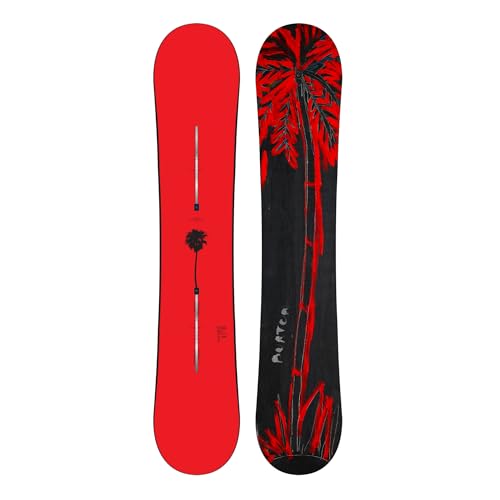
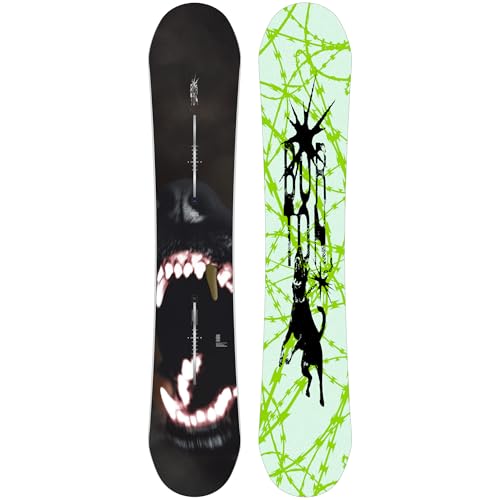
As an Amazon Associate we earn from qualifying purchases at no extra cost to you. Ratings are shown as listed on Amazon.
Quick picks by riding situation
| Rider or terrain | Useful board specification | Good real-world examples | Why it works |
|---|---|---|---|
| First board, groomers, mixed conditions | Directional twin or true twin; medium-soft flex; camber between 2 and 5 mm; 152–158 cm for many average-sized adults | Burton Ripcord, Salomon Sight, K2 Raygun | Easy turn initiation, manageable edge hold, and enough stability to progress |
| Beginner who wants one board for several seasons | All-mountain directional twin; medium flex; 154–160 cm; waist width matched to boot size | Burton Process, Salomon Assassin, Jones Mountain Twin | More carving support and speed stability without becoming difficult to control |
| Park, jumps, rails, and switch riding | True twin; soft-to-medium flex; 148–156 cm; traditional camber or hybrid camber | Salomon Huck Knife, Capita Defenders of Awesome, GNU Head Space | Balanced takeoffs, predictable switch landings, and easier presses |
| Freeride and powder | Directional shape; medium-stiff flex; 156–166 cm; 10–30 mm setback; wide or tapered nose | Jones Frontier, Burton Skeleton Key, K2 Excavator | Better float, tracking, and stability in uneven snow |
Those examples are starting points, not automatic recommendations. The correct size depends on body weight, boot size, riding level, and the manufacturer’s size chart. A very light rider on a long, stiff board may struggle more than a heavier rider on the same length.
How board length changes stability and control
Longer boards have more effective edge and snow contact. That generally improves stability at speed, reduces twitchiness, and helps a board bridge chopped-up snow. The trade-off is slower turn initiation and more effort in tight terrain, trees, and beginner-level turns.
Shorter boards are easier to pivot, press, spin, and maneuver at low speed. They are often preferable for park riding or smaller riders, but going too short can make a board feel nervous during carving and less supportive on landings.
Use weight as the primary sizing variable, then check the brand chart. As a broad starting guide, many riders around 55–70 kg suit roughly 148–154 cm, riders around 65–80 kg often suit 152–158 cm, and riders around 75–95 kg commonly look at 156–162 cm. These ranges overlap because board shape and intended use matter. A powder board may be longer than a park board for the same person.
Width is a boot-fit decision, not a style preference
A board that is too narrow allows the toe or heel of the boot to drag during a deep carve. A board that is too wide takes more effort to roll from edge to edge. Most adult riders should choose a regular-width board when wearing boots below approximately US men’s 10, a mid-wide or wide model around US men’s 10–11, and a wide model from about US men’s 11 upward. Women’s and youth sizing follows different boot dimensions.
A small amount of overhang is desirable; the boot should not extend so far that it touches the snow before the edge does. Binding angle also affects clearance. Before buying, compare the board’s waist width with the outer length of the actual boot, not merely its stated shoe size.
Shape: twin, directional twin, or directional?
True twin
The nose and tail have matching length, flex, and contact geometry. This is the simplest choice for riding switch, park laps, spins, and balanced landings. A true twin is also friendly to beginners who have not yet settled into a preferred stance.
Directional twin
The board remains capable of switch riding but has a subtly longer nose, a different flex pattern, or a modest setback. It is a strong one-board solution because it combines switch capability with improved stability and float.
Directional and tapered shapes
A directional board places more surface area in front of the front foot and often narrows toward the tail. The nose rises over powder while the tail sinks slightly, reducing the need to lean back. This is excellent for freeride terrain but less convenient for frequent switch riding and symmetrical park work.
Flex and profile determine how forgiving the board feels
Soft flex is easy to bend and forgiving when technique is still developing. It suits low-speed turns, presses, buttering, and casual park riding, but it can feel unstable during fast carving or rough landings. Medium flex is the most versatile range for an all-mountain board. Stiff flex rewards deliberate input with strong edge hold and landing support, yet it magnifies mistakes and is usually a poor first choice.
Profile describes the board’s curve when viewed from the side:
- Traditional camber: arched between the bindings, with strong edge engagement, rebound, and carving power. It is precise but less forgiving if a rider catches an edge.
- Rocker: lifted contact areas that make turn initiation and powder riding easier. Full rocker can feel loose at speed.
- Rocker-camber-rocker: camber underfoot with lifted tips. This hybrid gives a useful compromise between grip, forgiveness, and float.
- Flat or flat-rocker: predictable and stable underfoot, but usually less energetic than camber and less naturally buoyant than a strongly rockered powder shape.
For a first board, mild hybrid camber or a forgiving flat-rocker profile is usually easier to live with than aggressive full camber. Park riders often prefer camber or hybrid camber for pop and edge control, while powder-focused riders usually benefit from rocker in the nose.
Base materials: speed, repairability, and maintenance
Extruded bases are made by pressing polyethylene into a sheet. They are slower than premium sintered bases, but they are inexpensive, durable, and easier to repair. They suit beginners, occasional riders, and people who do not want frequent waxing.
Sintered bases absorb wax and can glide faster, particularly in cold or variable snow. They also require more regular waxing and show dry, pale patches quickly when neglected. A deep gouge may need professional repair. Some boards use premium sintered blends with added carbon or other materials; these can be fast but do not eliminate the need for maintenance.
For a rider making ten days per season, an extruded base can be the more sensible ownership choice. For frequent riding, racing, long traverses, or speed-focused freeriding, a sintered base is worth considering.
A practical decision matrix
| Your priority | Length choice | Flex and shape | Best board category |
|---|---|---|---|
| Lowest learning curve and occasional trips | Middle of the weight-chart range | Soft-medium, twin or directional twin, extruded base | Forgiving all-mountain beginner board |
| Carving groomers and riding fast | Middle to upper end of the chart | Medium, camber or hybrid camber, sintered base | All-mountain or freeride board |
| Rails, boxes, spins, and switch | 2–5 cm shorter than an all-mountain choice | Soft-medium, true twin, centered stance | Park or freestyle board |
| Frequent powder and natural terrain | Upper half of the chart, unless using a volume-shifted board | Medium-stiff, directional, rockered or tapered nose | Freeride or powder board |
What wears first and how to protect the board
Edges can rust when a wet board is stored in a bag. Dry the board after every day, especially around the bindings, and store it unzipped in a dry place. Base scratches are common around rocks and thin coverage; minor scratches can be filled, while large gouges should be repaired before they reach the core.
Wax when the base looks pale, feels slow, or has been ridden for roughly three to five full days. Hot waxing lasts longer than spray-on alternatives. Scrape excess wax from the base and clear it from the edges. Keep bindings tight, but do not overtighten screws into the board. Inspect straps, buckles, and ratchets because these inexpensive parts often need replacement before the board itself is worn out.
One common mistake is buying a powder board as a first and only board because it looks specialized. It may float beautifully but be awkward for switch riding, park practice, and crowded groomers. Another is choosing a board by height alone. Weight, boot clearance, and intended terrain produce a much better match.
Bottom line
Choose a medium-flex directional twin with a forgiving hybrid profile for the broadest beginner-to-intermediate use. Choose a shorter true twin for park progression. Choose a directional, tapered, rockered-nose board for regular powder. Once length, width, shape, flex, profile, and base material agree with your terrain and technique, the board will feel more stable, carve more predictably, and require less effort to control.

Write Your Review
No reviews yet. Be the first to share your experience!