

Key takeaways
- Do not install a thermostat before confirming whether the equipment is a heat pump or conventional system.
- Do not place the thermostat near a kitchen, sunny window, exterior door, or supply register.
- Do not create aggressive temperature setbacks if your system uses a slow heat pump or hydronic heating; recovery may trigger expensive auxiliary heat.
- Clean the thermostat face with a soft, dry cloth. Do not spray cleaner into the housing.
- Replace sensor batteries when alerts appear rather than ignoring intermittent readings.
- Review the schedule after daylight-saving changes, household routine changes, or a move to working from home.
- Keep the old thermostat and label in case the smart model must be removed or returned.
The best smart thermostats in 2026 are the ecobee Smart Thermostat Premium for multi-room comfort, Google Nest Learning Thermostat for guided scheduling, Honeywell Home T9 for room-by-room control, and Sensi Touch 2 for affordable DIY installation.
The right choice depends less on the thermostat’s display and more on four practical questions: does your HVAC system provide a compatible power connection, do you need independent room sensors, which smart-home platform do you use, and will you actually maintain a schedule? Check those points before comparing design or app features.
Our top picks
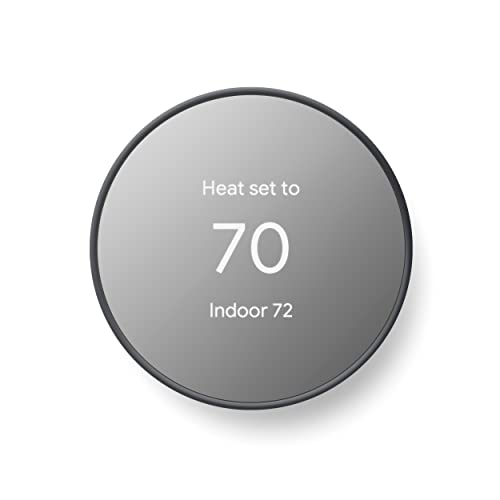


As an Amazon Associate we earn from qualifying purchases at no extra cost to you. Ratings are shown as listed on Amazon.
Best smart thermostats by situation
| Situation | Best fit | Why it makes sense | Typical price range |
|---|---|---|---|
| Several rooms need different temperatures | ecobee Smart Thermostat Premium | Includes a room sensor and supports additional sensors, occupancy detection, and broad HVAC compatibility | $180–$250 |
| You want automated learning rather than detailed programming | Google Nest Learning Thermostat | Builds a schedule from usage patterns and supports remote sensors | $200–$280 |
| You want room prioritization without paying for a premium display | Honeywell Home T9 | Uses wireless room sensors to average or prioritize selected spaces | $120–$220 |
| You want a conventional DIY replacement | Sensi Touch 2 | Familiar wall-thermostat controls, a clear touchscreen, and optional room sensors | $100–$170 |
| You have a tight budget and a straightforward system | Basic programmable Wi-Fi thermostat | Can provide remote control and scheduling without occupancy or multi-room features | $50–$100 |
ecobee Smart Thermostat Premium: best for whole-home comfort
The ecobee Smart Thermostat Premium is the strongest choice when the temperature at the hallway thermostat does not represent the rooms you use most. It ships with one SmartSensor and can use additional sensors to measure temperature and occupancy elsewhere in the home. You can set a bedroom, office, nursery, or living area as the priority space instead of allowing one central thermostat to control everything.
It works with conventional heating and cooling systems, heat pumps, dual-fuel systems, humidifiers, dehumidifiers, and ventilators, although the exact terminal requirements vary by installation. A C-wire is normally expected, but ecobee includes a Power Extender Kit for some systems without a C-wire. That is not universal insurance: systems with unusual wiring, proprietary equipment, or insufficient transformer capacity may still need an HVAC professional.
Its main ownership advantage is flexibility. You can create comfort settings such as Home, Away, and Sleep, add time-based schedules, and review energy reports. The main drawback is cost: sensors add expense, and the most useful setup often requires two or more sensors. Expect roughly $180 to $250 for the thermostat and about $50 to $100 per additional sensor, depending on the package.
Google Nest Learning Thermostat: best for adaptive scheduling
The Google Nest Learning Thermostat suits households that prefer the thermostat to build a routine instead of requiring a detailed weekly program. It can learn preferred temperatures, detect activity, use geofencing through connected phones, and adjust operation around periods when the home is empty. A compatible Nest Temperature Sensor can shift control toward a selected room at a chosen time.
Nest is particularly appealing if your household already uses Google Home. It also supports remote control, alerts, and energy-history features through the Google Home ecosystem. However, “learning” is not the same as room-by-room zoning. A sensor reports conditions in another room; it does not independently heat or cool that room when the rest of the system is running. If your home has major temperature differences, airflow or insulation work may be more effective than buying extra sensors.
C-wire compatibility deserves close attention. Some Nest installations can operate without a C-wire, but power-sharing behavior depends on the HVAC equipment and wiring. Heat pumps, multi-stage systems, and systems that repeatedly restart or show low-power warnings deserve extra caution. Verify compatibility with the official checker and photograph the existing wiring before removing the old thermostat.
Honeywell Home T9: best for practical room prioritization
The Honeywell Home T9 is a good middle ground for buyers who want remote room sensors but do not need an especially elaborate smart-home platform. Its wireless sensors can measure temperature and occupancy, allowing the thermostat to focus on selected rooms during a schedule period. That is useful when the home office is occupied during the day but the bedroom matters more at night.
The T9 supports many conventional forced-air systems and heat pumps. A C-wire is generally required for the thermostat, so it is less convenient than models that include a power adapter for selected no-C-wire installations. Check whether your system has single- or multi-stage heating and cooling, auxiliary heat, or accessories such as a humidifier before ordering.
Its limitation is ecosystem depth. The app handles the important tasks—schedules, remote adjustments, alerts, and sensor selection—but buyers seeking extensive automation may prefer ecobee or a thermostat that fits their existing smart-home platform more closely.
Sensi Touch 2: best value for straightforward systems
The Sensi Touch 2 is a sensible choice when you want Wi-Fi control and a readable touchscreen without paying for advanced occupancy features. It supports seven-day scheduling, temporary holds, remote adjustments, and energy-use information. Optional room sensors are available for compatible setups, but the product is most attractive when the thermostat’s location already represents the home reasonably well.
Many Sensi installations require a C-wire. The brand offers models and installation arrangements for certain systems without one, but do not assume that every Sensi thermostat has the same power requirements. Confirm the exact model, especially if you have a heat pump, electric auxiliary heat, or a two-transformer system.
Compared with premium alternatives, the Sensi’s value comes from simplicity rather than sophisticated automation. It is often the better purchase for a smaller home, a rental where you want reversible changes, or a household that will use a fixed schedule and rarely adjust settings from an app.
C-wire and HVAC compatibility: the check that prevents most bad purchases
A smart thermostat needs continuous power for its display, Wi-Fi radio, processor, and sensors. The C-wire, or common wire, normally supplies that continuous return path. Older thermostats often use only power during a heating or cooling call, so they may not have a C-wire connected.
- Turn off HVAC power at the service switch or breaker.
- Photograph the existing terminals, including every wire and its label.
- Identify the system type: conventional furnace and air conditioner, heat pump, boiler, electric baseboard, dual fuel, or equipment with accessories.
- Use the manufacturer’s compatibility checker rather than matching wire colors alone.
- Check the indoor equipment control board if the wall box lacks a C-wire; an unused conductor may be tucked behind the thermostat.
- Hire an HVAC technician for proprietary communicating systems, unfamiliar wiring, or equipment that controls humidification, ventilation, or multiple transformers.
Never rely on the wire color as proof of function. Installers may repurpose conductors, and a blue wire is not automatically a C-wire.
Room sensors: what they can—and cannot—solve
A sensor changes which room the thermostat considers when deciding whether to run the system. It does not add a new duct, radiator, or zone damper. If a sunny upstairs room is 6°F warmer than the hallway, a sensor may improve the control decision, but the room can still lag if the ductwork is undersized or the door remains closed.
For a two-story home, begin with one sensor in the most-used room upstairs and one in the main living area. Avoid placing sensors above radiators, near supply vents, in direct sun, or on an exterior wall. Mount them at roughly chest height, away from drafts. Batteries commonly last around one to two years, but cold locations, weak wireless signals, and frequent occupancy detection can shorten that period.
Scheduling and energy reports: a useful calculation
Energy reports are most useful for comparing your own patterns, not for promising a fixed saving. Suppose a home’s heating system averages 2.5 kW while running, operates 8 hours per day, and electricity costs $0.20 per kWh:
2.5 kW × 8 hours × $0.20 = $4.00 per day.
If a schedule reduces runtime by 45 minutes per day:
2.5 kW × 0.75 hours × $0.20 = $0.38 per day, or about $11.40 per 30 days.
That is an illustration, not a guarantee. Real results depend on outdoor temperature, insulation, equipment efficiency, humidity, and whether the thermostat’s reported runtime includes auxiliary heat. Use the report to spot unusual operation—for example, a heat pump using auxiliary heat too often—rather than treating it as a precise utility bill forecast.
Installation and ownership mistakes to avoid
- Do not install a thermostat before confirming whether the equipment is a heat pump or conventional system.
- Do not place the thermostat near a kitchen, sunny window, exterior door, or supply register.
- Do not create aggressive temperature setbacks if your system uses a slow heat pump or hydronic heating; recovery may trigger expensive auxiliary heat.
- Clean the thermostat face with a soft, dry cloth. Do not spray cleaner into the housing.
- Replace sensor batteries when alerts appear rather than ignoring intermittent readings.
- Review the schedule after daylight-saving changes, household routine changes, or a move to working from home.
- Keep the old thermostat and label in case the smart model must be removed or returned.
Bottom line
Choose the ecobee Smart Thermostat Premium for the most capable multi-room setup, Google Nest Learning Thermostat for adaptive scheduling and Google Home integration, Honeywell Home T9 for focused room prioritization, and Sensi Touch 2 for affordable control of a conventional HVAC system. The best smart thermostats are not necessarily the ones with the most features; they are the ones whose power requirements, sensors, controls, and HVAC compatibility match how your home is actually heated and used.

Write Your Review
No reviews yet. Be the first to share your experience!