

Key takeaways
- 80–180 lumens: suitable for small, light-colored artwork.
- 150–300 lumens: a sensible range for many medium photographs and prints.
- 300–600 lumens: useful for larger, darker, or more textured artwork.
- 600–1,200 lumens: generally better delivered through two or more fixtures over oversized pieces.
The best picture lights match the light’s width to the frame, deliver enough brightness without glare, use a warm color temperature that flatters artwork, and offer a power setup you can live with.
For most framed horse portraits, landscapes, and family photographs, choose a light about half to two-thirds the width of the frame, with adjustable output around 200–500 lumens and a color temperature between 2700K and 3000K. Small frames need compact, low-output lights; oversized artwork needs either a wide fixture or two evenly spaced lights.
Our top picks


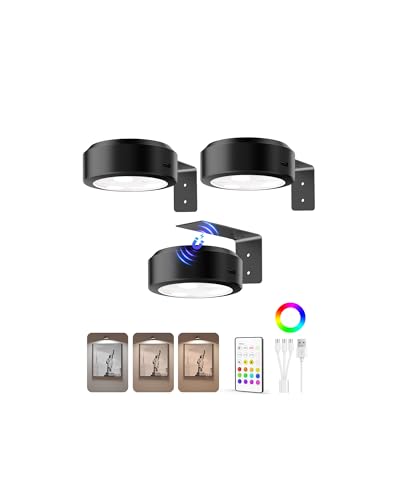
As an Amazon Associate we earn from qualifying purchases at no extra cost to you. Ratings are shown as listed on Amazon.
Best picture lights by frame size
| Frame width | Recommended light width | Useful brightness | Best power option | Typical finish choice |
|---|---|---|---|---|
| Up to 16 inches | 4–6 inches | 80–180 lumens | Battery or low-voltage plug-in | Brass, black, or aged bronze |
| 17–28 inches | 6–10 inches | 150–300 lumens | Rechargeable battery or plug-in | Matte black, bronze, or brushed brass |
| 29–42 inches | 10–16 inches | 250–500 lumens | Plug-in or hardwired | Finish matched to frame hardware |
| 43–60 inches | 16–24 inches, or two lights | 450–800 lumens | Plug-in or hardwired | Black, bronze, or polished metal |
| Over 60 inches | 24–36 inches, or multiple fixtures | 700–1,200 lumens total | Hardwired preferred | Architectural finish coordinated with the room |
These are starting points rather than rigid rules. A dark oil painting generally needs more light than a pale watercolor, while glossy glass can require less output because reflections become distracting quickly.
Best picture lights for small artwork
For a small 8-by-10-inch photograph, miniature print, or narrow equestrian sketch, use a 4- to 6-inch picture light. A fixture wider than the frame can look visually heavy and may spread light onto the surrounding wall instead of the artwork.
Choose approximately 80–180 lumens and look for a narrow, adjustable head. Dimmability is particularly useful at this scale: a small frame can appear overlit even when a larger painting would look comfortably illuminated at the same distance.
Battery-powered lights are often the least disruptive choice for a small frame. They avoid visible cords and do not require an electrician, but check whether the light uses replaceable batteries or a rechargeable cell. A compact rechargeable unit may be convenient for occasional display, whereas replaceable batteries are easier to keep running in a guest room, hallway, or seasonal decorating area.
Best picture lights for medium frames
Frames between 17 and 42 inches wide are the easiest to light successfully. A 6- to 10-inch fixture suits a smaller medium frame, while a 10- to 16-inch light usually gives more even coverage to a 30- to 42-inch piece.
For a typical horse portrait or framed print, target 150–500 lumens with a 2700K or 3000K LED. Around 2700K produces a candlelike, traditional gallery feel and works well with wood frames, sepia photography, and warm-colored interiors. Around 3000K looks cleaner and can preserve the appearance of blue skies, green fields, and white matting without feeling stark.
At this size, rechargeable lights offer a useful compromise between a clean installation and reasonable running time. Plug-in models are better for artwork that is illuminated every evening because you will not need to recharge or replace batteries. If the cord drops visibly below the frame, use a paintable cable channel rather than allowing it to hang loosely.
Best picture lights for oversized frames
Large artwork is where width and distribution matter more than maximum brightness. A single 12-inch light mounted over a 60-inch frame may create a bright center and dim edges, even if its lumen rating looks impressive.
For frames from 43 to 60 inches wide, use a 16- to 24-inch picture light or two smaller fixtures. For anything wider than 60 inches, two or three lights usually produce more balanced coverage than one extremely long bar. Space multiple lights evenly, keeping the outer fixtures far enough from the edges to avoid bright vertical bands.
Hardwired lighting is usually the most practical option for oversized artwork displayed permanently. It keeps heavy fixtures secure, removes battery maintenance, and allows a wall switch or dimmer to control the installation. A qualified electrician should handle new wiring, especially in older homes or where the wall contains uncertain wiring or plumbing.
How bright should a picture light be?
Lumens describe the amount of visible light produced; watts mainly describe energy use. For LED picture lights, compare lumens, beam spread, dimming range, and color rendering instead of choosing by wattage alone.
- 80–180 lumens: suitable for small, light-colored artwork.
- 150–300 lumens: a sensible range for many medium photographs and prints.
- 300–600 lumens: useful for larger, darker, or more textured artwork.
- 600–1,200 lumens: generally better delivered through two or more fixtures over oversized pieces.
A high-CRI LED, ideally with a color-rendering index of 90 or above, can make colors look more natural. This is especially valuable for artwork containing subtle coat colors, leather tones, foliage, and painted skies. Brightness should still be adjustable: the best picture lights are not necessarily the brightest ones.
Color temperature and glare: the details that change the result
Warm white light between 2700K and 3000K is the safest choice for most residential artwork. It complements traditional wood, bronze, and cream-colored walls. A 3500K light may suit a contemporary room with cool gray finishes, but it can make older paintings and warm mats appear dull or yellow by comparison.
Look for a shielded or diffused light source and an adjustable angle. Aim the beam downward across the artwork rather than directly toward the viewer. As a starting point, position the fixture 3–6 inches above the frame and angle it so the center of the artwork receives light without producing a reflection in the glass.
Before final installation, stand where viewers normally sit or walk. Move the light slightly forward, backward, or sideways until reflections disappear. Glossy glazing, metallic paint, and dark glass are more demanding than matte paper.
Battery, plug-in, or hardwired?
| Power type | Typical advantages | Ownership drawbacks | Best use |
|---|---|---|---|
| Replaceable battery | Fast installation; no cable | Ongoing battery cost; output may fall as batteries weaken | Small or occasional-use artwork |
| Rechargeable battery | Clean appearance; no disposable cells | Needs periodic charging; runtime varies by brightness | Medium frames and rented homes |
| Plug-in | Continuous operation; simple installation | Cord management is necessary | Frequently viewed artwork without wall wiring |
| Hardwired | Neatest permanent finish; reliable daily use | Installation cost and less flexibility | Large, valuable, or permanently displayed pieces |
To estimate rechargeable runtime, divide the stated battery capacity in watt-hours by the light’s power draw. For example, a 10-Wh battery powering a 2-W light has a theoretical runtime of five hours. Allow for driver losses and brightness controls, so practical runtime may be closer to four hours. If the light runs four hours each evening, that is about 28 hours per week; a unit rated for 30 hours may need weekly charging.
Finish choices: match the room, not just the frame
Matte black is versatile with modern frames, white walls, and black-and-white horse photography. Aged bronze works naturally with walnut, oak, leather furniture, and traditional interiors. Brass can add warmth above a gilded or cream frame, while brushed nickel suits cooler contemporary rooms.
Matching the picture light exactly to the frame is not essential. Coordinating it with nearby door hardware, curtain rods, or sconces often creates a more intentional result. Avoid a highly polished finish directly above glossy artwork if the metal itself becomes a distracting highlight.
Common mistakes to avoid
- Choosing a light as wide as the frame by default: this can overemphasize the fixture and create excessive edge spill. Half to two-thirds of the frame width is a better starting point.
- Using cool daylight LEDs: 5000K light can make a comfortable room feel clinical and may change the appearance of warm pigments.
- Ignoring the frame depth: deep frames may need a longer mounting arm or adjustable extension to cast light onto the artwork.
- Installing without checking reflections: a beautifully centered light is still unsuccessful if viewers see a bright stripe in the glass.
- Overlooking heat and ultraviolet exposure: choose modern LED lighting, avoid enclosed hot bulbs, and do not leave sensitive artwork brightly illuminated all day.
- Mounting into weak material: use appropriate anchors for plaster, drywall, masonry, or wood, particularly with long metal fixtures.
Quick buying decision
- Small frame, occasional display, no wiring: choose a dimmable 4- to 6-inch battery light at 80–180 lumens.
- Medium frame in a rental: choose a rechargeable 6- to 12-inch light at 150–350 lumens.
- Daily viewing in a family room: choose a plug-in or hardwired 10- to 16-inch LED with dimming and a CRI of 90 or higher.
- Oversized painting or gallery wall: choose multiple coordinated fixtures, 2700K–3000K, with approximately 700–1,200 lumens total.
- Traditional equestrian décor: consider aged bronze or warm brass with 2700K light.
- Modern black-and-white photography: consider matte black with 3000K light and careful glare control.
The best picture lights make the artwork the focus. Measure the frame first, select width and output for the actual size, prioritize dimming and glare control, then choose the power source and finish that suit how often the piece will be viewed.

Write Your Review
No reviews yet. Be the first to share your experience!