

Key takeaways
- Lower-density memory foam, roughly 2.5–3.5 lb/ft³: lighter, quicker to compress, and often less expensive, but more prone to body impressions over time.
- Medium-density memory foam, roughly 3.5–5 lb/ft³: a practical balance of pressure relief, resilience, and cost.
- Higher-density memory foam, above about 5 lb/ft³: substantial contouring and potentially longer wear, but more heat retention and slower movement.
- Support foam, commonly 1.5–2.5 lb/ft³: forms the structural base. Very low-density base foam can reduce edge stability and shorten useful life.
Best Memory Foam Mattresses for Comfortable Sleep
The best memory foam mattress depends on your sleeping position, body weight, temperature preference, and tolerance for a “hugging” feel: side sleepers usually benefit from a softer, pressure-relieving model, while stomach sleepers and heavier sleepers generally need firmer support and stronger edge reinforcement.
There is no single best mattress for everyone. Memory foam varies substantially in firmness, density, thickness, cooling design, and how quickly it responds when you change position. The comparisons below focus on the features that matter after the mattress is delivered—not just the materials listed on a product page.
Our top picks


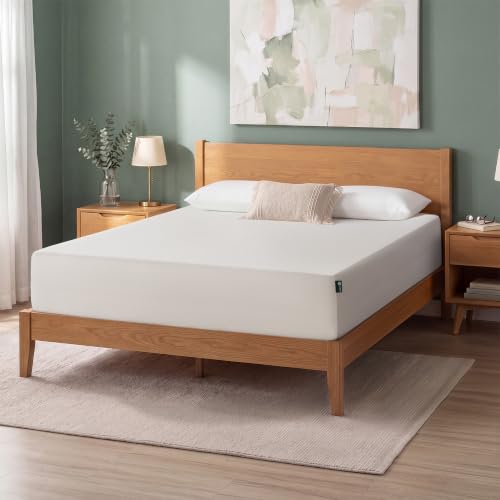
As an Amazon Associate we earn from qualifying purchases at no extra cost to you. Ratings are shown as listed on Amazon.
Quick comparison: which type suits you?
| Mattress type | Typical firmness | Foam construction | Best suited to | Main compromise |
|---|---|---|---|---|
| Soft all-foam mattress | 3–5 out of 10 | 10–14 inches; 3–5 inches of memory foam over support foam | Light- to average-weight side sleepers | More sink, warmth, and less edge stability |
| Medium all-foam mattress | 5–7 out of 10 | 10–12 inches; 2–4 inches of memory foam over high-density foam | Couples and mixed-position sleepers | May not provide enough cushioning for broad shoulders or hips |
| Firm all-foam mattress | 7–9 out of 10 | 10–12 inches; 1–3 inches of memory foam over a firm base | Stomach sleepers and people who dislike sinking | Can feel unforgiving for side sleepers |
| Memory-foam hybrid | 5–8 out of 10 | 11–14 inches; foam comfort layers over pocketed coils | Heavier sleepers, combination sleepers, and people wanting easier movement | Usually costs more and transfers slightly more motion |
| Cooling-focused foam mattress | 5–8 out of 10 | 10–14 inches; ventilated or phase-change cover with gel or open-cell foam | Warm sleepers who still want an all-foam feel | Cooling materials reduce, rather than eliminate, heat retention |
The strongest choices by sleeping situation
For side sleepers: choose pressure relief before firmness
Side sleepers need enough surface cushioning for the shoulder and hip while keeping the waist supported. A comfort layer around 3–5 inches thick, with a medium-soft to medium feel, is a sensible starting point. Very dense foam can feel comfortable initially but may make repositioning difficult if it allows the body to sink deeply.
Light sleepers often need a softer mattress because they do not compress the foam as much. Average- and heavier-weight side sleepers may need a medium or medium-firm model with zoned support so the pelvis does not sink excessively.
For back sleepers: look for even support
Back sleepers generally need a surface that cushions the lower back without allowing the hips to drop below the torso. Medium to medium-firm foam is the usual starting range. A mattress with 2–4 inches of responsive memory foam can provide contouring without the deep, slow-sinking sensation associated with thicker comfort layers.
For stomach sleepers: prioritize pelvic support
Stomach sleeping places more importance on preventing the midsection from sinking. A firmer all-foam mattress or a firm memory-foam hybrid is usually a better choice than a plush model. Look for a relatively thin comfort layer, a supportive base, and reinforced perimeter construction. If the mattress feels soft around the abdomen but firm elsewhere, it may not be a good long-term match.
For couples: motion isolation versus movement
Memory foam is particularly effective at absorbing movement. A dense, all-foam mattress normally isolates motion better than a coil-based hybrid, which can matter when one partner changes position or gets up during the night. The trade-off is slower response and weaker edge support.
Couples who use the full width of the bed may prefer a hybrid with reinforced edges. Couples who are more disturbed by movement should favor thicker, denser foam and avoid mattresses with highly responsive coil systems.
What foam density actually tells you
Foam density is not the same as firmness. Firmness describes how hard the mattress feels; density describes how much material is packed into a given volume. Higher-density memory foam often provides better contouring and durability, but it can retain more heat and feel slower to respond.
- Lower-density memory foam, roughly 2.5–3.5 lb/ft³: lighter, quicker to compress, and often less expensive, but more prone to body impressions over time.
- Medium-density memory foam, roughly 3.5–5 lb/ft³: a practical balance of pressure relief, resilience, and cost.
- Higher-density memory foam, above about 5 lb/ft³: substantial contouring and potentially longer wear, but more heat retention and slower movement.
- Support foam, commonly 1.5–2.5 lb/ft³: forms the structural base. Very low-density base foam can reduce edge stability and shorten useful life.
Manufacturers do not always publish every foam density, so do not treat an undisclosed specification as proof of poor quality. Instead, compare the warranty terms, the total comfort-layer thickness, the base design, and the clarity of the material description.
Cooling, edge support, and pressure relief: the real trade-offs
Cooling features
Cooling covers, gel infusions, graphite, copper, ventilated foam, and phase-change fabrics can improve the initial sleep surface. They cannot make a dense foam mattress behave like an open-air surface. The most effective practical improvements are breathable sheets, a supportive slatted base with adequate airflow, and avoiding an excessively thick plush comfort layer.
Edge support
All-foam mattresses commonly compress more at the perimeter than hybrids. This matters if you sit on the edge, share a smaller bed, or need the full sleeping area. A foam encasement or firmer perimeter helps, while pocketed coils usually provide stronger structural support. Edge support should be judged separately from the middle-of-the-bed feel.
Pressure relief
Pressure relief comes from the combination of material, thickness, firmness, and your body shape—not from memory foam alone. A softer mattress is not automatically more comfortable: if the pelvis sinks too far, the result may be difficult movement and an uneven sleeping posture. If your shoulder or hip contacts the firm support layer, the comfort layer may be too thin or too firm for you.
A practical decision matrix
| Your priority | Most suitable choice | Specification to seek |
|---|---|---|
| Lowest reasonable price | Medium all-foam mattress | 10–12 inches, at least 2 inches of memory foam, transparent trial and warranty terms |
| Maximum motion isolation | Dense all-foam mattress | 3–5 inches of memory foam and minimal bounce |
| Easy repositioning | Memory-foam hybrid | Pocketed coils, responsive transition foam, and reinforced edges |
| Sleeping hot | Medium-firm cooling-focused model | Breathable cover, ventilated foam, and no excessively thick plush layer |
| Higher body weight | Firm hybrid or reinforced all-foam model | 12 inches or more, sturdy base, strong edge construction, and a suitable weight rating |
| Small bedroom or narrow stairway | Compressed mattress with manageable packaged dimensions | Confirm the box size, delivery path, bed-frame dimensions, and finished mattress weight |
Ownership details that affect comfort and lifespan
Allow a compressed mattress several hours to expand before judging its feel; some models benefit from a full 24–72 hours in a warm, ventilated room. A temporary new-foam odor is possible. Remove the plastic promptly and ventilate the room rather than sleeping on the mattress while it remains wrapped.
Use a compatible foundation. Many manufacturers specify closely spaced slats, often with gaps of approximately 2–4 inches, but the exact requirement varies. Excessively wide gaps can allow sagging and may affect warranty coverage. Measure the frame before delivery, particularly for split foundations, adjustable bases, and platform beds.
The cover is usually the first easily replaceable part to wear, while the upper comfort foam is the part most likely to develop impressions. Use a washable protector, rotate the mattress only if the manufacturer permits it, and do not fold a full-size mattress for storage unless its instructions allow folding. Vacuuming the cover and treating spills quickly are safer than soaking the foam.
For a simple value calculation, divide the purchase cost by expected nights of use. A $1,200 mattress used for eight years costs about $0.41 per night: $1,200 divided by 2,920 nights. This does not make a more expensive mattress automatically better, but it helps compare durability, comfort, and warranty terms rather than focusing only on the initial price.
Bottom line
Choose a medium-soft, sufficiently thick memory-foam mattress for side-sleeping pressure relief; a medium or medium-firm model for most back sleepers and couples; and a firm hybrid or reinforced foam design for stomach sleepers, heavier sleepers, and anyone who values edge support. If you have persistent pain, numbness, or sleep problems, treat mattress selection as general comfort guidance and discuss those symptoms with an appropriate healthcare professional.


Write Your Review
No reviews yet. Be the first to share your experience!