

Key takeaways
- Weekend off-grid package: 100 Ah lithium battery, 200–400 watts of solar, LED lighting, and a 12-volt refrigerator.
- Longer remote stays: 200 Ah or more of lithium capacity, 400 watts or more of solar, a battery monitor, and a backup charging method.
- Cold-weather use: enclosed plumbing, protected water tanks, a furnace, and battery heating or a manufacturer-approved low-temperature charging system.
Best Teardrop Trailers for Comfortable Trips
The best teardrop trailers for 2026 are the nüCamp TAB 400 for maximum interior comfort, the Little Guy Max for a roomy two-person layout, the inTech Luna Rover for a lighter tow, and the Escapod Topo2 or Timberleaf Classic for serious off-grid travel. Your right choice depends less on the exterior shape than on dry weight, interior height, bed length, kitchen design, insulation, and the capability of your tow vehicle.
Quick comparison: the numbers that affect comfort
Trailer specifications can vary with options, batteries, air conditioning, and cabinetry. The figures below are approximate advertised or typical configurations, so confirm the exact build sheet before buying.
Our top picks

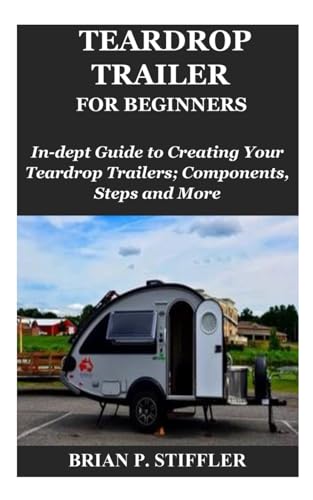
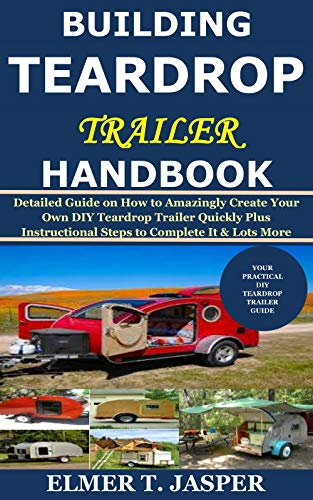

As an Amazon Associate we earn from qualifying purchases at no extra cost to you. Ratings are shown as listed on Amazon.
| Trailer | Approx. dry weight | Sleeping area | Interior height | Kitchen arrangement | Best suited to |
|---|---|---|---|---|---|
| inTech Luna Rover | About 1,800–2,000 lb | Approximately 78 x 58 in | About 5 ft 10 in | Rear galley with outdoor cooking emphasis | Light-duty tow vehicles and short trips |
| Timberleaf Classic | About 1,500–2,000 lb | Approximately 80 x 54 in | About 4 ft 10 in | Rear hatch galley | Couples prioritizing simplicity and low weight |
| Escapod Topo2 | About 2,700–3,000 lb | Approximately 78 x 60 in | About 5 ft 3 in | Outdoor rear kitchen | Frequent camping, rough roads, and four-season use |
| Little Guy Max | About 3,000–3,500 lb | Approximately 76 x 60 in | About 6 ft 7 in | Indoor galley kitchen | People who want a walk-in interior and weather protection |
| nüCamp TAB 400 | About 2,900–3,000 lb | Approximately 80 x 70 in, depending on layout | About 6 ft 6 in | Indoor kitchen with sink, refrigerator, and cooktop | Longer trips and the most home-like comfort |
Our picks by camping situation
| Your priority | Best match | Why | Main compromise |
|---|---|---|---|
| Lowest practical tow weight | inTech Luna Rover | Compact body and manageable hitch weight for many smaller SUVs | Less standing room and limited indoor cooking |
| Simple weekend camping | Timberleaf Classic | Light, straightforward, and easy to set up | No comfortable standing area or full indoor bathroom |
| Frequent off-grid travel | Escapod Topo2 | Robust construction, higher-clearance design, and strong electrical options | Higher purchase price and greater tow requirement |
| Indoor cooking and changing clothes | Little Guy Max | Tall cabin, indoor galley, and a more usable bad-weather interior | Heavier than most conventional teardrops |
| Longest, most comfortable trips | nüCamp TAB 400 | Large bed, indoor kitchen, heater, and more livable floor plan | Needs a properly equipped midsize SUV or pickup |
Head-to-head: compact teardrops versus walk-in models
Timberleaf Classic and inTech Luna Rover
Compact teardrops are easier to tow, store, and maneuver around trailheads, horse facilities, and narrow campsites. Their aerodynamic shape can also reduce the penalty of towing compared with a tall travel trailer. The trade-off is that the cabin is primarily a bedroom. You will usually sit or lie down rather than stand, and the kitchen is commonly outside under a rear hatch.
The Timberleaf Classic is appealing when low weight and a traditional rear galley matter most. The inTech Luna Rover provides a more modern aluminum-shell approach and a slightly more lounge-oriented interior. Either can work well for one or two people who spend daylight hours outside and need a dry, secure sleeping space at night.
Little Guy Max and nüCamp TAB 400
These are better choices when comfort means using the trailer during rain, cold mornings, or extended stays. Their taller interiors allow you to stand, dress, prepare food, and move around without crawling over the bed. Indoor kitchens are especially useful when campground cooking areas are muddy or wind-exposed.
The TAB 400 generally offers the more residential feel, with a larger sleeping arrangement and a more complete interior system. The Little Guy Max can be attractive for buyers who want a tall, compact trailer without moving to a full-size travel trailer. Both demand more attention to tow ratings, payload, braking, and hitch weight than a small conventional teardrop.
Escapod Topo2
The Topo2 is aimed at owners who use forest roads, dispersed campsites, and remote trail systems rather than only paved campgrounds. Its emphasis is on a durable composite body, independent suspension, ground clearance, and integrated electrical options. It is a strong choice for off-grid travelers, but its rugged equipment does not make it weightless: a capable crossover, SUV, or pickup is usually more appropriate than a small sedan.
How to match the trailer to your tow vehicle
Do not compare your vehicle with the trailer’s dry weight alone. A realistic tow calculation is:
Loaded trailer weight = dry trailer weight + water + battery + propane + food + clothing + camping equipment.
For example, a trailer advertised at 2,900 lb might gain approximately 250 lb of battery, propane, cookware, bedding, clothing, and tools, plus 166 lb if carrying 20 gallons of fresh water. That produces roughly 3,316 lb before unusual cargo. A comfortable planning margin is to keep the expected loaded weight below about 80 percent of the vehicle’s maximum rated trailer capacity, leaving room for hills, heat, wind, and equipment variation.
Also check the vehicle’s payload rating. Passengers, luggage, the hitch receiver, and the trailer’s tongue weight all consume payload. A trailer with a 350 lb tongue weight may place substantially more than 350 lb on the vehicle after a weight-distribution change, cargo rack, or full propane cylinder is added.
Insulation and off-grid equipment: what matters in practice
Insulation is more important than a shiny exterior when temperatures swing. Look for a continuous insulated shell or well-sealed composite panels, insulated roof and floor sections, thermal breaks around windows, and a properly sealed door. A small trailer can heat quickly, but it can also lose heat quickly through glass, roof vents, and an uninsulated floor.
For off-grid use, compare the complete system rather than the battery label. A 400-watt solar array can replenish roughly 1,000 to 1,800 watt-hours on a sunny day after conversion losses, depending on season and location. A 100 Ah lithium battery at 12.8 volts stores about 1,280 watt-hours in theory. A compressor refrigerator, furnace fan, lights, water pump, and device charging can consume 500 to 900 watt-hours per day; air conditioning usually requires shore power or a much larger battery-and-inverter system.
- Weekend off-grid package: 100 Ah lithium battery, 200–400 watts of solar, LED lighting, and a 12-volt refrigerator.
- Longer remote stays: 200 Ah or more of lithium capacity, 400 watts or more of solar, a battery monitor, and a backup charging method.
- Cold-weather use: enclosed plumbing, protected water tanks, a furnace, and battery heating or a manufacturer-approved low-temperature charging system.
Ownership realities buyers often miss
The bed mattress is one of the first comfort items to reveal a trailer’s limitations. Measure the actual sleeping platform, not just the exterior body, and check whether a standard replacement mattress will fit. A custom mattress can add several hundred dollars. Ask whether the dining cushions convert into the bed every night; frequent conversion is less convenient than a permanently made sleeping area.
Rear hatch seals and roof-vent seals need periodic inspection because they endure sun, dust, and repeated movement. Clean the galley after every trip, especially around the sink drain and stove, where grease and food residue attract insects. Lubricate hinges and stabilizer jacks according to the manual, inspect tires for age as well as tread, and test the electric brakes before a long journey.
Common mistakes include towing with an overloaded rear axle, leaving fresh water in the system during freezing weather, storing a trailer with a partially charged lead-acid battery, and assuming a solar panel will run air conditioning. Ask for the actual as-built weight, tongue weight, battery type, tank capacities, tire-load rating, and warranty coverage before signing a purchase agreement.
Bottom line
Choose the Timberleaf Classic or inTech Luna Rover if easy towing and simple weekends matter most. Choose the Little Guy Max when standing room and indoor cooking justify extra weight. Choose the Escapod Topo2 for repeated backcountry travel and off-grid capability. For the most comfortable extended trips in a teardrop-sized package, the nüCamp TAB 400 is the strongest fit—provided your vehicle has enough payload and towing capacity after the trailer is fully loaded.

Write Your Review
No reviews yet. Be the first to share your experience!