

Key takeaways
- Keyboard and hinges wear first. Repeated opening, crumbs, and pressure in an overfilled backpack are more common failure causes than processor age. Use a padded sleeve and avoid lifting the laptop by the display.
- Battery capacity declines. Expect gradual loss after several hundred charge cycles. Heat accelerates wear, so do not leave the computer on a bed or under clothing while charging.
- Storage fills quietly. Downloads, recorded lectures, game files, and creative projects can consume hundreds of gigabytes. Keep important work backed up separately instead of relying on one SSD.
- Ports affect convenience. A laptop with only USB-C may require a hub for projectors, USB drives, wired internet, or external displays. Budget for a reliable adapter if your course uses older classroom equipment.
- Repairs vary by design. Upgradeable memory and replaceable batteries improve long-term flexibility. Thin sealed laptops may be excellent computers but more expensive to repair outside warranty.
The best laptops for students are the MacBook Air 13-inch for most macOS users, the Lenovo IdeaPad Slim 3i Chromebook Plus for a low-cost school computer, the ASUS Zenbook 14 OLED for Windows performance in a light package, and the Framework Laptop 13 for students who value repairability over the lowest purchase price.
The right choice depends less on having the fastest processor and more on your course software, daily carrying distance, battery access, and how much storage you need. A student writing essays and attending lectures has different priorities from one running engineering simulations, editing video, or using specialist Windows-only applications.
Our top picks


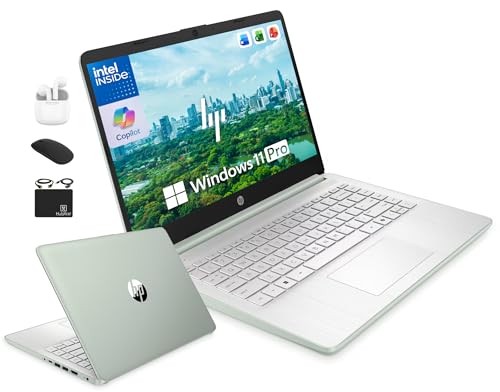

As an Amazon Associate we earn from qualifying purchases at no extra cost to you. Ratings are shown as listed on Amazon.
Best student laptops at a glance
| Laptop | Typical 2026 price range | Screen | Weight | Battery expectation | Best for |
|---|---|---|---|---|---|
| MacBook Air 13-inch (M4) | $949–$1,099 | 13.6-inch, 2560 × 1664 | 2.7 lb / 1.24 kg | About 12–16 hours of mixed work | Most students who can use macOS |
| Lenovo IdeaPad Slim 3i Chromebook Plus | $300–$450 | 14-inch, usually 1920 × 1080 | About 3.2–3.4 lb / 1.45–1.54 kg | About 8–11 hours | Web, documents, email, and tight budgets |
| ASUS Zenbook 14 OLED | $800–$1,300 | 14-inch OLED, commonly 1920 × 1200 or 2880 × 1800 | About 2.7–2.9 lb / 1.22–1.32 kg | About 9–13 hours | Windows users wanting portability and a premium display |
| Microsoft Surface Laptop 13.8-inch | $900–$1,500 | 13.8-inch, 2304 × 1536 | About 2.96 lb / 1.34 kg | About 11–15 hours | Windows productivity and long lecture days |
| Framework Laptop 13 | $900–$1,700 configured | 13.5-inch, 2256 × 1504 | About 2.87 lb / 1.3 kg | About 8–12 hours | Repairability, upgrades, and long ownership |
Battery figures are realistic mixed-use estimates rather than manufacturer maximums. Bright screens, video calls, coding workloads, gaming, poor Wi-Fi reception, and high-performance processor settings can reduce runtime substantially.
Our picks by student situation
Best overall: MacBook Air 13-inch with M4
The M4 MacBook Air is the strongest all-purpose choice for students whose required applications run on macOS. It is light enough for daily campus travel, silent because it has no cooling fan, and fast for research, office work, coding, photo editing, and moderate video projects. The 13.6-inch display provides more usable space than many inexpensive 13-inch laptops without making the computer cumbersome.
Choose at least 16GB of unified memory and preferably 512GB of storage if the laptop will last through a degree. The base storage may be adequate for cloud-based coursework, but large media files and local development tools can fill it quickly. The main limitation is compatibility: some engineering, accounting, construction, and university testing applications require Windows. Check your department’s software list before buying.
Best budget option: Lenovo IdeaPad Slim 3i Chromebook Plus
A Chromebook Plus is sensible when coursework is mainly conducted in a browser or through Google Workspace, Microsoft 365 on the web, video calls, PDF reading, and online learning platforms. The IdeaPad Slim 3i Chromebook Plus usually offers enough memory and processor performance for many browser tabs while costing far less than a premium laptop.
It is not a universal replacement for Windows or macOS. Desktop Adobe applications, many specialist engineering packages, some programming environments, and software requiring full offline installation may not work properly. Confirm that your school supports ChromeOS. Also look for a model with 8GB of RAM and 128GB or more of storage; lower specifications can become restrictive over several years.
Best Windows laptop for portability: ASUS Zenbook 14 OLED
The Zenbook 14 OLED combines a spacious 14-inch, often 16:10 display with a low travel weight. That extra vertical screen area is useful for reading articles, viewing long spreadsheets, and writing while keeping reference material visible. OLED panels provide strong contrast and attractive color, although they can consume more power at high brightness and may reflect overhead classroom lighting.
Configuration matters. A recent Intel Core Ultra or AMD Ryzen processor, 16GB of memory, and a 512GB SSD form a good student baseline. Avoid choosing a model solely for its OLED screen if it has only 8GB of memory or a small 256GB drive. For long unplugged days, reduce brightness and use an efficient power mode rather than running the processor at maximum performance.
Best for long Windows days: Microsoft Surface Laptop 13.8-inch
The Surface Laptop is a polished option for students who want a comfortable keyboard, a high-resolution touchscreen, and strong everyday battery life in a compact body. Its 3:2 display is particularly helpful for documents and web pages because it shows more vertical content than a typical 16:9 screen.
It is less appealing when you need many ports, a replaceable battery, or extensive internal upgrades. Check the processor version and application compatibility carefully, especially if selecting an ARM-based configuration: most mainstream software works well, but certain specialist tools, drivers, and accessories may need a Windows compatibility check.
Best for repairability: Framework Laptop 13
The Framework Laptop 13 costs more than basic student laptops, but its replaceable memory, SSD, battery, keyboard, and other parts can make ownership more flexible. Expansion cards let you choose the ports you need, which is useful when moving between classrooms, laboratories, and dorm desks.
Its value depends on whether you will keep and maintain it for several years. Upgrading a 512GB SSD later can be cheaper than replacing an entire computer, but repairs still require time, tools, and comfort with opening the machine. It is a particularly strong match for computer science students and anyone who dislikes disposable hardware.
Decision matrix: match the laptop to your routine
| Your situation | Recommended type | Minimum sensible specification | Why |
|---|---|---|---|
| Under $500; browser-based work | Chromebook Plus | 8GB RAM, 128GB storage, 1080p display | Low cost and simple maintenance |
| Daily walking between classes | 13–14-inch ultraportable | Under 3.2 lb, USB-C charging, 10-hour-class battery | Reduces bag weight and charger dependence |
| Engineering or specialist Windows software | Windows laptop | 16GB RAM, 512GB SSD, Core Ultra 5/Ryzen 5 class or better | Better compatibility and multitasking |
| Media, design, or large local files | MacBook Air, Zenbook, or performance Windows laptop | 16GB RAM, 512GB–1TB SSD, accurate bright display | Faster exports and more working space |
| Keeping one laptop for five or more years | Repairable or upgradeable model | Replaceable SSD and battery; 16GB RAM preferred | Extends useful life when parts wear out |
How much performance do students actually need?
For essays, presentations, web research, and video calls, a modern midrange processor with 8GB of memory can work, but 16GB is the safer 2026 choice. It prevents slowdowns when a browser, PDF reader, messaging app, and video call are open together. A 512GB SSD is a practical compromise: it leaves room for applications and files without paying premium pricing for 1TB.
Students should prioritize memory and storage before paying for a top-tier processor. A faster chip does little for a user whose computer is constantly swapping data because RAM is full. Conversely, architecture, graphics performance, and cooling matter more for 3D modeling, machine learning, gaming, and video production.
Battery life, screen size, and the real carrying cost
Battery capacity alone does not predict all-day use. A 14-inch OLED at high brightness can use more energy than a lower-resolution LCD, while an efficient processor can offset some of that difference. For a full day away from a socket, target a laptop advertised for at least 15 hours of light use, then expect roughly 60–75% of that figure in mixed student work.
Screen size is a trade-off rather than a quality ranking. A 13-inch laptop is easier to carry and usually more efficient. A 14-inch model gives noticeably more workspace while remaining portable. A 15- or 16-inch laptop suits design work and split-screen study but adds bulk; it is less convenient if you commute on foot or by bicycle.
For example, moving from a 4.5-pound laptop to a 2.8-pound model saves 1.7 pounds. If you carry it to class 180 days per academic year, that is 306 pound-days of avoided laptop weight. That is not a reason to replace a working computer by itself, but it explains why a lighter design can matter over repeated campus trips.
Ownership details that listings often omit
- Keyboard and hinges wear first. Repeated opening, crumbs, and pressure in an overfilled backpack are more common failure causes than processor age. Use a padded sleeve and avoid lifting the laptop by the display.
- Battery capacity declines. Expect gradual loss after several hundred charge cycles. Heat accelerates wear, so do not leave the computer on a bed or under clothing while charging.
- Storage fills quietly. Downloads, recorded lectures, game files, and creative projects can consume hundreds of gigabytes. Keep important work backed up separately instead of relying on one SSD.
- Ports affect convenience. A laptop with only USB-C may require a hub for projectors, USB drives, wired internet, or external displays. Budget for a reliable adapter if your course uses older classroom equipment.
- Repairs vary by design. Upgradeable memory and replaceable batteries improve long-term flexibility. Thin sealed laptops may be excellent computers but more expensive to repair outside warranty.
Bottom line
Buy the MacBook Air M4 for the best balance of weight, speed, battery life, and build quality when macOS supports your coursework. Choose a Lenovo Chromebook Plus when your work is web-based and your budget is tight. Select the ASUS Zenbook 14 OLED or Surface Laptop for a premium Windows experience, and choose the Framework Laptop 13 when repairability and long-term ownership matter most. Before ordering, verify required software, select 16GB of memory where possible, and treat battery life and carrying weight as daily-use specifications rather than afterthoughts.

Write Your Review
No reviews yet. Be the first to share your experience!