

Key takeaways
- Choose closed holes and offset G unless your teacher has a specific reason for open holes or inline G.
- Start with a C foot unless your repertoire requires low B.
- Prioritize a leak-free adjustment and comfortable hand position over silver content.
- Test soft attacks, low notes, high notes, and rapid keys before deciding.
- Confirm that the case supports the flute securely and includes a usable cover.
- Ask who will service the flute and what a standard adjustment costs locally.
- For a used flute, have a qualified repair technician inspect pads, springs, posts, tubing, and silver-plating wear before purchase.
Best Flutes for Beginners, Students, and Pros
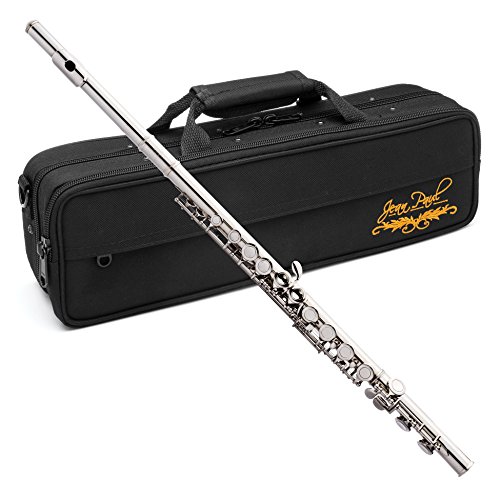
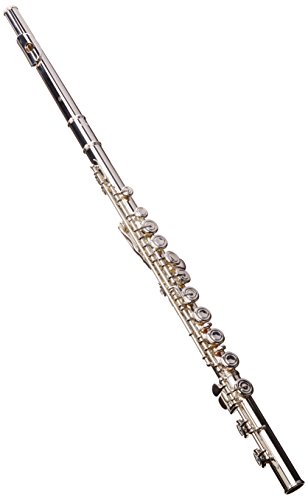
The best flutes for most beginners and advancing students are reliable silver-plated student models such as the Yamaha YFL-222, Pearl 505E, Trevor James 10X, or Gemeinhardt 2SP; serious players should compare a solid-silver headjoint and body, refined keywork, and a professional setup rather than choosing by appearance alone.
Quick recommendations by player and situation
| Player or situation | Best type of flute | Models worth comparing | Typical new-price range in 2026 |
|---|---|---|---|
| First-time school player | Silver-plated nickel-silver body, closed holes, offset G, C foot | Yamaha YFL-222, Pearl 505E, Gemeinhardt 2SP | $500–$1,000 |
| Committed student upgrading | Better mechanism, French pointed arms, optional split-E, stronger headjoint | Trevor James 10X, Yamaha YFL-312, Azumi AZ2SRB | $1,000–$2,500 |
| Advanced student or conservatory applicant | Solid-silver headjoint, usually silver-plated body, B foot optional | Yamaha YFL-412, Altus 807, Pearl 765 | $2,000–$4,500 |
| Professional orchestral or solo player | Hand-finished solid silver or mixed-metal instrument selected by tone and response | Muramatsu GX, Yamaha YFL-677, Altus 907, Powell Sonaré or professional Powell | $4,000–$15,000+ |
Prices vary considerably with precious-metal options, handmade work, regional taxes, and whether the flute is new or professionally refurbished. A well-maintained used flute from a reputable repairer can be a better purchase than a cheap new instrument with poor adjustment.
Our top picks


As an Amazon Associate we earn from qualifying purchases at no extra cost to you. Ratings are shown as listed on Amazon.
What matters more than the brand name?
Materials and tone
Most student flutes use nickel silver underneath a silver-plated finish. This is normal: it keeps the instrument durable and affordable while producing a clear, focused sound. “Silver-plated” does not mean the flute is made entirely from solid silver.
Solid-silver headjoints are the most useful material upgrade for many advancing players. They can offer a broader or more complex response, but they do not automatically make a player sound better. A precise headjoint cut, leak-free mechanism, and a player’s comfort matter at least as much.
Professional flutes may use sterling silver, gold alloys, or platinum in the headjoint, body, or keys. These materials change resistance, color, weight, and cost. They are choices to make after trying instruments, not upgrades that every student needs.
Offset G versus inline G
An offset G key sits slightly toward the player, making it easier for many smaller hands to reach. It is the practical default for beginners and is often more comfortable for players with limited finger flexibility.
Inline G keys place both G keys in one straight line. Some advanced players prefer the symmetrical feel and traditional design, but inline is not inherently more professional and can be less comfortable for certain hands. Choose based on hand position and tension, not status.
Open holes versus closed holes
Closed-hole, or plateau-key, flutes cover the tone holes with solid keys. They are simpler to seal, forgiving during the first years of playing, and usually the safest choice for a beginner.
Open-hole, or French-key, flutes have five ring keys with holes in their centers. They allow quarter tones, alternate fingerings, and some extended techniques, but only when the fingers cover the holes accurately. Removable plugs can temporarily convert an open-hole flute to a closed-hole setup.
Open holes do not guarantee better tone or intonation. A student who is still learning basic finger placement may progress faster on a closed-hole instrument. An advancing player studying orchestral, solo, or contemporary repertoire may reasonably choose open holes.
Headjoint, footjoint, and keywork choices
The headjoint determines much of the flute’s initial response. When comparing instruments, test low notes, middle-register attacks, high notes, soft playing, and quick repeated notes. A flute that feels impressive only at loud volume may become tiring in lessons or ensemble rehearsals.
A C footjoint is shorter, lighter, and standard on most beginner flutes. It reaches written middle C as the lowest note. A B footjoint adds the low B key and can help some high-register response, but it adds length, weight, and cost. It is useful for players whose repertoire requires low B; it is not essential for starting.
Look for keys that move quietly and return promptly, with consistent resistance from one register to another. French pointed arms can be attractive and may make servicing easier in some designs, but properly adjusted traditional Y-arms are also dependable. A split-E mechanism can make high E easier to center, although not every player needs it.
Best flutes for beginners
Yamaha YFL-222
The YFL-222 is a strong all-purpose student choice: silver-plated construction, closed holes, offset G, and a C foot. Yamaha’s student keywork is widely used in school programs, and replacement knowledge is common among repair technicians. It is a good fit when predictable response and easy servicing matter more than decorative features.
Pearl 505E
The Pearl 505E is another sensible student model, generally specified with closed holes, offset G, and a C foot. Pearl’s one-piece core-bar mechanism is designed to support smooth key action. Compare the actual adjustment and headjoint response of the individual flute rather than assuming two examples will feel identical.
Trevor James 10X and Gemeinhardt 2SP
The Trevor James 10X is often chosen by students who want a comfortable, responsive beginner instrument with room to develop. The Gemeinhardt 2SP remains a familiar school and private-teacher recommendation. Both are best evaluated for pad sealing, comfortable ergonomics, and service support in your area.
Best flutes for advancing students
The Yamaha YFL-312, Azumi AZ2SRB, and comparable intermediate instruments move beyond the basic student specification. Depending on the exact configuration, they may combine a solid-silver headjoint with a silver-plated body, improved keywork, and more refined tonal response.
This category is where trying before buying becomes especially valuable. A solid-silver headjoint may make one player’s soft attacks easier but another player’s sound too resistant. Decide whether you need open holes, a split-E, or a B foot before paying for them. A C-foot intermediate flute with an excellent headjoint can be more useful than a feature-heavy model that does not suit your embouchure.
Best flutes for professionals
Professional models from Muramatsu, Yamaha, Altus, Powell, and other established makers are selected for response, intonation, projection, key feel, and consistency across registers. Models such as the Muramatsu GX, Yamaha YFL-677, and Altus 907 represent different design philosophies, so there is no universal winner.
Professional buyers should compare several instruments in the same room, ideally with a trusted teacher or colleague listening from a distance. Test pianissimo attacks, sustained notes against a tuner, octave connections, fast technical passages, and the flute’s response after it warms up. Metal choice is secondary to whether the instrument gives you the color and resistance your repertoire demands.
Case, cleaning, and ownership costs
Most new flutes include a fitted hard-shell case and an outer case cover, but the quality varies. Check that the flute cannot shift inside the case, that the case closes without pressure on the keys, and that the cover has a secure handle and shoulder strap. A separate cleaning rod and cloth may be included; a floor stand, swab system, and music stand usually are not.
After every playing session, pull a clean, absorbent swab through each joint. Do not leave the swab, moisture, or loose polishing cloth packed under the flute. Avoid household silver polish, scented oils, and abrasive cloths. Never force keys that feel stuck.
The pads and corks are the first regular wear items. Frequent players may need adjustment several times per year, while an occasional player may go longer. A routine adjustment can cost roughly $75–$200, and a more extensive repad or overhaul can run from several hundred dollars to well over $1,000. Keeping the mechanism clean and avoiding temperature extremes reduces preventable problems.
A simple cost-per-use calculation
Suppose a $900 student flute is played four times per week for three school years: 4 sessions × 40 weeks × 3 years equals 480 uses. Before repairs and resale value, the instrument costs about $1.88 per playing session. That makes reliable keywork and local servicing worth more than saving a small amount on an unfamiliar bargain model.
Buying decision checklist
- Choose closed holes and offset G unless your teacher has a specific reason for open holes or inline G.
- Start with a C foot unless your repertoire requires low B.
- Prioritize a leak-free adjustment and comfortable hand position over silver content.
- Test soft attacks, low notes, high notes, and rapid keys before deciding.
- Confirm that the case supports the flute securely and includes a usable cover.
- Ask who will service the flute and what a standard adjustment costs locally.
- For a used flute, have a qualified repair technician inspect pads, springs, posts, tubing, and silver-plating wear before purchase.
For most beginners, a closed-hole, offset-G, C-foot student flute from Yamaha, Pearl, Trevor James, or Gemeinhardt is the best balance of playability and ownership cost. Students ready for a tonal upgrade should compare solid-silver-headjoint models in person, while professionals should choose by response and keywork after trying several instruments—not by material specification alone.

Write Your Review
No reviews yet. Be the first to share your experience!