

Key takeaways
- Budget: WTB Silverado Steel and the Selle Italia Model Y (about 277 g, 142 mm, made from recycled materials per BikeRadar).
- Mid-range: WTB Volt, Ergon SM Enduro and SDG Bel-Air V3.
- Premium: Ergon SM Pro, WTB Deva Titanium and Fizik Terra Aidon X5, where titanium or carbon rails and refined padding reduce weight.
If you want a quick answer, the WTB Volt suits riders who want one comfortable saddle for varied trails, the Ergon SM Pro or SM Enduro suits riders who want a relief channel and a performance feel, the SDG Bel-Air V3 suits hard riders who need durability, and the WTB Silverado suits anyone who wants a proven saddle without a big outlay. These picks come from comparing the makers’ stated specs with what BikeRadar, OutdoorGearLab and other 2026 roundups report, and they are starting points for a fit-based decision rather than a final ranking.
This page focuses on comparing the top picks side by side and explaining the trade-offs between them, in particular weight, padding, width and cost.
Our top picks

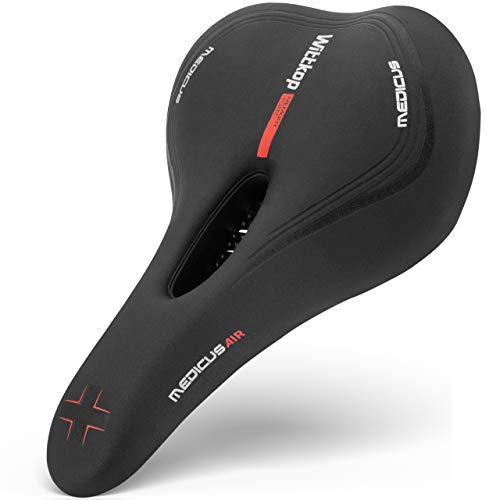


As an Amazon Associate we earn from qualifying purchases at no extra cost to you.
Top Picks Compared
| Saddle | Reported strength | Stated or reported specs | Trade-off |
|---|---|---|---|
| SDG Bel-Air V3 | OutdoorGearLab top pick for durability; effective relief channel per BikeRadar | Reported at about 232 g with alloy rails and 140 mm width listed in steel form at about 319 g by BikeRadar | One roundup mentions creaking complaints |
| Ergon SM Pro | Named best overall in several roundups, though many are affiliate-style | About 235 g, titanium rails, orthopedic foam and microfiber cover as reported | Firmer and lower weight limit than some rivals, reported at 220 lb |
| Ergon SM Enduro | All-day comfort with a drain-hole relief channel (BikeRadar) | 135 and 148 mm widths, about 306 g | Heavier steel-rail build |
| WTB Silverado | Value; well made with a textured top and tough edge bumpers (BikeRadar) | 135 and 142 mm widths, about 306 g for the steel version | Thin padding |
| WTB Volt | One of the comfiest per BikeRadar; several widths | 142, 145 and 150 mm, about 230 g | Not as light as titanium saddles |
| Fizik Terra Alpaca X5 | Broad sit bones, tail rise for stability | 145 mm, about 234 g | Narrow range of sizes |
| Specialized Power Comp with Mimic | Short to medium rides, soft-tissue relief | 143, 155 and 168 mm, about 234 g | Road-derived shape |
Note that weights and prices differ between sources. Singletracks lists a different Silverado weight than BikeRadar, and that page is old, so treat gram figures as approximate and rely on the maker’s current listing when you buy.
Comfort: Width, Shape and Padding
Width is the first filter
Saddle comfort begins with sit bone spacing. Mountain bike saddles generally come in narrower sizes than road saddles, with BikeRadar listing widths from 135 mm up to 160 mm among the models above. The Specialized Power Comp stretches to 168 mm for riders with broader sit bones. A bike shop can measure you in a few minutes.
Shape: flat versus curved
A flat profile, like the WTB Silverado’s flat side-to-side shape described by BikeRadar, lets you slide around freely. A curved or hammock-style top, like the SDG Bel-Air, locks you more into one position and supports the sit bones. Fizik’s Terra models use a concave shape from nose to tail for stability.
Padding: thin and firm usually wins
Several reviewers note that firm, well-shaped saddles feel better after hours than very soft ones, because soft foam compresses and allows pressure to build. OutdoorGearLab calls the Silverado minimally padded yet supportive, and says the Bel-Air provides excellent power transfer. Padded shorts do the cushioning work, so the saddle can stay firm.
Durability and Weight
A mountain bike saddle takes knocks that a road saddle never sees. OutdoorGearLab praised the SDG Bel-Air V3 for a vacuum-sealed seamless top with welded edges, and BikeRadar mentions Kevlar-reinforced wings on the steel version. The WTB Silverado has tough edge bumpers. Lighter titanium-rail saddles such as the WTB Deva Titanium at about 195 g and the Fizik Terra Aidon X5 at about 195 g save weight but cost more. If you ride aggressive terrain, durability is generally worth more than a few grams.
Rider weight limits matter too. OutdoorGearLab reports a limit of 260 lb for the SDG Bel-Air V3 and one source reports 220 lb for the Ergon SM Pro. Always read the maker’s stated limit before buying.
Budget, Mid-Range and Premium
- Budget: WTB Silverado Steel and the Selle Italia Model Y (about 277 g, 142 mm, made from recycled materials per BikeRadar).
- Mid-range: WTB Volt, Ergon SM Enduro and SDG Bel-Air V3.
- Premium: Ergon SM Pro, WTB Deva Titanium and Fizik Terra Aidon X5, where titanium or carbon rails and refined padding reduce weight.
Pick X If… Decision Table
| Pick this | If you… |
|---|---|
| WTB Silverado | want a low-risk, widely used saddle at a modest cost |
| WTB Volt | want a comfortable saddle with several width options |
| SDG Bel-Air V3 | ride rough terrain and want a durable cover |
| Ergon SM Enduro or SM Pro | want a relief channel and an orthopedic-foam feel |
| Fizik Terra Alpaca X5 | have broad sit bones and want a supportive tail |
| Specialized Power Comp | spend long seated stretches and want soft-tissue relief |
How the Top Three Differ in Practice
SDG Bel-Air V3: the durable all-rounder
OutdoorGearLab describes the Bel-Air V3 as the most durable saddle in its mountain bike group, with a hammock-style profile that supports the sit bones and a top that resists tearing. BikeRadar adds that the padding blends comfort with support and the relief channel is effective. The trade-off is weight in the steel-rail version, and one roundup mentions reports of creaking after little use, so inspect the clamp area if you hear noise. Riders who crash or scrape rocks often will value the toughness more than the extra grams.
Ergon SM family: relief channel and orthopedic foam
The SM Enduro and SM Pro share a focus on pressure relief. BikeRadar lists the Enduro with a channel and drain hole for all-day comfort, and other roundups report the SM Pro with orthopedic foam and titanium rails at a lower weight. One reviewer calls it firmer than the WTB Volt. Because several of the strongest endorsements come from affiliate-style lists, it is sensible to weigh them against the more cautious BikeRadar and OutdoorGearLab write-ups.
WTB Volt and Silverado: the familiar shapes
WTB shapes are among the most widely fitted on production bikes. The Silverado is flat and lightly padded, and the Volt is wider across the back with a more pronounced channel. Both offer several widths, so riders with narrower or wider sit bones can stay within one shape. For many riders, the quickest route to a good saddle is trying a WTB width that matches their measurement before moving to more expensive options.
Common Mistakes When Buying
- Buying on weight alone: A saddle that saves 40 g but does not fit will ruin a ride faster than a heavier one that does.
- Ignoring shorts: A good chamois pad changes how a firm saddle feels, so pair a new saddle with decent shorts before judging it.
- Skipping the weight limit: Titanium-rail performance saddles can carry lower limits, so heavier riders need to read the maker’s number.
- Changing everything at once: Swap one item at a time, whether saddle, height or tilt, so you know which change helped.
- Trusting old reviews: Some pages in search results are several years old and describe earlier versions, so match the current model name and version before you buy.
Fit and Care Notes
Set the saddle level, then adjust the nose by a few millimeters at a time. Move the saddle fore and aft within the rail range to fine-tune your reach and knee position. Keep the clamp area clean, tighten bolts to the torque printed on the seatpost or clamp, and inspect for cracks after crashes. If you have persistent numbness, pain or skin irritation that does not improve after adjusting, see a bike fitter and, if it continues, a doctor.
Alternatives to Consider
- Women-specific MTB saddles: BikePerfect publishes a roundup for riders who need a wider rear.
- Short-nose designs: BikeRadar covers short-nose saddles that suit riders who rotate the pelvis forward.
- Gravel-oriented saddles: The Fizik Vento Argo R1 Adaptive, listed at about 198 g in 140 and 150 mm, is described as multi-discipline.
Frequently Asked Questions
Which mountain bike saddle is the most durable?
OutdoorGearLab gave the SDG Bel-Air V3 its top pick for durability, citing a seamless top with welded edges. The WTB Silverado is also reported to have tough edge bumpers. Durability depends on how often you crash.
Is the Ergon SM Pro worth it?
Roundups that favour it cite orthopedic foam and low weight, but many of those roundups look affiliate-driven, and one review calls it firmer than the WTB Volt. Try it if you like a firm, performance-focused feel and your weight is within the maker’s limit.
How wide should a mountain bike saddle be?
Most listed models run from about 135 to 150 mm, with a few wider at 160 or 168 mm. Pick by sit bone measurement, not by body size alone.
Does a relief channel help?
Many riders find it reduces pressure on soft tissue, and reviewers repeatedly praise channels on the Ergon SM and SDG Bel-Air saddles. If you have ongoing discomfort despite a good fit, consult a doctor.
Is the WTB Silverado good enough?
BikeRadar calls it well made for its reasonable price and OutdoorGearLab notes that it is a common factory fitting. It is thinly padded, so riders who want cushioning may prefer the Volt.
Why do sources list different weights for the same saddle?
Weights depend on rail material and version, and older reviews may describe earlier generations. Compare like-for-like versions and use the maker’s listing for the exact figure.









Write Your Review
No reviews yet. Be the first to share your experience!