

Key takeaways
- Gold lacquer: common, practical, and relatively easy to maintain.
- Clear lacquer: shows the natural brass color and offers similar everyday protection.
- Silver plate: can feel distinctive and is often associated with specific professional designs, but tarnish requires polishing.
- Unlacquered brass: develops character over time but may not suit players who want a uniform appearance.
The best alto saxophones for beginners and professionals are usually chosen by matching key action, intonation, construction, mouthpiece flexibility, and long-term repairability to the player’s budget and playing schedule—not simply by choosing the most expensive instrument.
Our top picks
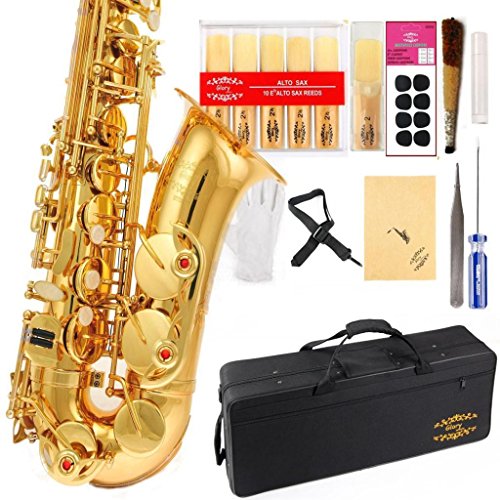
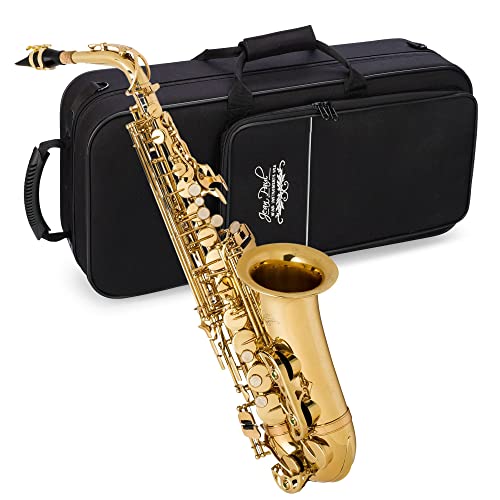

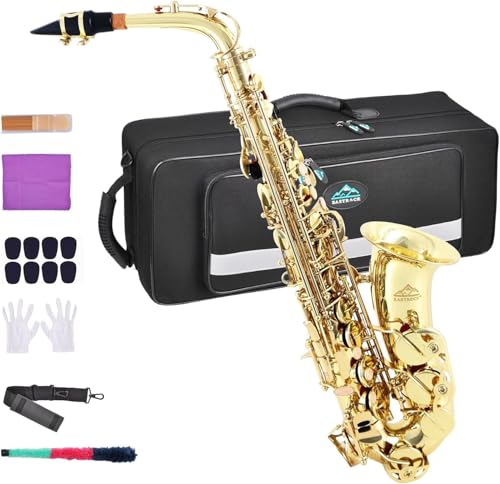
As an Amazon Associate we earn from qualifying purchases at no extra cost to you. Ratings are shown as listed on Amazon.
Quick picks by player and budget
| Player situation | Recommended type or model | Typical market range in 2026 | Why it fits |
|---|---|---|---|
| First student, careful budget | Reliable lacquered student alto; Yamaha YAS-280 or Jupiter JAS700 | $900–$1,500 new | Predictable keywork, manageable resistance, and strong repair support |
| Serious student or advancing player | Yamaha YAS-480 or comparable intermediate model | $1,500–$2,500 new | More adjustment range and a platform that can remain useful after school-level playing |
| Classical or jazz player upgrading | Yanagisawa A-WO1 or Selmer Paris Axos | $2,000–$3,500 new | Refined response, accurate tone holes, and more developed tonal character |
| Working professional | Yamaha YAS-62, Yanagisawa A-WO10/A-WO20, or Selmer Paris Series II | $3,000–$6,000 new | Consistent intonation, durable mechanisms, and broad mouthpiece compatibility |
| Classical specialist or premium buyer | Yamaha YAS-875EX or comparable professional alto | $4,000–$7,000 new | Precise response and a tonal design aimed at demanding ensemble work |
Prices vary substantially by country, finish, accessories, and whether the saxophone is new or professionally serviced. A well-maintained used professional instrument can outperform a neglected new student model, but beginners should budget for an inspection by a qualified repair technician.
What matters most when choosing an alto saxophone?
1. Key action and mechanical consistency
Key action is the amount of movement and resistance you feel when pressing the keys. A beginner alto should not feel stiff, noisy, or uneven from one register to another. Light action can make fast passages easier, but excessively loose keys may feel unstable and can develop leaks if adjustment is poor.
Check that the palm keys, side keys, low C, low B, and low B-flat close cleanly without excessive finger force. On a properly adjusted saxophone, the low notes should speak without repeated attempts, and the octave key should change registers cleanly rather than producing squeaks or delayed response.
Professional models often offer more refined key geometry and tighter tolerances. That does not automatically make them easier for a new player: some have a quicker, more immediate response that reveals poor embouchure control. For most students, predictable resistance is more useful than maximum speed.
2. Intonation
Intonation describes how accurately the saxophone plays in tune across its range. Alto saxophones are not perfectly in tune at every fingering, so players adjust individual notes with air support, voicing, and embouchure. A good instrument gives you a manageable starting point rather than eliminating the need to listen.
Student models from established manufacturers generally provide dependable intonation when paired with a suitable mouthpiece. A poorly matched mouthpiece can make the instrument seem out of tune: an excessively open or bright setup may push certain notes sharp, while a very closed or resistant setup can make the sound flat and constricted.
If possible, test sustained middle-register D, palm-key notes, low C, and the upper register with a tuner. Look for consistent tendencies rather than demanding that every note display exactly zero cents. A teacher can also identify whether the problem lies in the saxophone or the player’s voicing.
3. Brass, lacquer, and other finishes
Most alto saxophones are made from brass, an alloy chosen for its workable strength and acoustic behavior. “Lacquered brass” means the brass body has a thin protective finish, commonly a clear or gold-colored lacquer. The lacquer is not the primary sound-producing material.
Unlacquered brass develops a patina as it ages and requires more attention to surface appearance. Silver-plated instruments have a different feel and appearance, while nickel-plated keywork is valued for durability. Finish can influence a saxophone’s response and projection through the complete construction, but finish color alone is not a reliable way to predict tone.
- Gold lacquer: common, practical, and relatively easy to maintain.
- Clear lacquer: shows the natural brass color and offers similar everyday protection.
- Silver plate: can feel distinctive and is often associated with specific professional designs, but tarnish requires polishing.
- Unlacquered brass: develops character over time but may not suit players who want a uniform appearance.
Do not pay a large premium solely for a decorative finish. Spend first on accurate construction, a good neck fit, dependable pads, and local repair support.
Best alto saxophones by experience level
For beginners: Yamaha YAS-280 and Jupiter JAS700
The Yamaha YAS-280 is a widely used student design with comfortable ergonomics, reliable intonation, and a neck receiver intended to make assembly and handling less intimidating. Its response is generally forgiving, which matters more to a first-year player than advanced tonal complexity.
The Jupiter JAS700 is another sensible student-level option. Jupiter instruments are commonly supported through school and band-instrument service networks, and the model’s keywork is designed for regular educational use. Choose between these instruments based on the condition of the individual saxophone, the quality of local servicing, and which neck and mouthpiece feel more natural.
For a beginner, avoid buying based on a low sticker price if the saxophone has leaking pads, bent rods, or keys that do not close evenly. A repair bill can erase the initial saving.
For intermediate players: Yamaha YAS-480
The Yamaha YAS-480 is aimed at players who have developed stable breath support and want a more capable instrument without immediately moving to a premium professional model. Its design provides a useful transition in response and keywork, and it can accommodate the player’s changing preferences as technique improves.
An intermediate saxophone is worthwhile when the player practices several times per week, performs regularly, and has identified limitations in the current instrument. If lessons are infrequent and practice is occasional, upgrading the mouthpiece and having the existing saxophone adjusted may produce more improvement per dollar.
For advanced and professional players: Yamaha, Yanagisawa, and Selmer Paris
The Yamaha YAS-62 is a versatile professional-level choice with a focused, dependable response suited to many styles. Yanagisawa’s A-WO series is known for careful mechanical work and consistent manufacturing, with models such as the A-WO1 offering a relatively direct route into professional construction and higher models adding different materials and finishing details.
The Selmer Paris Axos offers a professional-oriented design at a lower price than some of the company’s top models. The Selmer Paris Series II remains a significant reference for classical players who want a centered, controlled sound. Yamaha’s YAS-875EX is another premium option, especially for players prioritizing precise response in classical and concert-band settings.
At this level, there is no universal winner. A professional player may prefer the resistance and tonal color of one saxophone while another prefers a freer-blowing design. The best choice is the model that matches the player’s mouthpiece, air concept, repertoire, and ensemble role.
Mouthpiece trade-offs: the part beginners often overlook
A saxophone’s mouthpiece has a major effect on resistance, projection, articulation, and pitch. Student mouthpieces usually have moderate tip openings and predictable chambers, making them easier to control. A larger tip opening can provide more volume and expressive flexibility, but it also demands stronger embouchure control and an appropriate reed strength.
| Setup | Typical effect | Best suited to | Common drawback |
|---|---|---|---|
| Moderate tip opening, medium chamber | Balanced resistance and stable pitch | Beginners, concert band, classical study | May feel less powerful in a loud jazz setting |
| Larger tip opening with softer reed | More projection and bending flexibility | Jazz and contemporary playing | Pitch and intonation can become harder to control |
| Smaller tip opening with firmer reed | Focused response and controlled articulation | Classical solo and ensemble work | Can feel resistant if breath support is underdeveloped |
Do not change saxophone and mouthpiece at the same time unless necessary. Keeping one variable constant makes it easier to identify what actually improved. Reeds are consumables: a beginner who plays 30 minutes, five days per week may need to replace reeds every few weeks to a few months, depending on moisture, storage, and accidental damage.
Ownership costs and maintenance
Budget for a neck strap, swab, mouthpiece brush, reed case, and periodic adjustment. After playing, remove moisture from the body and neck with an appropriate swab, wipe fingerprints from the finish, and leave the case open briefly if the instrument is damp. Do not store a wet swab inside the case beside the saxophone.
The parts that commonly wear first are pads, corks, felts, springs, octave-key components, and adjustment screws. Repeatedly forcing a tight mouthpiece onto the neck can damage the cork; twisting keys sideways can bend rods; and leaving the mouthpiece attached can stress the neck receiver during transport.
As a simple ownership calculation, a $1,200 student saxophone used for three 30-minute sessions each week over three years provides about 234 playing hours. Before repairs and accessories, that is roughly $5.13 per playing hour. Practicing five times weekly would lower the figure to about $3.08 per hour, which shows why durability and serviceability often matter more than saving a few hundred dollars at purchase.
Final buying checklist
- Play low notes, middle-register notes, and palm-key notes before buying.
- Check that every key closes cleanly and that rods do not wobble excessively.
- Use the intended mouthpiece and a fresh, suitable reed during comparison.
- Ask about warranty coverage, adjustment service, and replacement parts.
- Have a used saxophone inspected by a saxophone technician before payment.
- Choose a finish for durability and preference, not because color alone promises a better sound.
For most new players, a well-adjusted Yamaha YAS-280, Jupiter JAS700, or comparable student alto is the safest starting point. Intermediate musicians should consider the YAS-480 or a similar model, while advanced and professional players can sensibly compare the Yamaha YAS-62, Yanagisawa A-WO series, Selmer Paris Axos or Series II, and Yamaha YAS-875EX by playing them with their own mouthpiece and repertoire.

Write Your Review
No reviews yet. Be the first to share your experience!