

Key takeaways
- 1.5-3 gallons: suitable for a small pellet stove or light weekly cleanup.
- 3-5 gallons: the practical range for most household fireplaces and mixed fireplace/pellet-stove use.
- 5-8 gallons: useful for large fireplaces, multiple appliances, or infrequent cleaning.
The best ash vacuums are purpose-built metal-canister models with a heat-resistant or fire-resistant filter, a sealed fine-dust system, and enough capacity for your normal cleanup load. For most homeowners, the PowerSmith PAVC101 is the most versatile choice; the Snow Joe ASHJ201 suits occasional pellet-stove maintenance and tighter budgets, while a larger ash vacuum is preferable for frequent wood-fireplace cleaning.
Our top picks
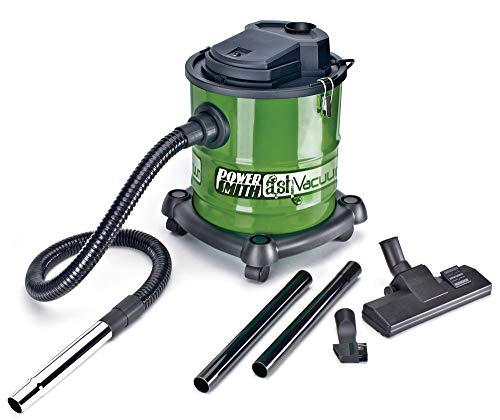


As an Amazon Associate we earn from qualifying purchases at no extra cost to you. Ratings are shown as listed on Amazon.
Best ash vacuums at a glance
| Model or type | Canister and construction | Motor / hose information | Best for | Typical market range |
|---|---|---|---|---|
| PowerSmith PAVC101 | 3-gallon metal canister; heat-resistant filter system | 10-amp motor; approximately 16-foot power cord; metal hose and attachments | Regular fireplace and pellet-stove cleanup | $70-$110 |
| Snow Joe ASHJ201 | 4.8-gallon metal tank; pre-filter and fine-dust filtration | 4-amp motor; approximately 13-foot cord; roughly 4-foot hose | Occasional cold-ash removal and larger ash volume | $55-$90 |
| Compact ash vacuum | 1.5- to 3-gallon metal container; replaceable or washable filter | Usually 3- to 6-amp motor; short hose and cord | Small pellet stoves, apartments, and limited storage | $45-$80 |
| Large commercial-style ash vacuum | 5- to 8-gallon metal container; multi-stage filtration | Often 5- to 10-amp motor; longer hose and cord | Large fireplaces, workshops, and frequent use | $100-$200 |
Specifications can differ by retailer, production run, or regional version, so confirm the manual before buying replacement filters or assuming a particular accessory is included. The figures above are useful buying benchmarks rather than a substitute for the current instruction booklet.
Our picks by cleaning situation
Best all-around: PowerSmith PAVC101
The PowerSmith PAVC101 is a strong fit for a household that cleans a wood-burning fireplace or pellet stove weekly during the heating season. Its metal body and metal hose are better suited to fireplace debris than a plastic household vacuum, and its 3-gallon capacity is large enough for routine ash beds without becoming especially awkward to carry.
The 10-amp motor gives it more suction headroom than many small ash vacuums. That matters when ash has settled into corners, around a grate, or beneath a pellet-stove burn pot. A higher-amp motor does not automatically mean better real-world pickup: a clogged pre-filter, leaking lid gasket, or overfilled canister can reduce suction quickly. Still, the PAVC101 has a useful balance of power, capacity, and portability.
Choose it when you want one dedicated vacuum for both a fireplace and pellet-stove maintenance. Before purchase, check whether the replacement filter kit available in your area includes every filter layer, because ash-vacuum filtration is a consumable ownership cost.
Best for a larger ash load: Snow Joe ASHJ201
The Snow Joe ASHJ201 offers a 4.8-gallon metal tank, giving it more capacity than the PowerSmith. That extra room is useful if your fireplace produces a deep ash bed or you prefer to clean less often. Its relatively modest 4-amp motor is adequate for loose, cold ash, but it is not the obvious choice when you need maximum suction through a long hose or are trying to collect heavier debris.
Its pre-filter and fine-dust filter arrangement is more important than the headline motor rating. The pre-filter catches larger particles before they load the fine filter, helping preserve airflow. The trade-off is that the filter needs attention after each substantial cleaning. This model makes sense for occasional fireplace use, especially when capacity matters more than compact storage.
Best for a small pellet stove: a compact metal ash vacuum
A 1.5- to 3-gallon compact model is often the better choice for a small pellet stove in a utility room or apartment. Pellet ash is usually fine and light, so a large tank adds storage bulk without necessarily improving the job. Look for a metal canister, a sealed lid, a metal or heat-resistant hose, and a dedicated fine-particle filter that can be replaced.
Do not select solely by the smallest price. Very inexpensive models may have short cords, narrow hoses, weak lid latches, or filters that are difficult to source. If you clean twice per week for five months, a $20 saving may be less attractive than a model with readily available filters and a stronger gasket.
What matters more than peak suction
Heat-resistant filtration
A suitable ash vacuum should identify its filter as heat-resistant, fire-resistant, or specifically designed for ash. This generally refers to the filter media and its ability to tolerate the intended application better than ordinary paper vacuum bags. It does not mean the machine is safe for live coals, glowing embers, or hot ash.
Fine ash can pass through inadequate filtration and return to the room as airborne dust. Prefer a model with a coarse pre-filter plus a fine-dust filter, a tight lid seal, and a filter that can be cleaned without damaging it. Washable filters reduce recurring purchases, but they must be completely dry before reinstallation. A damp filter restricts airflow and can damage the motor.
Metal canister capacity
Capacity should match both ash volume and lifting comfort:
- 1.5-3 gallons: suitable for a small pellet stove or light weekly cleanup.
- 3-5 gallons: the practical range for most household fireplaces and mixed fireplace/pellet-stove use.
- 5-8 gallons: useful for large fireplaces, multiple appliances, or infrequent cleaning.
A bigger tank does not mean you should fill it completely. Ash can block the filter long before the canister reaches its nominal capacity. Stop when airflow falls, the filter warning appears, or the ash reaches the manufacturer’s fill line.
Suction, airflow, and hose design
Amperage indicates electrical input, not a complete suction measurement. A 10-amp vacuum may have more reserve than a 4-amp unit, but hose diameter, filter condition, seal quality, and internal airflow also determine pickup. A short, relatively wide hose usually transfers suction better than a very long narrow one.
For pellet-stove cleaning, a narrow nozzle is helpful around the burn pot, but it can clog with clinkers or partially burned pellets. For a fireplace, a broader metal nozzle speeds up removal from a flat hearth. A blower function can help clear crevices, but use it only where dispersing fine ash will not contaminate the room.
Decision matrix: which ash vacuum fits you?
| Your situation | Prioritize | Most sensible choice |
|---|---|---|
| One small pellet stove, limited storage | Compact size, fine filter, replacement-filter availability | 1.5- to 3-gallon metal model |
| Wood fireplace cleaned weekly | 3- to 5-gallon tank, robust hose, strong filtration | PowerSmith PAVC101 or comparable model |
| Large fireplace cleaned only every few weeks | Capacity and pre-filtration | Snow Joe ASHJ201 or a 5-gallon-plus model |
| Multiple appliances or frequent professional-style use | Longer service life, replaceable filters, larger tank | Large commercial-style ash vacuum |
| Lowest purchase budget | Safe metal construction and available consumables | Compact dedicated ash vacuum, not a household vacuum |
Safe ash-vacuum procedure
- Wait until the appliance is fully cold. Allow at least 24 hours after a substantial fire, and longer if ash is deep or the weather is cold. If any material glows, smokes, crackles, or feels warm, do not vacuum it.
- Inspect the filter and gasket. Fit the correct filter, check that it is dry, and make sure the lid closes evenly.
- Remove large objects manually. Take out metal fragments, stones, clinker pieces, and unburned chunks that could block the hose.
- Vacuum slowly. Keep the nozzle just above the ash rather than plunging it into a dense pile. This reduces filter loading and helps prevent blockages.
- Stop before overfilling. Empty the canister outdoors into a covered metal container. Do not place ash in a plastic bin, cardboard box, or directly against a building.
- Clean the filter outdoors. Follow the manufacturer’s instructions. Avoid striking a fine filter against hard surfaces, which can damage the media and release dust.
Ownership costs and common mistakes
The filter is usually the first consumable to wear. Expect replacement intervals to depend on ash volume, filter quality, and whether the pre-filter is cleaned regularly. A simple cost calculation illustrates the point: if a vacuum costs $80 and a replacement filter costs $15 twice per heating season, the first-year equipment cost is about $110 before electricity. At 40 cleanups, that is approximately $2.75 per use. A cheaper vacuum with unavailable filters can become more expensive if it must be replaced early.
Common mistakes include using a household vacuum, vacuuming warm ash, operating without the fine filter, washing a filter that is labeled dry-clean only, and storing ash indoors after emptying the machine. Also inspect the hose for packed ash and the lid gasket for flattening. A small air leak can reduce pickup and allow fine dust to escape.
Final recommendation
For most fireplace and pellet-stove owners, choose the PowerSmith PAVC101 or a comparable 3-gallon metal ash vacuum with multi-stage, heat-resistant filtration. Pick the Snow Joe ASHJ201 when a larger tank and occasional fireplace cleanup matter more than maximum motor power. Whichever model you choose, filtration quality, cold-ash handling, replacement-filter availability, and a secure metal canister are more important than an impressive suction claim on the box.

Write Your Review
No reviews yet. Be the first to share your experience!