

Key takeaways
- Flat, maintained grass: A 17–20-horsepower lawn tractor is often adequate for a 42-inch deck.
- Thick grass or frequent towing: Consider approximately 20–25 horsepower and a sturdier transmission.
- Slopes: Prioritize a low center of gravity, wide tires, reliable braking, and the manufacturer’s slope guidance over maximum deck width.
- Uneven ground: A fabricated steel deck and larger front tires can withstand more abuse than a lightweight stamped deck, although they add weight.
- Wet areas: Avoid mowing when the surface is soft. Heavy machines can rut the lawn, and spinning tires can damage turf.
The best riding lawn mowers are matched to your yard first: choose a 30–42-inch deck for small or obstructed lawns, a 42–48-inch deck for typical suburban properties, and a 48–60-inch deck only when you have broad, relatively open ground and enough storage space.
Our top picks
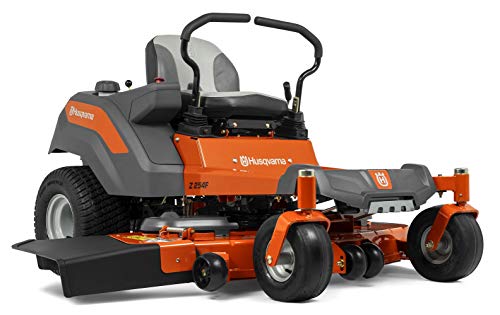


As an Amazon Associate we earn from qualifying purchases at no extra cost to you. Ratings are shown as listed on Amazon.
Quick picks by yard size
| Yard situation | Best mower type | Useful deck width | What to prioritize | Typical mowing time |
|---|---|---|---|---|
| Under 1/2 acre, trees, gates, or narrow passages | Rear-engine rider or compact lawn tractor | 30–42 inches | Small footprint, tight turning radius, easy storage | 30–60 minutes |
| 1/2–1.5 acres with mostly open grass | Lawn tractor or entry-level zero-turn | 42–48 inches | Balanced power, comfort, fuel capacity, and deck access | 45–90 minutes |
| 1.5–3 acres, open and regularly maintained | Garden tractor or residential zero-turn | 48–54 inches | Faster ground coverage, stronger transmission, wider tires | 60–120 minutes |
| Over 3 acres or large open fields | Heavy-duty zero-turn or garden tractor | 54–60 inches | Commercial-style deck, high fuel capacity, suspension, durability | 90 minutes or more |
These times are planning estimates, not guarantees. Slopes, obstacles, grass height, overlapping passes, and whether you collect clippings can change the result substantially.
Best riding lawn mowers for specific situations
Best all-around choice for a typical suburban yard: 42-inch lawn tractor
A 42-inch lawn tractor is the safest starting point for many homeowners with roughly 1/2 to 1.5 acres. Models such as the John Deere S100 and Cub Cadet XT1 LT42 represent this class. They use a conventional steering wheel, offer a familiar driving position, and generally handle mowing, light towing, and optional bagging without the learning curve of lap-bar controls.
Look for an engine in roughly the 17–22-horsepower range, a hydrostatic transmission, and a turning radius near 16–18 inches. A 42-inch deck is wide enough to reduce mowing time while still fitting through many gates and around common landscaping. It is usually a better fit than a 54-inch machine if the lawn contains garden beds, play equipment, or several trees.
Best for many obstacles: compact rear-engine rider
If the lawn is smaller than about 1/2 acre but you still want a seat and steering wheel, a 30–36-inch rear-engine rider can be more practical than a full-size tractor. Its narrower body can fit through tighter gates, and its shorter overall length simplifies garage storage. The trade-off is slower coverage and less capability for towing, snow equipment, or rough terrain.
Measure the narrowest gate and the actual storage doorway—not just the open garage bay. Allow at least 2–4 inches of clearance on each side, plus room to turn the mower inside the shed or garage.
Best for open acreage: residential zero-turn mower
A zero-turn mower is most valuable when the yard has broad, uninterrupted sections. Toro TimeCutter models and the Cub Cadet Ultima series are examples of residential zero-turn lines. Independent rear-wheel control lets the mower pivot around obstacles and reduces the uncut circles left by a tractor.
Choose a 42–48-inch deck for around 1–2 acres, or a 50–60-inch deck for larger, open properties. A zero-turn can be a poor choice for a lawn dominated by tight passages, steep banks, wet ground, or scattered ornamental beds. Lap-bar steering also takes practice; begin slowly on level ground and learn how the controls respond before mowing near fences or trees.
Best low-maintenance option where charging is practical: battery riding mower
Battery machines appeal to owners who want lower routine engine maintenance and quieter operation. The EGO POWER+ Z6 is a well-known battery zero-turn platform, while Ryobi offers 80V riding mower and zero-turn products in selected markets. Exact runtime depends on battery capacity, cutting speed, grass density, slope, and blade height.
For a battery mower, compare usable mowing time rather than a headline battery number. A homeowner cutting 3/4 acre every week may have a very different experience from someone mowing 2 acres of thick grass. Confirm that the included batteries and charger are sufficient for your area; some configurations can accept additional battery packs, while others cannot.
How deck width changes the decision
A wider deck does not always mean a faster job. Its advantage appears only when the mower can maintain speed and make broad passes. A simple estimate is:
Approximate mowing time = lawn area ÷ (deck width × ground speed × efficiency).
Efficiency accounts for turning, overlap, and obstacles. For a 1-acre lawn, assume 43,560 square feet, a 42-inch deck, a 4-mile-per-hour cutting speed, and 70% field efficiency. The theoretical result is roughly 44 minutes. In practice, slopes, trees, and trimming may push the job closer to 55–70 minutes.
Increasing the deck from 42 to 54 inches adds cutting width, but it also increases the mower’s overall width and may reduce maneuverability. If obstacles force frequent short turns, the larger machine may save less time than expected.
Terrain, engine power, and traction
- Flat, maintained grass: A 17–20-horsepower lawn tractor is often adequate for a 42-inch deck.
- Thick grass or frequent towing: Consider approximately 20–25 horsepower and a sturdier transmission.
- Slopes: Prioritize a low center of gravity, wide tires, reliable braking, and the manufacturer’s slope guidance over maximum deck width.
- Uneven ground: A fabricated steel deck and larger front tires can withstand more abuse than a lightweight stamped deck, although they add weight.
- Wet areas: Avoid mowing when the surface is soft. Heavy machines can rut the lawn, and spinning tires can damage turf.
Zero-turn mowers are highly maneuverable but require care on slopes. Their ability to pivot does not make them automatically safer on hills. For a property with significant grades, compare the operator manual’s limits and consider a tractor-style mower or a walk-behind solution for the steepest sections.
Decision matrix: which mower fits your ownership pattern?
| Your priority | Most suitable choice | Why | Compromise |
|---|---|---|---|
| Lowest purchase and maintenance complexity | 30–42-inch lawn tractor | Common parts, simple steering, broad service availability | Slower around obstacles |
| Shortest mowing time on open ground | 48–60-inch zero-turn | Fast turns and wide cutting path | More storage width and a steeper learning curve |
| Limited garage space | 30–42-inch rear-engine rider or tractor | Smaller footprint and easier maneuvering indoors | Less power and slower coverage |
| Quiet operation and infrequent engine servicing | Battery riding mower | No gasoline storage, oil changes, or spark plug replacement | Battery replacement cost and charging requirements |
| Regular towing or rougher property | Garden tractor | Heavier frame, stronger transmission, and greater stability | Higher price, weight, and turning radius |
Ownership costs and maintenance realities
Fuel is only one part of the budget. Gasoline mowers need engine oil, an oil filter on models that use one, an air filter, a spark plug, and fuel-system care. Battery mowers avoid those engine consumables but shift the long-term expense toward battery capacity and eventual battery replacement. Ask about battery warranty length, charging temperature limits, and whether replacement packs are sold individually.
The parts that commonly wear first are blades, belts, deck spindle bearings, tires, steering components, and battery packs. Blades should be inspected regularly and sharpened or replaced when cutting becomes ragged. A dull blade increases mowing time and can encourage repeated passes. Belts should be checked for cracking, glazing, or slipping, especially before the cutting season.
After mowing, remove packed grass from the deck only as directed by the manufacturer. Wet clippings hold moisture against steel, restrict airflow, and can accelerate corrosion. Never place hands near the deck while blades may move; remove the key, disconnect the spark-plug lead or battery as specified, and follow the manual’s procedure before cleaning or servicing.
Storage and buying checks
- Measure the mower’s published width with the discharge chute in its normal position.
- Check whether the deck can be raised or removed for cleaning and belt access.
- Confirm that your trailer, shed ramp, and garage floor can support the mower’s weight.
- Leave ventilation and charging clearance around a battery mower and charger.
- Check fuel stabilizer guidance if the gasoline mower will sit unused for more than a few weeks.
- Choose a seat, steering layout, and control position you can use comfortably for the full mowing session.
For most homeowners, the best riding lawn mowers are not the largest or fastest models. A 42-inch tractor is the balanced choice for a mixed suburban yard; a compact rider suits small, restricted spaces; a zero-turn earns its cost on open acreage; and a battery model is appealing when quiet operation and charging convenience matter more than unlimited runtime. Match the deck to the paths, the powertrain to the terrain, and the mower’s physical size to the place where it will live.

Write Your Review
No reviews yet. Be the first to share your experience!