

Key takeaways
- Best all-round porch option: A hardwired LED wall lantern with 800–1,000 lumens, 2700–3000K light, a dusk-to-dawn sensor, and IP44 protection.
- Best for a patio: A downward-facing or up-and-down fixture with dimming, 500–800 lumens, and a warm 2700K colour temperature.
- Best for a stable or tack-room wall: An IP65 LED bulkhead or sealed wall light producing 1,000–1,500 lumens, preferably with a shielded diffuser.
- Best where wiring is impractical: A large solar wall light with a separate panel, 600–1,000 claimed lumens, and a replaceable or readily available battery.
- Best for decorative character: A powder-coated aluminium or galvanised-steel lantern with a replaceable LED bulb and clear or frosted panels.
Best Outdoor Wall Lights for Stylish Security
The best outdoor wall lights combine 800–1,200 lumens, a weather-resistant IP44–IP65 enclosure, corrosion-resistant metal, and a warm-to-neutral colour temperature that improves visibility without glaring into windows, driveways, or a horse’s eyes.
For most porches and exterior doors, choose a mains-powered LED wall lantern with 800–1,000 lumens, an IP44 or higher rating, and a 2700–3000K light colour. Patios benefit from dimmable downward lighting, while long exterior walls, tack-room entrances, and yard gates are better served by brighter IP65-rated bulkhead or flood-style fixtures. Solar lights can work where cabling is difficult, but their brightness and runtime depend heavily on winter daylight.
Our top picks
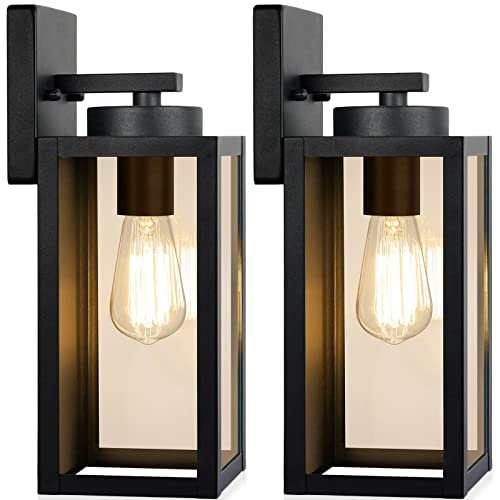


As an Amazon Associate we earn from qualifying purchases at no extra cost to you. Ratings are shown as listed on Amazon.
Quick picks by situation
- Best all-round porch option: A hardwired LED wall lantern with 800–1,000 lumens, 2700–3000K light, a dusk-to-dawn sensor, and IP44 protection.
- Best for a patio: A downward-facing or up-and-down fixture with dimming, 500–800 lumens, and a warm 2700K colour temperature.
- Best for a stable or tack-room wall: An IP65 LED bulkhead or sealed wall light producing 1,000–1,500 lumens, preferably with a shielded diffuser.
- Best where wiring is impractical: A large solar wall light with a separate panel, 600–1,000 claimed lumens, and a replaceable or readily available battery.
- Best for decorative character: A powder-coated aluminium or galvanised-steel lantern with a replaceable LED bulb and clear or frosted panels.
What matters more than appearance?
Brightness and beam direction
Lumens measure the total light produced; they do not tell you how evenly it reaches the ground. A 1,000-lumen fitting with a narrow beam may create a harsh bright spot, while a frosted 800-lumen diffuser can provide more comfortable coverage around a doorway.
As a practical guide, 400–600 lumens is adequate for a small porch or side passage. Use 700–1,000 lumens around a front door, patio steps, or a garage. Larger walls, driveways, and working areas may need 1,000–1,500 lumens or more, but several moderate lights are usually safer and more attractive than one intense floodlight.
For equestrian properties, avoid exposed high-intensity LEDs aimed towards paddocks or stable doors. Sudden glare and deep shadows can make it harder to judge steps, gates, or animals’ movement. A shielded downward beam is often more useful than maximum output.
Fixture materials and corrosion resistance
Aluminium is lightweight and widely available. Powder coating improves its resistance to rain and oxidation, but scratches or chipped edges can eventually expose the metal.
Stainless steel offers a clean modern appearance and good corrosion resistance. Look for grades intended for outdoor use; coastal air, fertiliser, and stable ammonia are demanding environments. Even stainless steel benefits from occasional cleaning.
Galvanised steel provides a tough, practical finish and suits farm buildings, barns, and utility areas. It can be heavier than aluminium and may develop surface changes over time, particularly where the protective coating is damaged.
Polycarbonate diffusers are impact-resistant and useful near yards, children’s areas, and working entrances. Clear glass often looks more premium, but it can break and shows dirt more readily. Frosted or opal diffusers hide dust while softening the light.
Understanding IP ratings
The IP code describes protection against solids and water. The first digit concerns dust and solid objects; the second concerns moisture. For example, IP44 resists objects larger than 1 mm and splashing water from all directions. IP65 adds dust-tight construction and protection against water jets.
| Location | Recommended rating | Why it suits the location | Typical output |
|---|---|---|---|
| Covered porch | IP44 or higher | Handles rain splash when the roof provides some shelter | 400–1,000 lumens |
| Open patio or exterior wall | IP54–IP65 | Better protection from wind-driven rain and dust | 600–1,200 lumens |
| Stable, wash area, or yard entrance | IP65 or higher | Sealed against dust and more resistant to hose spray | 1,000–1,500 lumens |
| Fully exposed coastal wall | IP65 plus corrosion-resistant finish | Reduces moisture and salt-related deterioration | 800–1,500 lumens |
IP ratings do not guarantee that a light will survive pressure washing, immersion, chemical cleaners, or poor installation. Keep connectors and cable entries facing downward where the design allows, and replace cracked seals.
Head-to-head: bulb, integrated LED, or solar?
Replaceable LED-bulb fittings
These use a standard replaceable lamp, commonly an E27 or E14 screw bulb depending on the fixture. Their main advantage is repairability: when the bulb fails, you replace the inexpensive consumable rather than the whole fitting. You can also change brightness or colour temperature later.
The compromise is lower efficiency in some decorative lanterns, limited space for large bulbs, and more opportunities for moisture to enter if the bulb cover is not sealed correctly. Choose an outdoor-rated LED bulb and check the fitting’s maximum wattage.
Integrated LED fixtures
Integrated LEDs usually offer a slim profile, efficient light output, and a clean appearance. They are a strong choice for contemporary porches, patios, and stable walls where a sealed unit is desirable.
When the LED module or driver eventually fails, the complete fitting may need replacement. Check whether the manufacturer specifies a replaceable driver or LED board, and avoid treating a long stated LED lifespan as a guarantee for the entire product. Gaskets, sensors, finishes, and drivers may wear first.
Solar wall lights
Solar lights avoid trenching and electrical cabling, making them useful on remote outbuildings or temporary locations. However, a claimed 1,000 lumens may describe a brief peak rather than several hours of sustained brightness. Shading, dirty panels, short winter days, and cold temperatures reduce performance.
For dependable security, favour a separate-panel model that lets you position the panel in direct sunlight while keeping the lamp under an eave. A motion sensor can conserve energy, but set the timeout carefully: a 30-second light may be sufficient for a gate, whereas a 3-minute setting is more practical beside a tack-room door.
Styles that work around horses and homes
- Lanterns: Traditional, welcoming, and well suited to porches or brick walls. Choose frosted glazing if clear glass creates glare.
- Up-and-down sconces: Attractive on rendered or modern walls, but check that the upward beam will not shine into bedrooms or neighbouring properties.
- Bulkhead lights: Rugged and practical for stables, workshops, garages, and utility entrances. Polycarbonate versions tolerate knocks better than glass.
- Adjustable flood-style lights: Best for driveways and large working areas. Use shields or careful aiming to avoid illuminating paddocks unnecessarily.
- Minimal rectangular fixtures: A good match for contemporary buildings and narrow walls where a projecting lantern could be bumped.
Installation requirements before you buy
Hardwired lights should be installed by a suitably qualified electrician in accordance with local electrical regulations. Confirm whether the fixture is designed for the existing voltage, whether an earth connection is required, and whether the mounting plate covers the old junction box.
Measure the available wall space before ordering. A light that is 300 mm tall can overwhelm a narrow porch, while a tiny 150 mm fitting may look lost beside a wide garage door. Leave enough clearance for the door swing, roof runoff, gutters, and ladders.
- Choose the mounting height. Around 1.8–2.2 metres is common for a domestic wall light, but follow the fitting instructions and account for nearby windows.
- Mark the beam direction. Aim light onto steps and walking surfaces, not directly at eye level.
- Seal the wall entry correctly. Use the supplied gasket or an appropriate outdoor-rated seal; do not block drainage paths built into the fixture.
- Set the sensor. Point motion sensors away from roads, waving branches, and busy stable areas to reduce false triggers.
- Test at night. Check glare from inside the house, shadows around steps, and whether the beam reaches the intended gate or path.
Ownership costs and maintenance
A basic decorative wall light may cost roughly £25–£70, a better sealed LED fixture around £60–£180, and a large premium or highly corrosion-resistant fitting £150–£350 or more. Installation, new cabling, switches, and wall repairs can cost more than the light itself.
For an electricity comparison, a 12-watt LED used for five hours each night consumes:
12 watts × 5 hours × 365 days ÷ 1,000 = 21.9 kWh per year.
At an example electricity rate of £0.30 per kWh, that is about £6.57 per year, before standing charges. A motion sensor reducing operation to one hour per night would use about 4.4 kWh annually, or approximately £1.32 at the same rate. Actual tariffs vary, but the calculation shows why sensors can matter more than small differences in bulb wattage.
Clean diffusers and solar panels every few months, especially near dusty yards. Remove cobwebs, inspect cable glands, and check for condensation inside the enclosure. Replace brittle seals and corroded screws promptly. Do not use pressure washers on wall lights unless the manufacturer specifically permits it.
Final buying decision
Choose a replaceable-bulb lantern for easy future repairs and classic styling; an integrated LED for a compact, modern, low-maintenance appearance; or a solar model when running mains cable is impractical. For most exposed exterior walls, prioritise IP65, a shielded 800–1,200-lumen output, a corrosion-resistant finish, and a warm or neutral colour temperature over decorative features alone. The right fixture should make entrances and paths easier to use without turning the surrounding yard into a harsh, overlit space.

Write Your Review
No reviews yet. Be the first to share your experience!