

Key takeaways
- Material: Look for galvanized steel with a rolled rim and reinforced handles. Thin sheet metal can flex when full.
- Drainage: A threaded drain near the base is much more useful than simply tipping the tub. Confirm that the plug is included and replaceable.
- Handles: Two handles help with positioning, but a full 17-gallon tub can weigh more than 150 pounds with ice and drinks. Handles are for emptying or short repositioning, not for carrying across a lawn.
- Rust prevention: Dry the tub fully after use. Scratched zinc coating, standing water, and salty melted ice are common causes of corrosion.
The best beverage tubs for parties are usually a 15- to 20-gallon galvanized or insulated tub with a drain plug, sturdy side handles, and enough depth to cover bottles and cans with ice; choose a larger stock tank for crowds and a rolling cooler when transport matters more than presentation.
Our top picks

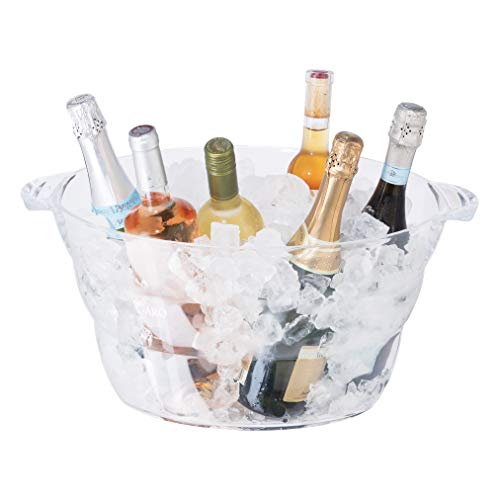

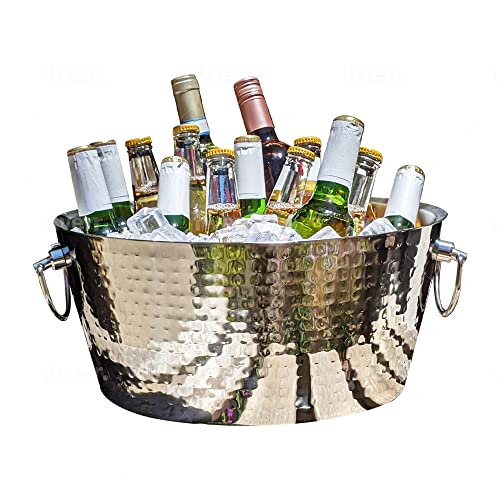
As an Amazon Associate we earn from qualifying purchases at no extra cost to you. Ratings are shown as listed on Amazon.
Best beverage tub choices by situation
| Party situation | Best tub type | Useful capacity | Why it fits |
|---|---|---|---|
| Small patio gathering, up to 12 guests | 10- to 15-gallon insulated plastic tub | 45-70 cans, or 25-35 bottles with ice | Light enough to move and easier to drain |
| Typical barbecue or barn party, 15-25 guests | 15- to 20-gallon galvanized tub | 70-100 cans, or 35-50 bottles with ice | Good balance of presentation, capacity, and durability |
| Large outdoor event, 30-50 guests | 25- to 40-gallon stock tank | 120-200 cans, or 60-100 bottles with ice | Deep, rugged, and economical per serving |
| Events where the tub must be moved often | Large wheeled cooler | 50-70 quarts, commonly 40-70 cans with ice | Wheels, insulation, and a secure lid are more valuable than decoration |
| Formal celebration or wedding drinks station | Galvanized tub with stand and drain | 15-20 gallons | Looks attractive while keeping drinks accessible |
What capacity actually means
A tub’s advertised volume is its liquid capacity, not the number of drinks it will hold once ice is added. Ice occupies substantial space, and a container filled to the rim is difficult to carry and likely to splash. For practical planning, reserve about one-third of the interior for ice and keep the waterline below the top edge.
A useful estimate is:
Drink capacity = usable tub volume ÷ the volume of one drink, after allowing room for ice and retrieval.
For example, a 17-gallon tub holds about 2,176 fluid ounces. If roughly 35 percent is reserved for ice and empty space, about 1,414 fluid ounces remain. That is theoretically enough for approximately 117 12-ounce cans, but the real-world number will be lower because cans do not pack perfectly and people need room to reach the bottom. Plan on about 75 to 95 cans, depending on the ice quantity and shape of the container.
For mixed bottles, allow more space. A 15- to 20-gallon tub is generally comfortable for approximately 30 to 50 standard bottles with ice. Tall wine or sparkling-wine bottles need a deeper vessel and may reduce the practical capacity considerably.
Galvanized steel: the best-looking all-rounder
A galvanized tub is the traditional choice for outdoor parties because it is inexpensive, rigid, and visually appropriate for patios, gardens, barns, and equestrian events. Behrens makes galvanized utility tubs in sizes commonly used for beverage service, including tubs around the 17-gallon range. Similar galvanized party tubs are available from many home and farm-supply brands.
Choose steel when appearance and durability matter, but inspect the details rather than buying by capacity alone:
- Material: Look for galvanized steel with a rolled rim and reinforced handles. Thin sheet metal can flex when full.
- Drainage: A threaded drain near the base is much more useful than simply tipping the tub. Confirm that the plug is included and replaceable.
- Handles: Two handles help with positioning, but a full 17-gallon tub can weigh more than 150 pounds with ice and drinks. Handles are for emptying or short repositioning, not for carrying across a lawn.
- Rust prevention: Dry the tub fully after use. Scratched zinc coating, standing water, and salty melted ice are common causes of corrosion.
Galvanized steel is not insulated, so it will usually need more ice than a double-wall plastic tub. It also becomes cold and wet on the outside as condensation forms. Put it on a rubber mat or a tray if it will sit on wood, a finished deck, or indoor flooring.
Insulated plastic: the practical party option
Double-wall plastic beverage tubs and large insulated coolers are better when the drinks must stay cold for several hours or the container will be handled frequently. They are lighter than steel, do not rust, and are less likely to mark a deck. The trade-off is a more utilitarian appearance and, on some models, less internal width than the outside dimensions suggest.
For a portable alternative, an Igloo MaxCold cooler in the 60-quart class provides insulation and a drain, although its lidded cooler shape is less convenient than an open beverage tub for self-service. A wheeled cooler is worth considering when the drinks must travel from a vehicle to a field, arena, or campsite.
Prioritize a wide opening over maximum stated volume. Guests can retrieve cans quickly from a broad tub, while a narrow, deep cooler may technically hold more but cause people to dig through the ice. A drain that opens without removing the contents is particularly valuable because it lets you remove meltwater while leaving the drinks in place.
Stock tanks for the biggest crowds
A livestock or utility stock tank is often the best value when appearance is secondary to capacity. Rubbermaid Commercial Products makes stock tanks in large sizes, and galvanized stock tanks are also widely sold for farm use. Depending on the model, capacities from approximately 25 to 100 gallons are available.
For beverage service, a 25- to 40-gallon tank is usually easier to manage than an oversized 50- or 100-gallon model. It can hold a large quantity of cans without requiring an unsafe lifting operation. If you need more drinks, two medium tubs are often better than one enormous tank: guests can separate alcoholic and non-alcoholic beverages, and each station remains accessible.
Most stock tanks are not designed as beverage tubs. Check for these limitations:
- Many have no drain, so you will need a siphon pump, a small transfer pump, or a planned tipping method.
- The base may be broad but not comfortable on delicate flooring.
- Metal tanks can develop sharp edges if damaged, while molded plastic tanks can crack after prolonged sun exposure or rough handling.
- Some are too deep for short guests or children to reach safely.
Drainage, handles, and the details that determine ownership
Drainage is more important than a decorative finish. Meltwater makes drinks slippery, dilutes labels, and adds weight. A low drain with a cap or valve lets you empty the tub gradually into a bucket or hose-safe area. Check whether the drain threads match a standard garden-hose fitting; proprietary or fragile plugs are more difficult to replace.
Handles should be attached through reinforced sections, not just thin sheet metal. Welded steel handles can last for years, but the attachment points may bend if someone tries to lift a full tub. Molded plastic handles should flex slightly without whitening or cracking. A full beverage tub should normally be emptied in place.
The first components likely to wear are drain washers, plastic plugs, casters, and handle fasteners. Before each event, fill the tub with water, inspect for leaks, and tighten hardware by hand. Do not overtighten plastic drain fittings, which can distort the seal.
Decision matrix: which type should you buy?
| Your priority | Recommended specification | Avoid |
|---|---|---|
| Lowest cost and occasional use | 10- to 17-gallon galvanized steel tub; removable drain plug is a bonus | Oversized tanks that require extra ice and storage space |
| Frequent parties | Double-wall insulated plastic, 12-20 gallons, with replaceable drain hardware | Uncoated steel or tubs with permanently attached, non-serviceable plugs |
| Limited patio space | Wide 10- to 15-gallon tub with a footprint under approximately 30 by 20 inches | Deep stock tanks that block walkways |
| Moving drinks across grass | Wheeled 50-70-quart cooler with large wheels and a drain | Full steel tubs with small decorative handles |
| Outdoor equestrian or farm event | 25- to 40-gallon stock tank or two 17-gallon tubs | Lightweight decorative tubs that flex when lifted |
| Presentation matters | Galvanized tub on a stable stand, with a separate ice scoop and bottle opener | Uncovered electrical coolers or containers with exposed cables |
How much ice should you use?
For pre-chilled drinks, start with roughly one part ice to two parts drinks by volume. In hot weather or when the beverages begin at room temperature, use closer to a one-to-one ratio. Block ice lasts longer, while cubed ice surrounds cans and bottles more effectively. A mixture of large pieces underneath and cubes around the drinks provides a useful compromise.
Do not fill the tub with ice before placing drinks inside. Load a bottom layer of ice, add beverages in rows, then fill the gaps and top with more ice. This reduces empty pockets and makes the contents easier to retrieve. Keep the tub shaded whenever possible; direct sun can overwhelm even good insulation.
Cleaning and storage
Drain melted ice promptly, remove labels and debris, and wash the tub with warm water and mild dish soap. Use a soft brush around drain fittings and handle joints. Avoid chlorine bleach, abrasive pads, and strong acids on galvanized steel because they can damage the protective zinc coating. For molded plastic, follow the manufacturer’s cleaning guidance and avoid storing it wet with the lid closed.
Let every surface dry completely before storage. Store drain plugs separately only if you can identify them later, and keep replacement washers with the tub. Never use a beverage tub for food unless the manufacturer states that the interior is suitable for food contact; a utility or livestock tank may be appropriate for ice and sealed drinks but not loose food.
Final recommendation
For most hosts, the best beverage tub is a 15- to 20-gallon model with a drain, reinforced handles, a wide opening, and either galvanized steel for presentation or double-wall plastic for insulation. Buy a 25- to 40-gallon stock tank for a large, stationary drinks station, or choose a wheeled insulated cooler when the event requires frequent transport. Capacity matters, but a reliable drain, manageable weight, and easy cleaning will determine whether the tub remains useful after the first party.

Write Your Review
No reviews yet. Be the first to share your experience!