

Key takeaways
- Compare the best two horsepower submersible well pumps for deep wells, with 2 HP, 230V options rated to 35 GPM and 400 feet of head for homes and barns.
A two horsepower submersible is rarely a casual purchase. It is the size you land on when the well is genuinely deep, the house draws hard at peak hours, or a barn full of horses needs troughs filled without the pressure tank cycling itself to death. The real decision is not the horsepower badge. It is whether the pump’s head rating covers your pumping water level plus the rise to the tank, and whether its wiring style matches what is already hanging in the casing.
This shortlist is for owners of four inch or larger wells who need that class of lift: rural households on deep water, horse properties running wash racks and automatic waterers, and anyone replacing a tired two horsepower unit like for like. Both pumps below are true two horsepower deep well submersibles in stainless steel, picked from their Amazon listing names and specifications, and they differ mainly in how their motor controls are arranged, which turns out to matter more than most spec sheets suggest.
Quick Picks
As an Amazon Associate we earn from qualifying purchases
| Product | Best for | Key spec from title |
|---|---|---|
| Hallmark Industries MA0419X-12A | Replacing a two-wire pump where no surface control box is wanted | 35 GPM, 400 ft head |
| Hallmark Industries MA0419X-12AEXT | Owners who want the control box mounted at the surface | 35 GPM max, 400 ft head max |
How to Choose
Start With Head, Not Horsepower
Horsepower is the least useful number on the box until you set it against total dynamic head. Add up the pumping water level in the well, the vertical rise from the wellhead to the pressure tank, and the head needed to build tank pressure, then compare that total with the pump’s maximum head rating. A pump rated at 400 feet of head is working near its limit at that depth and delivers far less flow there than its headline gallons per minute suggests. Sensible buyers leave real margin: if your calculated total sits close to the maximum, the pump will run long, cycle oddly, and age early.
Match Flow to the Whole Property
A house alone rarely stresses a two horsepower pump, but a horse property is a different load. Morning chores can stack a wash rack hose, two automatic waterers, a laundry cycle, and someone in the shower into the same twenty minutes. Work through your simultaneous draws honestly, including any pasture irrigation or tank filling you do in summer, and remember that maximum flow figures are quoted at minimal head. As lift increases, delivered flow falls. Choosing a pump whose rated flow comfortably exceeds your worst realistic overlap keeps pressure steady at the tap and stops the barn hose dribbling whenever the house calls for water.
Decide Between Built-In and External Controls
Two horsepower submersibles come in two wiring families, and the choice follows you for the life of the installation. Two-wire pumps carry their starting components inside the motor, so nothing extra mounts at the surface and a replacement drops straight onto existing wiring. Three-wire pumps move those components into a separate control box above ground. That box needs a dry, accessible mounting spot and one more conductor down the well, but when a start capacitor fails years later, you swap a small box at the surface instead of pulling several hundred feet of pump, pipe, and cable out of the casing.
Confirm Casing Fit and Water Conditions
Every pump here is built for a four inch or larger casing, yet the actual body diameters differ slightly, which matters in older casings with mineral scale or a slight bow. Measure before ordering, and check the discharge size against your drop pipe so you are not adapting threads at the wellhead. Water quality deserves equal attention. Sandy wells wear impellers faster, and a pump with many stages has more surfaces exposed to grit. Finally, plan the check valve arrangement: a built-in valve is convenient, but many installers add another at the tank to protect the pump from backspin and water hammer.
The 2 Best Options
Hallmark Industries MA0419X-12A

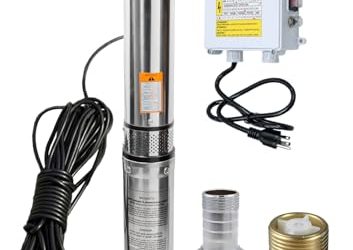
This is the straightforward replacement candidate for a deep well that already runs a two-wire setup. The listing describes a two horsepower, 230V stainless steel submersible rated at 35 GPM with a 400 foot head, built for wells of four inches or larger, with the control components inside the motor rather than in a separate box. For a household or barn that simply needs the old pump’s performance restored, that internal arrangement keeps the job simple: no new box to mount, no extra conductor to run, and built-in thermal protection guarding the motor against overheating faults.
Specs
- Power: 2 HP
- Voltage: 230V, 60 Hz
- Maximum flow: 35 GPM
- Maximum head: 400 feet
- Housing: stainless steel
- Well size: 4 inch or larger casing
- Wiring: 2-wire, built-in control box, no external box required
- Protection: built-in thermal protection
Best for: Like-for-like replacement of a two-wire 2 HP pump in a deep residential or barn well.
Watch out for: Because the controls are sealed in the motor, a starting fault means pulling the pump; confirm your existing wiring is genuinely two-wire before ordering.
ASIN: B00NTT2JMG
Hallmark Industries MA0419X-12AEXT

The EXT version keeps the same basic hydraulic promise, two horsepower, 230V single phase power, 35 GPM maximum flow and a 400 foot maximum head in a stainless steel body, but rearranges the electrics. It is a three-wire pump with a ground conductor, paired with an external control box, and its slimmer 3.8 inch body runs a 12-stage impeller stack through a 1-1/4 inch NPT discharge. That layout suits owners who think ahead to service day: start components live at the surface where they can be reached in minutes, and the included tape kits and short factory cord simplify the splice at installation.
Specs
- Power: 2 HP
- Voltage: 230VAC, 60 Hz, single phase
- Maximum flow: 35 GPM max
- Maximum head: 400 feet max
- Stages: 12
- Current: 10.2 amps
- Discharge: 1-1/4 inch NPT
- Pump diameter: 3.8 inch, for 4 inch wells
- Wiring: 3-wire plus ground, external control box included
- Cord: 10 ft electric cord
- Housing: stainless steel
Best for: New installations or re-wires where surface access to the control box is worth an extra conductor.
Watch out for: The control box needs a dry, reachable mounting location, and the 10 ft cord means your splice and drop cable plan has to be settled before the pump goes down.
ASIN: B07HT9SX2C
Which One Fits Your Situation
A Deep Well Feeding the Whole House
When the pumping level sits far down and the house is the main load, either pump covers the hydraulics, so let the wiring decide. Homes already wired for a two-wire motor take the MA0419X-12A with the least disturbance to the existing circuit and wellhead layout. If you are rewiring anyway, the EXT version’s surface box gives you a diagnostic point that does not require a pulling rig to reach.
Barns, Troughs, and Wash Racks
Horse properties punish pumps with long, overlapping draws rather than short bursts. Filling a large trough while the wash rack runs and the house draws its share is exactly the duty a 35 GPM class pump exists for. Choose the MA0419X-12AEXT if the wellhead sits near the barn where the control box can mount under cover, since barn staff will appreciate controls they can reach without scheduling a pump pull.
Replacing a Dead Pump on Existing Wiring
A like-for-like swap is the cheapest install you will ever do on a deep well, and it argues strongly for matching the old pump’s wiring style. Count the conductors coming up from the casing before you order. Two load wires point to the MA0419X-12A and its internal controls. An existing surface box in good shape points the other way, although the EXT ships with its own matched box, so replacing both together removes any compatibility doubt.
When Surface Access to Controls Matters Most
Some wells are deep enough that every pull is a half-day project with help, a hoist, and a weather window. On those properties, the external control box of the MA0419X-12AEXT earns its keep the first time a capacitor ages out, because the fix happens at the wellhead in minutes. The trade is honest: one more wire down the hole and a box to keep dry, in exchange for never pulling a pump just to reach a start component.
Common Mistakes
- Sizing by horsepower alone and never calculating total dynamic head, so the new pump runs near its maximum head, delivers a fraction of its rated flow, and wears out early.
- Ignoring the pressure component of head: a tank switch set at higher pressures adds well over ninety feet of equivalent lift, which can quietly push a marginal installation past the pump’s comfortable range.
- Ordering before counting the wires at the wellhead, then discovering the replacement needs an external control box, or an extra conductor, that the existing installation does not have.
- Assuming every four inch casing accepts every four inch pump, without checking the actual body diameter against scale buildup or a slightly out-of-round older casing.
- Skipping a torque arrestor and proper cable guards on a high-torque two horsepower install, letting the pump twist against the casing at every start until the wiring chafes.
Frequently Asked Questions
How deep can a 2 HP submersible well pump lift water?
Both pumps here carry a maximum head rating of 400 feet, but maximum head is the point where flow nearly stops, not a working depth. Your usable lift is total dynamic head: pumping water level, rise to the tank, and pressure head combined. Keep that total comfortably below the rating so the pump still delivers useful flow at the depth where it actually works.
Does a 2 HP submersible well pump need a control box?
It depends on the wiring design rather than the horsepower. The MA0419X-12A carries its starting components inside the motor and needs no external box. The MA0419X-12AEXT is a three-wire pump that runs through the external control box included with it. Neither arrangement changes the hydraulic ratings; the difference is where starting components live and how they get serviced later.
Can one of these pumps supply a house and a barn together?
Yes, provided the well itself recovers fast enough to sustain the combined draw. A 35 GPM maximum flow rating gives generous room for a household plus trough filling, waterers, and a wash rack, as long as your total dynamic head leaves the pump operating well inside its curve. The limiting factor on many properties is the well’s yield, not the pump, so confirm recovery rate before blaming hardware.
What size well casing do these pumps require?
Both models are built for wells of four inches or larger. The MA0419X-12AEXT lists a 3.8 inch pump diameter, which leaves modest clearance in a true four inch casing. Measure your casing’s inside diameter and check for scale or damage before ordering, because a pump that binds partway down turns a routine installation into a retrieval job nobody budgets for.
More from Amazon
Programs that pair well with the guide above. Offers and eligibility are set by Amazon and may change.
Set up recurring deliveries of everyday items on eligible products. Terms and savings are set by Amazon.
Explore Subscribe & SaveFree shipping on eligible items, Prime Video and more. Eligible new members can start with a free trial.
Start a Prime free trialAudiobooks and podcasts to listen to on the go. Eligible new members can start with a free trial.
Try Audible freeRead from a large library of eBooks and audiobooks on any device. Check Amazon for current plans.
Explore Kindle UnlimitedAs an Amazon Associate we earn from qualifying purchases.







Write Your Review
No reviews yet. Be the first to share your experience!