

Key takeaways
- Compare the best riding base layers for wicking comfort, sun coverage and a stay-tucked fit, from airy summer knits to tops that layer under show coats.
A good base layer is the hardest-working piece of clothing a rider owns. It sits against the skin through warm-ups, schooling sessions and barn work, pulling sweat away before it can chill you, shielding your arms from the sun, and sliding smoothly under everything from a fleece to a show coat. Cotton fails at almost all of that: it soaks up moisture, stays heavy, and bunches under breeches. Technical base layer tops are built differently, with stretch knits that move with your seat and hems long enough to stay put.
This guide compares five riding base layers that cover the main jobs riders ask of a first layer. Some are featherlight summer tops with mesh panels and serious sun coverage for hot schooling days. Others are smooth, close-fitting quarter zips that disappear under a show coat without adding bulk. Along the way we explain how synthetic and merino fabrics differ, how to pick a weight for the season, and why details like thumbholes and extra-long backs matter.
As an Amazon Associate, we earn from qualifying purchases.
Quick Picks
- Ariat Sunstopper 2.0 Quarter Zip — Best for hot-weather schooling, with cooling piqué knit and mesh underarms.
- TuffRider Ladies Long Sleeve Ventilated Technical Sport Shirt — Best ventilated value pick, in 100% polyester with mesh undersleeves and sizes to 3X.
- FitsT4 Sports Women’s Equestrian Shirt with Thumbholes — Best for riders who want thumbholes that keep sleeves anchored under gloves and jackets.
- Harrison Howard Equestrian Tops Half Mesh Arm Design — Best airflow design, pairing a nylon-spandex body with half-mesh arms for summer heat.
- MAGCOMSEN Women’s 1/4 Zip Pullover Sun Shirt — Best relaxed-fit option, a roomier quarter zip that layers easily.
How to Choose
Synthetic or merino fabric
Most riding base layers are synthetic. Polyester and nylon knits wick sweat off the skin, dry fast after a downpour, and hold their shape through daily washing. They suit summer schooling and frequent washing. Merino wool blends take a different approach: the natural fibre buffers temperature in both directions, feels warm on a cold morning hack and stays comfortable as the day heats up, and it resists odour far longer than synthetics, which suits multi-day clinics and travel. The trade-offs are slower drying and gentler washing. Many riders keep both: synthetics for summer and daily work, merino blends for cold weather and long days away from home.
Lightweight summer weights vs thermal winter weights
Fabric weight decides the season. Lightweight summer base layers use thin, open knits, often with mesh under the arms or sides, and many add UPF 50+ sun protection so sleeves double as sun cover. They are meant to be worn alone in heat or as a slick first layer that adds almost nothing under a coat. Thermal winter weights use brushed or fleeced inner faces that trap warm air, higher collars, and denser knits that block wind under a softshell. A midweight quarter zip covers spring and autumn on its own. Match the weight to the coldest moment of your ride, usually the first ten minutes.
Fit, length and staying tucked in
A base layer should skim the body without squeezing. Too loose and it wrinkles under a coat; too tight and it rides up every time you post the trot. The detail that matters most is length. Look for a long back that reaches well past the waistband of your breeches, ideally with a curved or dropped hem, so the shirt stays tucked through mounting, jumping position and bending for boots. Four-way stretch helps the hem stay put, and a smooth, flat finish at the waist avoids a ridge under a belt.
Thumbholes, collars and layering under show coats
Thumbholes hold sleeves down so there is no gap at the wrist under gloves, and they stop sleeves bunching up the arm when you pull on a jacket. For layering under show coats, choose the smoothest, thinnest top you can, with a low-profile quarter zip or mock collar that sits flat inside the coat collar and nothing raised to show through. Quarter zips are the most versatile neckline: open for airflow during warm-up, closed for a tidy look in the ring.
Ariat Sunstopper 2.0 Quarter Zip

The Sunstopper 2.0 is Ariat’s long-running answer to summer schooling, built on a lightweight piqué knit that feels cooler than a flat jersey because the textured face lifts the fabric slightly off the skin. Ariat’s ClimateTEK finish works with the knit to move heat away as you warm up, and mesh panels under the arms dump warmth where heat builds fastest. The mock collar zips up for full neck coverage on exposed arenas and down when you want airflow.
Coverage is the headline here: the fabric carries UPF 50+ sun protection, and the long sleeves keep arms shielded all day. The fit is athletic and body-skimming rather than compressive, and the body is long enough to tuck into mid- and high-rise breeches and stay there. Under a show coat it reads as a clean, plain schooling top. Riders who run hot and school outdoors all summer will get the most from this one.
See it here: https://www.amazon.com/dp/B09SGNYCPV
Specs
| Feature | Detail |
|---|---|
| Fabric | Lightweight polyester and spandex piqué knit |
| Sun protection | UPF 50+ |
| Ventilation | Mesh underarm panels |
| Collar | Mock collar with quarter zip |
| Fit | Athletic, body-skimming |
| Sleeve | Long sleeve |
| Best for | Hot-weather schooling and sun coverage |
TuffRider Ladies Long Sleeve Ventilated Technical Sport Shirt
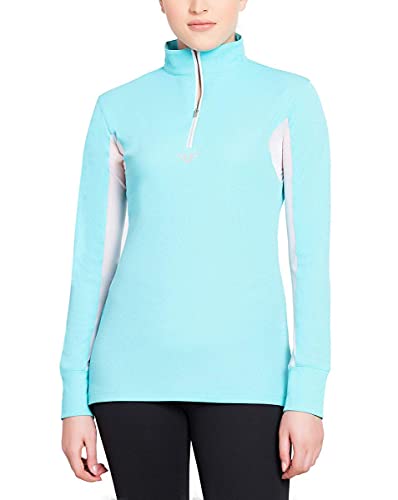
TuffRider’s ventilated sport shirt takes a straightforward approach: a full polyester body for fast drying, with mesh running along the underside of the sleeves so air moves every time your arms do. The front zipper lets you regulate temperature between rides, and the fabric shrugs off the daily cycle of sweat, dust and washing better than most natural fibres.
The size range is one of the widest in this group, running from extra small through 3X, which makes it an easy recommendation for riders who struggle to find technical tops that fit. The cut is a classic schooling-shirt shape, close enough to layer under a vest or jacket without bunching, and the hem is long enough for a secure tuck into breeches. It works alone through spring and summer and as a wicking first layer when the weather turns. For lessons, barn chores and trail miles, this is the workhorse of the list.
See it here: https://www.amazon.com/dp/B00AVE7S0A
Specs
| Feature | Detail |
|---|---|
| Fabric | 100% polyester |
| Ventilation | Mesh undersleeves |
| Closure | Front zipper |
| Sizes | XS to 3X |
| Fit | Classic close fit |
| Sleeve | Long sleeve |
| Best for | Everyday schooling and layering |
FitsT4 Sports Women’s Equestrian Shirt with Thumbholes

This FitsT4 Sports top is built around the two details riders ask for most: thumbholes and a half zip. The thumbholes anchor the sleeves so they cannot creep up your forearm during a ride, and they close the gap between sleeve and glove on cold mornings. The half zip opens deep enough to vent properly after a hard flatwork session, then closes to a neat stand collar that looks tidy enough for lessons and clinics.
The knit is quick-drying and moisture-wicking with UPF 50+ sun protection woven in, so it covers summer schooling as comfortably as shoulder-season layering. The athletic cut has enough stretch for two-point position without pulling at the shoulders, and the longer body stays tucked into breeches. Of the brand’s many equestrian tops, this long-sleeve thumbhole model maps most closely onto what a base layer should do: manage sweat, stay put, and disappear under whatever goes on top.
See it here: https://www.amazon.com/dp/B0F53ZPQPW
Specs
| Feature | Detail |
|---|---|
| Fabric | Quick-dry synthetic stretch knit |
| Sun protection | UPF 50+ |
| Sleeve detail | Thumbholes |
| Closure | Half zip with stand collar |
| Fit | Athletic women’s cut |
| Sleeve | Long sleeve |
| Best for | Riders who want anchored sleeves |
Harrison Howard Equestrian Tops Half Mesh Arm Design

Harrison Howard’s summer top takes ventilation further than most by building the underside of each arm from open mesh, so the whole length of the arm breathes instead of just the underarm patch. The body is a nylon and spandex blend, which feels smoother and slightly cooler against the skin than polyester and gives the shirt a polished look, helped by shaped shoulder lines and a high collar.
The fit is deliberately relaxed rather than body-hugging, which suits riders who dislike compression and want air moving between fabric and skin on humid days. It is a true summer-weight piece: worn alone it handles hot schooling, and its smooth face slides under a show coat or softshell without grabbing. The high collar adds sun coverage at the neck. Riders in hot, humid climates who find standard sun shirts stifling will appreciate how much air this design moves.
See it here: https://www.amazon.com/dp/B0CSSNH6MN
Specs
| Feature | Detail |
|---|---|
| Fabric | 75% nylon, 25% spandex |
| Ventilation | Half-mesh arm design |
| Collar | High collar, mock neck style |
| Closure | Zip-up front |
| Fit | Relaxed fit |
| Sleeve | Long sleeve |
| Best for | Hot and humid summer riding |
MAGCOMSEN Women’s 1/4 Zip Pullover Sun Shirt

The MAGCOMSEN quarter zip is the generalist of the group: a 100% polyester athletic top, sold for sports from golf to hiking and widely worn by riders as an everyday schooling layer. The regular fit leaves more room than the close cuts above, so it pulls easily over a thinner base on cold mornings or wears alone in summer. The zipper collar adjusts from an open neckline to a closed one that covers the neck.
Sun protection is built in at UPF 50+, and the knit dries quickly and wicks sweat well enough for lessons, trail rides and barn work. Because the cut is less tailored, check the hem against your breeches: tucked in, the extra ease disappears, and the longer body helps it stay anchored. Riders who split their time between the barn and other outdoor sports, or who prefer a looser top that still performs, will find this the most flexible option here.
See it here: https://www.amazon.com/dp/B097T5LQX3
Specs
| Feature | Detail |
|---|---|
| Fabric | 100% polyester |
| Sun protection | UPF 50+ |
| Closure | Quarter zip, zipper collar |
| Fit | Regular fit |
| Sleeve | Long sleeve |
| Seasons | Summer weight, layers in winter |
| Best for | Multi-sport riders and relaxed fits |
Products at a Glance
| Product | Fabric | Weight | Standout feature | Best for |
|---|---|---|---|---|
| Ariat Sunstopper 2.0 Quarter Zip | Polyester-spandex piqué | Lightweight | Cooling knit, mesh underarms | Hot-weather schooling |
| TuffRider Ventilated Technical Sport Shirt | 100% polyester | Lightweight | Mesh undersleeves, XS–3X sizes | Everyday workhorse layer |
| FitsT4 Sports Equestrian Shirt | Synthetic stretch knit | Lightweight | Thumbholes, half zip | Anchored sleeves |
| Harrison Howard Half Mesh Arm Top | 75% nylon, 25% spandex | Lightweight | Full half-mesh arms | Humid climates |
| MAGCOMSEN 1/4 Zip Pullover | 100% polyester | Lightweight | Relaxed regular fit | Layering and multi-sport use |
Frequently Asked Questions
What is the difference between a summer and a winter riding base layer?
Summer base layers use thin, open knits, often with mesh panels, and focus on wicking, airflow and sun protection. Winter weights use denser, brushed fabrics that trap warm air and block chill under outer layers. Both move sweat off the skin, but summer versions shed heat while winter versions hold onto it.
Are synthetic or merino base layers better for riding?
Synthetics dry faster, wash harder and suit daily schooling and hot weather, which is why most riding tops use them. Merino blends buffer temperature swings better and resist odour on long days, but they dry more slowly and need gentler care. Many riders use synthetics in summer and merino blends once the weather turns cold.
How should a base layer fit under a show coat?
Choose the thinnest, smoothest top you own, in a close but not tight fit, with a flat quarter zip or low mock collar that sits inside the coat collar. Avoid chest pockets, raised seams and textured fabrics that can print through the coat. A long hem tucked firmly into breeches keeps the silhouette clean.
How do I keep a base layer tucked into my breeches?
Start with length: the hem should reach several inches below the waistband, ideally with a curved or dropped back. Tuck the shirt in before fastening your breeches, smooth it flat over your hips, and add a belt to lock the waistband over the hem. High-rise breeches and four-way stretch fabrics make the biggest difference.
Conclusion
The right base layer disappears in the saddle, and that is the point. Pick the fabric for your climate, synthetics for fast drying and daily wear, merino blends when temperature swings matter most, then match the weight to the season and insist on a long back that stays tucked. From the cooling knit of the Ariat Sunstopper 2.0 to the anchored sleeves of the FitsT4 thumbhole top and the easy fit of the MAGCOMSEN quarter zip, the five tops above cover the main ways riders use a first layer. Choose the one that fits your weather and wardrobe, and it will earn its place in your kit bag.
More from Amazon
Programs that pair well with the guide above. Offers and eligibility are set by Amazon and may change.
Set up recurring deliveries of everyday items on eligible products. Terms and savings are set by Amazon.
Explore Subscribe & SaveFree shipping on eligible items, Prime Video and more. Eligible new members can start with a free trial.
Start a Prime free trialAudiobooks and podcasts to listen to on the go. Eligible new members can start with a free trial.
Try Audible freeRead from a large library of eBooks and audiobooks on any device. Check Amazon for current plans.
Explore Kindle UnlimitedAs an Amazon Associate we earn from qualifying purchases.


Write Your Review
No reviews yet. Be the first to share your experience!