

Key takeaways
- Choose the Thetford Porta Potti 365 if you want the best balance of capacity, portability, comfort, and simple operation. Choose the Dometic 976 when a heavier, premium toilet will remain in a vehicle and a powered flush matters. Choose a Camco cassette model for occasional…
The best portable toilets for camping and travel are usually the Thetford Porta Potti 365 for balanced family use, the Dometic 976 for a sturdier premium option, and a portable bucket toilet for the lowest cost and simplest emergency backup.
The right choice depends less on the flush button than on waste-tank capacity, seat height, cleaning access, odor control, and how often you can empty it. A compact cassette toilet is more comfortable and contained than a bucket, while a bucket toilet is lighter, cheaper, and often easier to store in a vehicle or horse trailer.
Our top picks
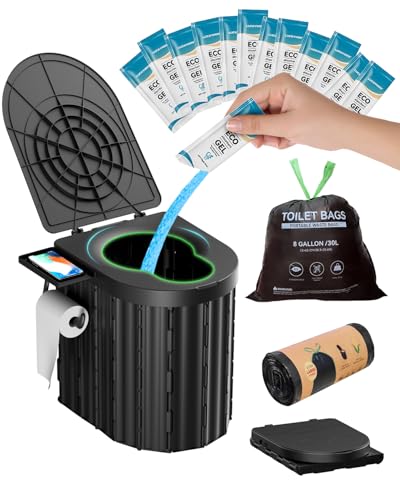

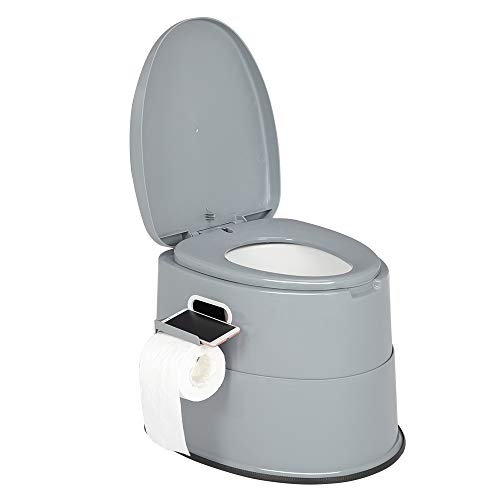

As an Amazon Associate we earn from qualifying purchases at no extra cost to you. Ratings are shown as listed on Amazon.
Best portable toilets compared
| Type or model | Fresh-water capacity | Waste capacity | Approx. weight | Seat height | Flush and odor control | Best suited to |
|---|---|---|---|---|---|---|
| Thetford Porta Potti 365 | 15 L | 21 L | 4 kg | 41.4 cm | Hand-pump flush; sealed cassette and vent valve | Families, horse camping, frequent weekend trips |
| Dometic 976 | 8 L | 18.9 L | About 5.5 kg | About 38 cm | Battery-powered flush; pressure-release and sealed waste tank | Comfort-focused vehicle camping and travel |
| Camco portable cassette toilet | About 10 L | About 20 L | About 4 kg | About 42 cm | Manual pump flush; slide valve and detachable tank | Budget-conscious campers wanting a conventional toilet |
| Portable bucket toilet | None | About 20–25 L liner volume | About 1–3 kg | Usually 35–45 cm | No flush; liner, absorbent medium, and closing lid | Emergencies, occasional use, minimal storage |
| Composting toilet | None or minimal | Varies by model | About 9–13 kg | Usually 48–52 cm | Urine separation, solids medium, and small ventilation fan | Extended stays where venting and separate disposal are practical |
Capacities and dimensions can vary slightly by production version and retailer, so check the manufacturer’s current specification before buying. Waste capacity is not the same as the number of uses: toilet paper, liquid volume, temperature, and the user’s habits all affect the emptying interval.
Our picks by camping situation
Best all-rounder: Thetford Porta Potti 365
The Porta Potti 365 is a strong choice when several people need a proper toilet without installing one in a vehicle. Its 21-litre waste tank is larger than many compact cassette toilets, and the 15-litre flush-water tank reduces the need to carry separate water for every use. The seat is close to household height, which is more comfortable than many small travel toilets.
Its manual pump avoids batteries and makes the toilet usable away from electrical power. The detachable waste tank has a slide valve and pour-out spout, although emptying still requires access to an approved disposal point. This model is particularly practical for horse-camping trips because it can be carried separately from tack and bedding and does not require a power connection.
Best premium vehicle option: Dometic 976
The Dometic 976 is aimed at users who value a solid feel, a household-style seat, and a powered flush. The battery-powered pump produces a more familiar flush than a small hand pump, but batteries are another consumable and can be inconvenient in cold weather or during long periods of storage.
Its waste tank is slightly smaller than the Porta Potti 365’s, so it may need emptying sooner for a family. The tank design is well suited to vehicle travel, but the unit is heavier and typically costs more. Choose it when the toilet will stay in a camper, van, boat, or horse trailer rather than being carried long distances to a campsite.
Best budget cassette toilet: A Camco portable cassette model
Camco’s portable cassette toilets provide the basic advantages of a flush toilet—separate clean and waste tanks, a closing waste valve, and a raised seat—at a generally lower market price than premium models. They are useful for occasional camping, tailgating, and keeping in a vehicle for road emergencies.
Expect differences between individual Camco models in tank size, pump style, and seat height. Confirm whether the model uses a manual bellows pump or a battery-operated system. A manual version is usually simpler to store and repair; a battery version may be more convenient but adds failure points.
Best for emergencies and minimum storage: a bucket toilet
A five-gallon-style bucket toilet is the simplest solution for a backup kit. It normally consists of a rigid bucket, a snap-on toilet seat, a liner, and an absorbent material such as wood pellets or a purpose-made solidifier. It is inexpensive, light, and does not leak from a pump or cassette seal.
The disadvantages are important: there is no flush, odor control depends on prompt sealing and the absorbent medium, and the bucket is less comfortable for repeated use. Use heavy-duty liners designed for waste rather than thin household bags, and follow local rules for disposal. A bucket toilet is excellent as an emergency reserve but less pleasant for a week-long family trip.
How much capacity do you really need?
For a rough planning estimate, allow around 1.5 to 2.5 litres of combined liquid and solid waste per person per day, excluding extra volume from toilet paper and cleaning water. This is only a planning figure because use varies considerably.
For example, four people using a 21-litre waste tank at an estimated 2 litres per person per day would produce approximately:
21 L ÷ (4 people × 2 L) = 2.6 days of nominal capacity.
In practice, plan to empty earlier—perhaps after two days—because a full tank is heavier, more difficult to carry, and more likely to splash or smell during disposal. For two people, the same tank may provide roughly four to five days, depending on toilet-paper use and whether everyone uses other facilities during the day.
Flush systems, odor control, and cleaning
Manual pump flush
A hand pump or bellows flush works without batteries and is usually the best option for remote camping. It uses clean water from the upper tank and is mechanically simple. Pump seals can eventually wear, especially if the toilet is stored with cleaning chemicals or mineral deposits inside the mechanism.
Battery-powered flush
A battery flush gives more consistent water flow with less effort. It suits users who want a more conventional toilet experience, but batteries should be removed during long-term storage. Carry spares, and keep the pump area dry.
Odor control
The most effective odor control comes from sealing the waste tank, not from heavy fragrance. Keep the slide valve closed except during flushing, use a toilet additive compatible with the manufacturer’s plastics and seals, and empty the tank before it becomes completely full. In hot weather, shade the toilet and avoid leaving waste in it for extended periods.
Do not mix household bleach, ammonia, drain cleaner, or incompatible septic chemicals in a cassette toilet. These products can damage seals, create hazardous fumes, or interfere with waste treatment. Use the toilet-fluid instructions supplied for that model and check disposal-site requirements.
Cleaning and maintenance that prevents most problems
- Separate the tanks carefully. Close the waste valve before lifting the upper section and keep the tank level during transport.
- Empty through the pour-out spout. Use an approved toilet, dump station, or disposal point; do not discharge waste onto open ground or into waterways.
- Rinse the waste tank. Add clean water, gently swirl, and empty again. Avoid high-pressure spray against valves and vents.
- Inspect the seals. Look for grit, cracking, swelling, or loss of flexibility around the slide valve, cap, and pump.
- Store it dry. Leave the tanks separated or the lid slightly open, remove batteries, and keep the unit out of freezing temperatures where trapped water could expand.
The parts most likely to wear first are rubber seals, pump diaphragms, tank caps, and seat hinges. Replacement seals are often available, which makes a recognized cassette-toilet brand easier to keep in service than an unbranded unit with no parts support.
Buying decision matrix
| Your priority | Best match | Why | Trade-off |
|---|---|---|---|
| Lowest purchase cost | Bucket toilet | Few parts and inexpensive liners | No flush and weaker long-term comfort |
| Two to four people on weekend trips | Thetford Porta Potti 365 | Large waste tank and useful seat height | Bulkier than emergency toilets |
| Permanent vehicle storage | Dometic 976 | Solid construction and powered flush | Heavier and battery-dependent |
| Small storage compartment | Compact cassette toilet or bucket | Lower footprint and easier packing | Usually less capacity or comfort |
| Extended off-grid stays | Large cassette or properly vented composting toilet | Longer emptying interval | More weight, setup, and disposal planning |
Final verdict
Choose the Thetford Porta Potti 365 if you want the best balance of capacity, portability, comfort, and simple operation. Choose the Dometic 976 when a heavier, premium toilet will remain in a vehicle and a powered flush matters. Choose a Camco cassette model for occasional use at a lower general market price. For a disaster kit, roadside backup, or very limited storage, a bucket toilet is hard to beat for simplicity.
Before purchasing, measure the storage space, check the seat height, confirm where the waste can legally be emptied, and calculate capacity for the number of people rather than relying on the tank size alone.

Write Your Review
No reviews yet. Be the first to share your experience!