

Key takeaways
- For the majority of users, the best balance boards are wide rocker models with a 60–80 cm deck, a 120–150 kg or higher dynamic capacity, a textured top, and a full-width non-slip base. Choose a wobble board when compact storage matters, and move to a…
The best balance boards for core strength and stability are chosen by matching the board’s movement type, deck size, weight limit, grip, and base to your experience, available space, and training goal—not by choosing the most unstable option.
For most riders, a medium-width rocker board with a grippy wooden or composite deck is the most useful starting point. It develops controlled ankle, hip, and trunk adjustments without making every session a struggle. A roller board offers more demanding side-to-side control, while a wobble board is better for compact, low-cost practice and short balance drills.
Our top picks
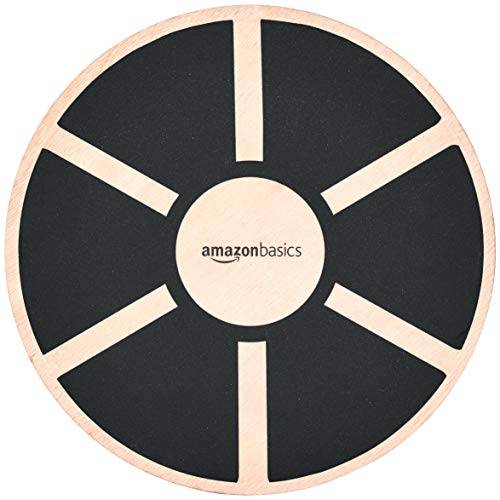


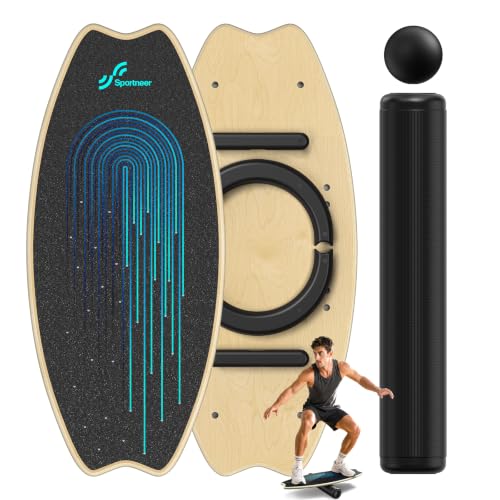
As an Amazon Associate we earn from qualifying purchases at no extra cost to you. Ratings are shown as listed on Amazon.
Quick picks by training situation
| Situation | Best board type | Useful specifications | Typical market range |
|---|---|---|---|
| First balance board or nervous beginner | Wide rocker board | 60–75 cm deck, 10–15° rocking angle, 120 kg or higher capacity | $35–$80 |
| Rider wanting steady daily core work | Rocker board with fixed or attached base | 65–80 cm deck, rubber contact surfaces, 150 kg or higher capacity | $50–$110 |
| Advanced balance and reaction training | Roller board | 70–85 cm deck, 10–15 cm roller, end stops, 120 kg or higher capacity | $70–$180 |
| Small home or office space | Compact wobble board | 35–45 cm diameter, 8–12 cm pivot, textured top | $25–$70 |
| Frequent use by multiple adults | Commercial-style rocker or wobble board | Hardwood or reinforced composite deck, 180–200 kg capacity, replaceable grip | $90–$220 |
Which type of balance board is right for you?
Rocker boards: the best all-round choice
A rocker board curves or pivots in one direction, usually from side to side. Because the movement is relatively predictable, you can concentrate on posture, breathing, and smooth weight transfer. That makes this type particularly suitable for equestrians building the ability to stay centered while the horse changes rhythm or direction.
Look for a deck at least 60 cm long and 30 cm wide if you want comfortable two-foot stance work. A longer deck gives larger feet more room and makes turning the board less abrupt. A board with a 10–15° range of motion is challenging enough for most general fitness sessions without forcing constant stepping off.
Wobble boards: compact and adjustable
A wobble board pivots in several directions around a central dome or hemisphere. It takes little storage space and is useful for brief balance intervals, warm-ups, and single-leg progressions. The smaller the pivot and the larger the permitted tilt, the more difficult the board usually feels.
Wobble boards are convenient, but they can encourage gripping with the toes or leaning from the waist. Beginners should start near a wall or stable support and aim for quiet corrections rather than maximum movement.
Roller boards: the demanding option
A roller board rests on a separate cylinder, requiring control in two directions. It provides a more dynamic challenge than a rocker board, but it also creates a higher risk of the deck sliding away when technique breaks down. Choose a model with raised end stops, a roller with a rubberized surface, and enough deck length to keep both feet clear of the edges.
Roller boards suit experienced users who can already stand comfortably on a rocker board. They are less convenient for casual use because the roller and deck need separate storage, and they require more floor clearance—often at least 1.5 metres of unobstructed length.
Deck materials, dimensions, and weight limits
| Feature | What it changes | What to prioritize |
|---|---|---|
| Birch or beech plywood | Rigid, relatively light, and responsive | Multi-layer construction, sealed edges, no flex under load |
| Solid hardwood | Durable and stable, but usually heavier | Smoothly rounded edges and a moisture-resistant finish |
| Reinforced composite | Consistent shape and easy cleaning | Textured top, strong base attachment, no sharp moulding seams |
| Foam or soft-touch deck | More comfortable for bare feet | Closed-cell material that does not absorb sweat easily |
| Rubber base or feet | Reduces sliding and protects hard floors | Full-width contact strips or broad, replaceable feet |
Do not treat the advertised weight limit as a target. A sensible calculation is to add your body weight, clothing, and any load you may hold, then choose a board rated at least 25% higher. For example, a 90 kg user wearing 3 kg of equipment should select at least 116 kg of capacity: 93 × 1.25 = 116.25 kg. Choosing a 120 kg or higher rating provides a small practical margin.
Capacity is only meaningful when the rating applies to dynamic use. Some inexpensive boards state a maximum static load but do not explain how the figure was established. If the product information is unclear, choose a sturdier model with a reinforced deck and a conservative load rating rather than assuming the highest number is reliable.
Non-slip surfaces: grip without losing control
The top surface should prevent your feet from sliding while still allowing small, deliberate adjustments. Coarse abrasive grip tape can hold well but may irritate bare feet and wear through socks. Moulded rubber or textured thermoplastic is generally more comfortable for frequent sessions. A thin cork or foam layer can improve comfort, but it may compress or peel sooner than the deck itself.
The underside matters just as much. A broad rubber base is preferable to four tiny plastic feet on smooth flooring. On carpet, a rubber base can catch the pile and create uneven resistance, so test the board on the surface where you will actually train. Avoid using a roller board on loose rugs, polished wet floors, or near furniture that could catch the deck.
Decision matrix: selecting by experience, space, and frequency
| Your priority | Recommended specification | Why |
|---|---|---|
| Lowest reasonable budget | Rocker or basic wobble board, plywood or composite, 120 kg capacity | Fewer moving parts and lower replacement costs |
| Beginner confidence | Wide deck, low pivot, 10–12° tilt, non-slip underside | More time to correct posture before stepping off |
| Advanced challenge | Roller board with end stops and 10–15 cm roller | Requires faster, more precise weight shifts |
| Daily or shared use | Sealed hardwood or reinforced composite, replaceable grip, 150 kg or higher capacity | Better resistance to repeated loading and cleaning |
| Limited storage | 35–45 cm wobble board or rocker under 70 cm long | Fits beneath furniture or in a small cupboard |
How to use a balance board safely and effectively
- Prepare the area. Use a level, dry surface with at least one metre of clear space around you. Keep a wall, countertop, or sturdy rail within reach.
- Begin with two feet. Place feet hip-width apart, soften the knees, and keep ribs stacked over the pelvis. Look at a fixed point instead of the floor.
- Use short intervals. Start with five rounds of 20–30 seconds, resting 30–60 seconds between rounds. Increase time only when corrections remain controlled.
- Add movement gradually. Progress from still standing to gentle weight shifts, shallow knee bends, arm positions, and finally single-leg work. A roller board should come later than these steps.
- Stop for loss of control. Step off if the board shoots sideways, your foot slips, or you need to jump to recover. Balance training is about repeatable control, not surviving the longest wobble.
For riding-related conditioning, a useful session might be two minutes of easy bilateral work, three rounds of 30-second controlled weight shifts, and two rounds per side of supported single-leg balance. This can complement riding but does not replace instruction, strength work, or sport-specific practice.
Durability and ownership realities
The grip surface and rubber feet usually wear before a quality deck fails. Inspect the board monthly for peeling tape, flattened rubber, cracks around the pivot, loose screws, and separation between the base and deck. Replace damaged grip or feet rather than compensating by training on a slippery surface.
Wipe sweat from the deck after use with a lightly damp cloth, then dry it. Avoid soaking plywood, storing it in a damp tack room, or leaving it in direct sunlight or a hot vehicle, since moisture and heat can deform wood, soften adhesives, and shorten the life of rubber components. Do not apply oil or silicone polish to the contact surfaces; a cleaner-looking board may become dangerously slick.
Also check the floor protection. A board that is stable on rubber flooring may slide on hardwood, while a hard pivot can mark delicate surfaces. A thin, firm exercise mat can help, provided it does not bunch or create a rocking surface of its own.
Bottom line
For the majority of users, the best balance boards are wide rocker models with a 60–80 cm deck, a 120–150 kg or higher dynamic capacity, a textured top, and a full-width non-slip base. Choose a wobble board when compact storage matters, and move to a roller board only after you can control a simpler board without grabbing support. The right choice is the one that lets you train consistently, progress in small steps, and maintain quiet, deliberate movement.

Write Your Review
No reviews yet. Be the first to share your experience!