

Key takeaways
- 30 metres: splash resistance only. Avoid swimming.
- 50 metres: suitable for light surface contact, but not an ideal swimming watch.
- 100 metres: generally suitable for swimming when the watch is in good condition.
- 200 metres: the practical target for a recreational dive watch, especially when paired with ISO 6425 certification.
- 300 metres and above: useful for professional or technical applications, but often brings greater thickness and weight.
The best dive watches for most people are the Citizen Promaster Dive Eco-Drive for low-maintenance daily wear, the Seiko Prospex SPB143 for a compact mechanical option, and the Tudor Black Bay 58 for premium finishing and balanced proportions.
Our top picks


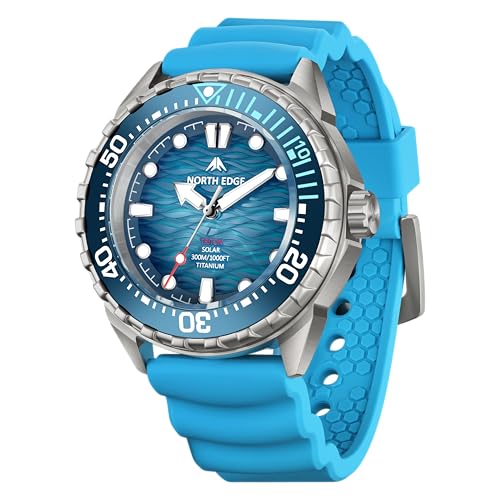
As an Amazon Associate we earn from qualifying purchases at no extra cost to you. Ratings are shown as listed on Amazon.
What makes a dive watch suitable for daily wear?
A capable dive watch is not defined by water resistance alone. The useful combination is a clearly marked rotating bezel, strong lume, a screw-down crown, a case that protects the crystal and movement, and a strap or bracelet that remains comfortable away from the water.
For recreational diving, look for a watch rated to at least 200 metres and preferably certified to ISO 6425 as a diver’s watch. A 100-metre rating can be adequate for swimming and surface use, but it provides less margin for impact, ageing seals, and accidental crown operation. Ratings are laboratory measurements, not a promise that the watch can be taken to the stated depth every day without servicing.
Best dive watches by situation
| Situation | Best choice | Key specifications | Why it fits |
|---|---|---|---|
| Lowest-maintenance daily wear | Citizen Promaster Dive Eco-Drive BN0150 series | 44.5 mm case; 200 m water resistance; solar quartz; polyurethane strap | Accurate, light to maintain, and powered by light rather than a replaceable battery |
| Compact mechanical watch | Seiko Prospex SPB143 | 40.5 mm case; 200 m water resistance; automatic movement; stainless steel | Shorter lug-to-lug feel and a restrained design that works with casual clothing |
| Affordable automatic | Orient Kamasu | 41.8 mm case; 200 m water resistance; automatic movement; sapphire crystal | Strong specification for its general market price range, with a useful day-date display |
| Premium everyday wear | Tudor Black Bay 58 | 39 mm case; 200 m water resistance; automatic movement; approximately 70-hour power reserve | Moderate diameter, high-quality bracelet options, and a movement built for regular use |
| Extra depth and technical margin | Sinn U50 | 41 mm case; 500 m water resistance; automatic movement; tegimented steel versions available | Compact for its depth rating and particularly suited to demanding environments |
Understanding water-resistance ratings
Water resistance is commonly shown in metres, bar, or atmospheres. One bar is approximately equivalent to 10 metres of static water pressure, so a 200-metre rating corresponds to about 20 bar under test conditions. The rating does not directly describe the depth a person should reach while wearing the watch.
- 30 metres: splash resistance only. Avoid swimming.
- 50 metres: suitable for light surface contact, but not an ideal swimming watch.
- 100 metres: generally suitable for swimming when the watch is in good condition.
- 200 metres: the practical target for a recreational dive watch, especially when paired with ISO 6425 certification.
- 300 metres and above: useful for professional or technical applications, but often brings greater thickness and weight.
Seals are consumable components. Heat, ultraviolet light, salt, chlorine, perspiration, and repeated crown operation gradually reduce their effectiveness. Have the watch pressure-tested after opening the case or when its service interval recommends it. Never operate the crown or chronograph pushers underwater unless the manufacturer specifically permits it.
How the unidirectional bezel works
The bezel is more than decoration. Before descending, a diver aligns the bezel’s luminous triangle with the minute hand. As time passes, the minute hand moves away from the triangle and shows elapsed time. If the bezel is accidentally knocked, its unidirectional design can only move toward a shorter displayed time, helping prevent the wearer from underestimating air consumption.
For everyday use, assess the bezel by its grip, alignment, and action. A useful bezel should turn with deliberate clicks, have minimal sideways play, and line up accurately with the 12 o’clock marker. A 60-minute scale is the most versatile choice. A countdown bezel, where the desired end point is set against the minute hand, can also be useful for parking, cooking, or timed exercise.
A bezel is not a substitute for a dive computer, depth gauge, compass, or proper dive training. It measures elapsed time only. Divers should follow their training and use equipment appropriate to the planned dive.
Movement types: quartz, solar, or automatic?
Solar quartz: best for convenience
The Citizen Promaster Eco-Drive is the clearest choice when accuracy and low ownership effort matter most. Solar quartz movements can run for months in darkness once charged, and they avoid the routine winding or periodic resetting associated with many mechanical watches. The trade-off is a larger case on some models and less mechanical character.
Standard quartz: accurate and inexpensive to run
A conventional quartz dive watch is usually thin, accurate, and affordable. Its battery will eventually require replacement, and the case should be pressure-tested after that service. For someone who wears a watch occasionally, quartz often makes more practical sense than an automatic because it does not stop when left in a drawer.
Automatic: engaging, but more demanding
Automatic movements wind through wrist motion and may offer a power reserve from roughly 40 to 70 hours. They are attractive to enthusiasts because of their mechanical construction, but they are less accurate than quartz and stop after being unworn for long enough. An automatic also tends to be thicker and more expensive to service. The Seiko SPB143, Orient Kamasu, Tudor Black Bay 58, and Sinn U50 all suit buyers who value mechanical ownership.
For a watch worn only on weekends, a longer power reserve is meaningful. A 70-hour reserve can keep running from Friday evening through Monday morning, whereas a movement with a roughly 40-hour reserve may stop during the same period.
Size, weight, and comfort matter more than depth ratings
Diameter alone does not determine fit. Lug-to-lug length, thickness, case shape, and bracelet articulation can make a 41 mm watch feel smaller than a thick 39 mm model. Measure the flat width of your wrist, then compare it with the watch’s lug-to-lug length. As a rough starting point, a lug-to-lug measurement below your wrist’s flat top width usually sits more securely, although personal preference and wrist shape matter.
Weight affects daily comfort. A steel bracelet can add substantial mass, while polyurethane or rubber reduces it and tolerates water well. Nylon fabric straps are light and easy to replace, but they absorb water and can feel less comfortable until dry. For office wear, a bracelet or fitted rubber strap generally looks more intentional than a wet fabric strap.
Durability and ownership costs
The crystal is one of the first specifications to compare. Sapphire resists scratches better than mineral crystal, while mineral crystal can be less expensive to replace and may handle certain impacts without shattering as readily. A ceramic bezel insert resists fading and scratches, but replacing one can cost more than replacing an aluminium insert.
The bezel insert, crown gaskets, strap, spring bars, and clasp are typical wear points. Rinse a saltwater-used watch with fresh water, wipe it dry, and clean around the bezel and bracelet with a soft toothbrush. Do not use solvents, abrasive polish, or a high-pressure spray. Check that spring bars are fully seated, especially after changing straps.
As a planning example, suppose a mechanical dive watch costs $500 and receives a $200 service every seven years. Over 14 years, the purchase plus two services totals about $900, or roughly $64 per year before strap replacements. A solar quartz model costing $300 with one gasket and pressure-test visit of $80 over the same period may total about $380, or $27 per year. Actual service prices vary by brand, location, and condition, but the calculation shows why movement choice affects ownership as much as the initial price.
Which one should you buy?
- Choose the Citizen Promaster Eco-Drive if you want dependable timing, minimal maintenance, and a watch that can sit unused without stopping.
- Choose the Seiko Prospex SPB143 if you want an automatic watch with a relatively compact case and a versatile vintage-inspired design.
- Choose the Orient Kamasu if your budget is commonly in the lower general market range and you want an automatic movement, sapphire crystal, and 200-metre rating.
- Choose the Tudor Black Bay 58 if finishing, bracelet quality, moderate proportions, and a long power reserve justify a premium price in the general luxury range.
- Choose the Sinn U50 if depth rating, robust materials, and technical construction matter more than a thin or dressy profile.
The best dive watch is therefore not the one with the largest depth number. It is the one whose water resistance, bezel, movement, dimensions, and maintenance demands match how you actually wear it. For most daily users, 200 metres is already ample; spending more on a thinner case, better bracelet, longer power reserve, or easier ownership may improve the experience more than choosing a higher rating.

Write Your Review
No reviews yet. Be the first to share your experience!