

Key takeaways
- Simple screw caps: Usually the easiest to clean and the least complicated to troubleshoot. They are a good choice for a bag, provided the gasket is seated correctly and the cap is fully tightened.
- Straw lids: Fast and convenient for frequent sipping, but they contain more seals and narrow passages. They are more likely to need replacement parts or careful cleaning.
- Wide mouths: Best for ice, filling, and bottle-brush access. They can spill more easily while drinking on the move.
- Angled spouts: Give more control than an open wide mouth without the internal tube of a straw. They are a useful middle ground for commuting and outdoor use.
The Best Insulated Water Bottles for Cold Drinks
The best insulated water bottles for cold drinks are the Hydro Flask Wide Mouth for all-day versatility, Owala FreeSip for easy drinking on the move, YETI Rambler for rugged durability, and Klean Kanteen TKWide when cleaning access and temperature retention matter most.
A good cold-drink bottle is not defined by insulation alone. The useful comparison is how long it preserves ice, whether the lid leaks in a bag, how quickly you can drink while walking or riding, how much space it occupies, and whether the mouth and gasket can actually be cleaned. The right choice depends on those trade-offs.
Our top picks
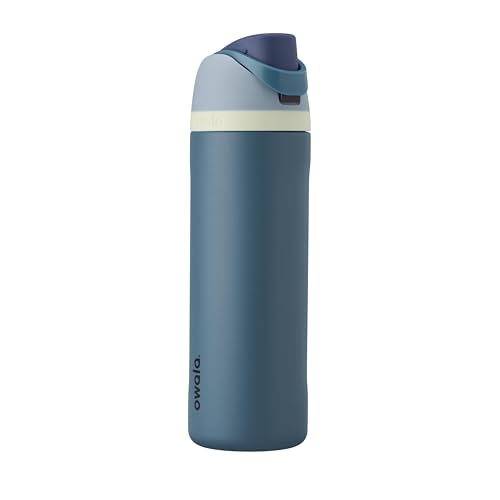


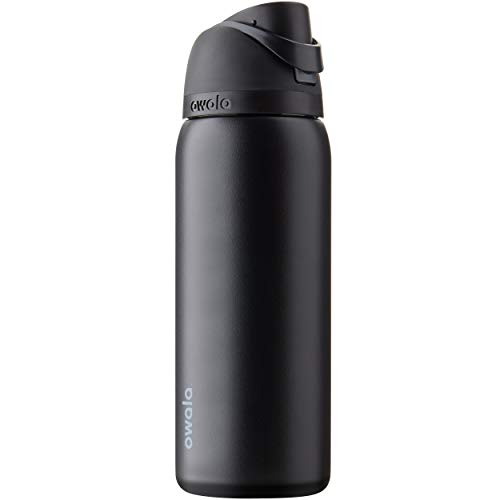
As an Amazon Associate we earn from qualifying purchases at no extra cost to you. Ratings are shown as listed on Amazon.
Quick comparison of leading bottle types
| Model | Capacity considered | Material | Approx. empty weight | Mouth or drinking design | Best fit |
|---|---|---|---|---|---|
| Hydro Flask Wide Mouth | 32 oz / 946 ml | 18/8 stainless steel, double-wall vacuum insulation | About 15 oz / 425 g | Wide opening; interchangeable cap options | Balanced everyday use and ice |
| Owala FreeSip | 24 oz / 710 ml | 18/8 stainless steel, double-wall vacuum insulation | About 16 oz / 454 g | Locking lid with built-in straw and wide-mouth sip option | Walking, commuting, and one-handed drinking |
| YETI Rambler | 26 oz / 769 ml | 18/8 stainless steel, double-wall vacuum insulation | About 18 oz / 510 g | Wide mouth with screw cap; other lid styles available | Rough outdoor use and large ice cubes |
| Stanley IceFlow Flip Straw | 30 oz / 887 ml | 18/8 stainless steel, double-wall vacuum insulation | About 17 oz / 480 g | Integrated flip straw and carry handle | Frequent sipping during travel or exercise |
| Klean Kanteen TKWide | 32 oz / 946 ml | 18/8 stainless steel, double-wall vacuum insulation | About 18 oz / 510 g | Wide opening with interchangeable insulated caps | Maximum flexibility and easier filling |
| CamelBak Chute Mag | 32 oz / 946 ml | Stainless steel, double-wall vacuum insulation | About 16 oz / 454 g | Angled drinking spout with magnetic cap holder | Controlled pouring without a straw |
Weights vary slightly by finish, cap, and production year. The figures above are useful for comparing portability, not for calculating shipping weight. Larger 32-ounce bottles hold more cold drink but can weigh roughly 3.5 to 5 pounds when full, so capacity is not automatically an advantage.
Our picks by situation
Best all-rounder: Hydro Flask Wide Mouth 32 oz
The Wide Mouth is a strong default because its opening accepts ice, its stainless-steel body tolerates regular outdoor use, and the cap system gives you more than one way to carry it. It is easier to clean than a narrow-neck bottle and generally fits standard backpack side pockets, although the 32-ounce version may be tight in smaller holders.
Choose it if you want one bottle for the stable, the car, hiking, and daily errands. Its main limitation is that a standard wide-mouth screw cap is slower to drink from while moving than a straw or integrated spout.
Best for easy sipping: Owala FreeSip
The FreeSip lid is its defining feature: you can sip through the internal straw or tilt the bottle and drink through the wider opening. The locking cover helps protect the drinking area, and the handle makes carrying convenient. This makes it particularly practical when you are walking, commuting, or want to drink without fully removing a cap.
The lid is more complicated than a simple screw cap. Straws, seals, and small channels need deliberate cleaning, and the bottle is less suitable for hot liquids. If your priority is the simplest possible wash routine, choose a conventional wide-mouth bottle instead.
Best for rugged use: YETI Rambler 26 oz
The Rambler combines a thick-feeling stainless-steel body with a generously sized opening that accommodates ice cubes and a bottle brush. It is a good choice for outdoor work, travel, and environments where the bottle may be dropped or knocked against equipment. The larger body and cap add weight, but that is part of its durable, substantial design.
Its screw-cap configuration is dependable and easy to understand, though it does not offer the instant access of a straw lid. Check the selected cap carefully: a bottle can be advertised under one model family while different lid versions have different leak behavior.
Best for high-frequency sipping: Stanley IceFlow Flip Straw
The IceFlow is convenient when you take small drinks repeatedly rather than stopping to unscrew a cap. Its flip straw, carry handle, and relatively generous 30-ounce capacity suit long walks, commuting, and active days. It is less appealing if you routinely add large ice cubes or want to drink from a completely open mouth.
Straw systems also require more maintenance. The straw and valve can retain sugary drink residue, and the lid should be disassembled as far as the manufacturer permits before washing.
Best for cap flexibility: Klean Kanteen TKWide 32 oz
The TKWide is worth considering if you want to change between a loop cap, chug-style cap, or straw-oriented arrangement rather than replacing the entire bottle. Its wide opening makes adding ice and washing easier, while the stainless-steel construction avoids the odor retention that can develop in some plastic bottles.
Its larger capacity is useful for long days, but a full bottle is heavy. It is also important to confirm that the chosen cap matches your needs: a leak-resistant screw cap and a quick-sip cap are not equivalent when the bottle is carried horizontally.
Insulation: what the specifications do and do not tell you
Double-wall vacuum insulation reduces heat transfer through the bottle walls, but real cold-drink performance depends on more than the advertised “cold for hours” claim. Starting with a chilled bottle, using cold liquid, minimizing opening time, and filling unused space all help. A small amount of ice can last much longer in a full bottle than in a partly filled one because there is less warm air and less liquid to cool.
Capacity affects practical cold retention too. A 32-ounce bottle usually holds temperature longer than a 20-ounce bottle under the same conditions because it has a smaller surface-area-to-volume ratio. However, a 32-ounce bottle also takes longer to chill in a refrigerator and is heavier to carry.
For ordinary daily use, stainless-steel vacuum bottles in this group are likely to keep water cold through a workday when properly filled. Do not treat an insulation claim as a guarantee for a specific climate, car interior, or amount of ice.
Leak resistance and mouth design
- Simple screw caps: Usually the easiest to clean and the least complicated to troubleshoot. They are a good choice for a bag, provided the gasket is seated correctly and the cap is fully tightened.
- Straw lids: Fast and convenient for frequent sipping, but they contain more seals and narrow passages. They are more likely to need replacement parts or careful cleaning.
- Wide mouths: Best for ice, filling, and bottle-brush access. They can spill more easily while drinking on the move.
- Angled spouts: Give more control than an open wide mouth without the internal tube of a straw. They are a useful middle ground for commuting and outdoor use.
Before putting any bottle in a backpack, fill it with water, close the lid, invert it over a sink, and gently shake it. Then leave it on its side for several minutes. This simple check can reveal a twisted gasket, damaged seal, or cap that is only partly engaged. No lid should be assumed leakproof when its drinking mechanism is open.
Materials, portability, and space
Stainless steel is durable, does not readily retain flavors, and provides a solid feel, but it is heavier than single-wall plastic. Powder-coated finishes improve grip and can protect the surface, although they may chip after repeated impacts. Bottles with a narrow base may fit vehicle cup holders more easily, while wide 32-ounce models often need a backpack pocket or a dedicated bottle carrier.
For an equestrian kit, measure the actual bottle pocket, saddlebag, or trailer refrigerator before buying. A bottle that is only 2 millimeters wider than the available sleeve may be unusable. Also consider whether the lid can be opened while wearing gloves and whether the handle can be clipped to a bag without pressing the drinking button accidentally.
Cleaning and ownership costs
Rinse the bottle soon after use, wash the body with warm water and dish soap, and clean the lid separately. Use a narrow brush for the drinking channel and a small brush for valves or straw components. Let every part dry completely with the lid removed or open; storing a damp sealed bottle is a common cause of stale odors.
The parts most likely to wear first are silicone gaskets, straw valves, flip hinges, and exterior coatings. A replacement seal or lid can extend the life of an otherwise sound bottle, but availability varies by brand and model. Avoid abrasive scouring pads, boiling water unless the manufacturer allows it, and placing a vacuum-insulated bottle in a freezer. Dishwasher guidance also differs by model and finish, so follow the specific care instructions rather than assuming all stainless-steel bottles are dishwasher-safe.
A practical cost calculation favors a durable bottle when it replaces disposable drinks. For example, a $30 bottle used four times per week for two years provides about 416 uses, or approximately 7 cents per use before replacement parts. That calculation only works if the lid remains hygienic and the bottle is convenient enough that you actually carry it.
Bottom line
Choose the Hydro Flask Wide Mouth for the safest all-purpose balance, the Owala FreeSip for convenient moving-day sipping, the YETI Rambler for a more rugged build, the Stanley IceFlow for repeated straw drinking, and the Klean Kanteen TKWide for cap and capacity flexibility. Whichever model you select, prioritize a lid you will clean properly, a diameter that fits your storage space, and a capacity you can carry comfortably when full. Those details matter as much as the insulation rating.

Write Your Review
No reviews yet. Be the first to share your experience!