

Key takeaways
- Choose a 10-by-10-foot screened canopy when space and storage are tight, a 12-by-12-foot instant or hub shelter for the best all-around balance, and a 13-by-13-foot or permanent hard-roof model when comfort and frequent use matter more than portability. Prioritize reinforced mesh, two-way entry, a vented…
The best screened gazebos for most buyers are a 12-by-12-foot instant canopy with zippered mesh walls, a powder-coated steel frame, a water-resistant polyester roof, and proper ground anchoring; choose a smaller 10-by-10 model for patios and a heavier 13-by-13 or six-sided shelter for frequent lawn, camping, or equestrian use.
Our top picks


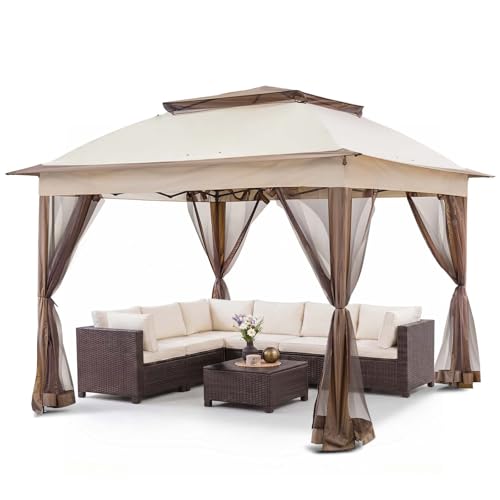
As an Amazon Associate we earn from qualifying purchases at no extra cost to you. Ratings are shown as listed on Amazon.
Best screened gazebo choices by situation
| Situation | Best configuration | Why it fits | Main compromise |
|---|---|---|---|
| Small patio or two to four people | 10 x 10 ft, about 100 sq. ft. | Uses less space and is easier to store | Limited room for a table and chairs |
| Family meals or six to eight people | 12 x 12 ft, about 144 sq. ft. | Good balance of shade, seating, and portability | Needs a larger storage footprint |
| Frequent outdoor entertaining | 13 x 13 ft or larger, preferably with straight sides | More usable interior area and headroom | Greater wind load and longer setup |
| Camping or rapid setup | Pop-up or hub-style shelter, 10 x 10 to 12 x 12 ft | Quick deployment and compact packed size | Usually less rigid than a permanent frame |
| Horse shows, grooming areas, or tack breaks | Heavy-duty 12 x 12 or 13 x 13 ft screen shelter | Room for chairs, coolers, and gear while reducing insects | Requires careful anchoring and clean, dry storage |
What separates a good screened gazebo from a frustrating one?
Footprint and usable space
Gazebo dimensions describe the outside edge, not the space available for furniture. A 10-by-10-foot shelter provides 100 square feet on paper, but sloping eaves, corner joints, and guy lines reduce the practical area. Allow roughly 24 inches of clearance around chairs and at least 30 inches for a comfortable walkway.
For example, a 12-by-12-foot gazebo has 144 square feet. A 6-by-8-foot dining table occupies 48 square feet, leaving 96 square feet for chairs and circulation. Once the table, eight chairs, and a cooler are added, the shelter may feel full even though the advertised footprint sounds generous. For mixed seating and open floor space, a 13-by-13-foot model is noticeably more comfortable.
Check both peak height and sidewall height. A roof peak around 9 to 10 feet feels open, while sidewalls around 6 feet 6 inches or higher are less likely to brush shoulders. Sloping walls create attractive profiles but reduce usable space near the perimeter.
Screen durability and entry design
Fine polyester or nylon mesh blocks smaller insects, but it is more vulnerable to snagging than coarse mesh. Look for reinforced hems, stitched attachment points, and zippers with fabric guards. The screen usually wears out before the roof frame does, particularly at door corners, lower edges, and places where hook-and-loop strips are repeatedly opened.
A single central door is acceptable for occasional use. Two opposing doors improve airflow and make it easier to move coolers, folding chairs, or equestrian equipment through the shelter. Zippered doors are more reliable than magnetic closures in breezy conditions, although they require two hands and should never be forced when the mesh is under tension.
Roof material and weather resistance
Most portable screened gazebos use polyester fabric with a water-resistant coating. A denser fabric, such as 150-denier or 300-denier polyester, generally offers better abrasion resistance than very light fabric, but denier alone does not prove waterproofing. Sealed seams, a properly pitched roof, and intact coating matter just as much.
Water resistance is not the same as storm resistance. These shelters are designed for shade, light rain, and ordinary summer use—not severe thunderstorms, heavy snow, or hurricane conditions. A vented roof reduces heat buildup and can lower uplift in moderate wind, but it does not make an unsecured gazebo safe.
For a permanent backyard installation, a hard-roof gazebo with aluminum or galvanized-steel panels provides better year-round weather resistance than a fabric pop-up. It also costs more, takes longer to install, and usually cannot be moved without disassembly.
Head-to-head: portable styles
Instant pop-up screened canopy
This is the practical choice when setup time matters. The scissor frame commonly opens in 5 to 15 minutes with two people, and the roof and mesh walls may remain attached during transport. Coleman makes Instant Screened Canopy models in this general category, although dimensions and included accessories vary by version.
The advantages are speed and portability. The weaknesses are flexible joints, smaller roof overhangs, and greater sensitivity to wind. Treat the shelter as a temporary structure: lower it when unattended and remove it before severe weather.
Hub-style screened shelter
Hub shelters use a central folding mechanism and typically have more vertical walls than a basic pop-up. Clam Quick-Set shelters and Gazelle screened gazebos are recognizable examples of this approach. Many can be erected in roughly one to three minutes once the roof and wall panels are familiar, though packing them away neatly takes longer.
They often offer excellent insect protection and generous interior space. Their wide sidewalls can catch wind, so every anchor point matters. A hub shelter is a strong choice for camping and event use when rapid setup is more important than the smallest packed size.
Permanent hard-roof gazebo
Aluminum or steel hard-roof structures provide the best long-term shade and can support more substantial screening systems. Expect several hours to a full day of assembly, often with two or more people. They are appropriate for a dedicated patio or garden location, not for frequent transport.
Inspect local rules before installation. Larger permanent structures may require permission, and the surface must be level enough for doors, posts, and roof panels to align correctly.
Anchoring is part of the product, not an accessory
Thin stakes supplied with a lightweight canopy are suitable only for firm soil and mild conditions. For grass, use long auger-style stakes or heavy-duty tent stakes at each leg, plus guy lines where the design provides attachment points. On concrete, use weighted plates or water-filled bases designed for canopy legs; do not improvise with unstable objects that can become trip hazards.
As a practical planning figure, four 30-pound weights provide 120 pounds of total ballast, but the required amount depends on the gazebo’s height, roof area, wind exposure, and surface. A 13-by-13-foot shelter presents about 169 square feet of roof area before accounting for the walls, so it can experience substantially more uplift than a 10-by-10-foot model. Follow the manufacturer’s anchoring instructions and take the shelter down when strong winds are forecast.
Setup, care, and seasonal storage
- Choose level ground. Remove stones and branches that can puncture the floor or distort the frame.
- Lay out every panel before raising the roof. This prevents zippers and hook-and-loop fasteners from being trapped inside the frame.
- Attach the screen without stretching it. Excess tension can pull seams apart when wind moves the structure.
- Anchor all legs immediately. Do not wait until the shelter is fully furnished.
- Check the roof after the first rain. Look for pooling, loose seams, and water dripping through attachment points.
For cleaning, brush away dry dirt first, then use lukewarm water and mild soap with a soft brush. Avoid bleach, abrasive cleaners, pressure washers, and machine drying unless the care label specifically permits them. Never fold a damp canopy: mildew stains and odors can develop quickly in enclosed fabric layers.
At the end of the season, dry the roof and screens completely, remove sand and grass from the frame joints, and store the shelter in a breathable bag in a dry area. Avoid hot attics, unheated sheds with condensation, and direct contact with a concrete floor. Loosely roll or fold mesh rather than compressing it against sharp frame edges.
Ownership costs that listings often overlook
Budget for replacement stakes, guy lines, zipper lubricant made for outdoor gear, seam-repair tape, and eventually a roof or screen panel. A sheltered canopy used twice per month for a five-month season sees about 10 uses per year. If it costs $300 and remains serviceable for five seasons, the shelter itself costs about $6 per use before replacement parts, anchors, and storage.
The components most likely to fail are zipper sliders, screen hems, roof coating, plastic corner joints, and scissor-frame rivets. Leaving the gazebo assembled in wind or folding it wet shortens its life far more quickly than ordinary sunlight exposure.
Bottom line
Choose a 10-by-10-foot screened canopy when space and storage are tight, a 12-by-12-foot instant or hub shelter for the best all-around balance, and a 13-by-13-foot or permanent hard-roof model when comfort and frequent use matter more than portability. Prioritize reinforced mesh, two-way entry, a vented water-resistant roof, sturdy frame joints, and a realistic anchoring plan. The best screened gazebo is not simply the largest or quickest to open—it is the one whose footprint, weather limits, storage demands, and anchoring system match the way you will actually use it.

Write Your Review
No reviews yet. Be the first to share your experience!