

Key takeaways
- Best all-round choice for cars with fixed mounting points: Thule WingBar Evo with the correct vehicle-specific feet and fit kit.
- Best for frequent outdoor-sports use: Yakima JetStream, especially when you want broad compatibility with bike, kayak, ski, and cargo-box accessories.
- Best for vehicles with raised factory rails: Rhino-Rack Vortex SX, provided its clamp spacing and vehicle load limit are suitable.
- Best budget approach: A complete, vehicle-specific square-bar or aerodynamic-bar system from a reputable manufacturer, rather than mixing used feet, bars, and unknown clamps.
- Best for occasional use: A removable clamp-on system with rubber-coated contact points, stored indoors between trips.
The best car roof racks are the ones whose vehicle-specific fit, load rating, bar length, and attachment system match your car and cargo—not simply the rack with the highest advertised capacity.
Our top picks


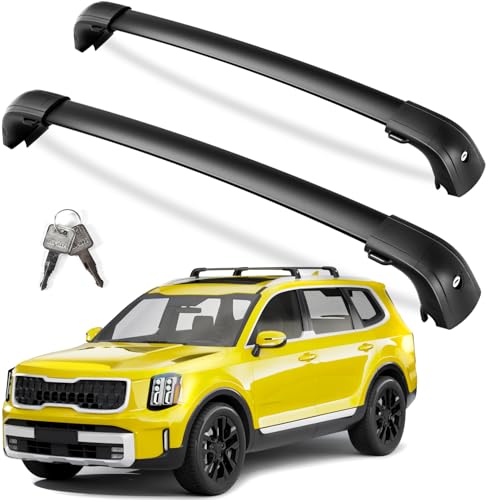
As an Amazon Associate we earn from qualifying purchases at no extra cost to you. Ratings are shown as listed on Amazon.
Quick picks by situation
- Best all-round choice for cars with fixed mounting points: Thule WingBar Evo with the correct vehicle-specific feet and fit kit.
- Best for frequent outdoor-sports use: Yakima JetStream, especially when you want broad compatibility with bike, kayak, ski, and cargo-box accessories.
- Best for vehicles with raised factory rails: Rhino-Rack Vortex SX, provided its clamp spacing and vehicle load limit are suitable.
- Best budget approach: A complete, vehicle-specific square-bar or aerodynamic-bar system from a reputable manufacturer, rather than mixing used feet, bars, and unknown clamps.
- Best for occasional use: A removable clamp-on system with rubber-coated contact points, stored indoors between trips.
These are starting points rather than universal winners. The vehicle roof, not the crossbars alone, determines the safe working limit. If your owner’s manual permits 75 kg and the rack is rated for 100 kg, the practical maximum is 75 kg, including the rack, feet, accessories, and cargo.
What separates the main roof-rack systems?
| System or type | Typical advertised rack limit | Bar lengths or size range | Attachment method | Best suited to | Main compromise |
|---|---|---|---|---|---|
| Thule WingBar Evo | Up to 100 kg, subject to vehicle limit | Approximately 95–150 cm depending on model | Vehicle-specific feet and fit kit; T-track accessory channel | Regular use, roof boxes, bikes, kayaks, skis | Complete systems commonly cost about $350–$700 |
| Yakima JetStream | Up to about 75 kg/165 lb, subject to vehicle limit | Common lengths include roughly 50–70 inches | Vehicle-specific towers, clips, or rail mounts; T-slot channel | Frequent accessory changes and aerodynamic performance | Correct tower and clip selection is essential |
| Rhino-Rack Vortex SX | Often up to 75 kg, subject to vehicle limit | Common bar lengths around 118–150 cm | Clamps directly to suitable raised factory rails | SUVs and wagons with raised rails | Not suitable for every flush rail or bare roof |
| Square steel-bar system | Typically 50–100 kg, depending on the complete system | Usually 100–150 cm | Clamps, fixed points, or rail mounts | Heavy, dirty, or infrequently used equipment | More wind noise and usually more exposed fasteners |
| Removable clamp-on system | Commonly 50–75 kg, subject to vehicle limit | Usually 110–140 cm | Door-frame clamps with rubber pads | Cars without rails or permanent mounting points | More installation time and greater risk of fitment error |
Advertised limits are not interchangeable: some manufacturers quote a bar or tower capacity, while others present the capacity of a complete system. Always use the lower of the vehicle, foot, bar, and accessory ratings. Dynamic capacity applies while driving; a separate static limit may apply when the vehicle is parked, such as when using a rooftop tent.
Choose by your vehicle’s roof type
Raised factory rails
Raised rails have a visible gap beneath them. Clamp-style feet such as the Rhino-Rack Vortex SX can often attach directly around the rails, making installation relatively quick. Measure the rail width and confirm that the feet are approved for your exact year, body style, and rail profile. A system designed for a thick oval rail may not securely grip a narrow rectangular one.
Flush rails
Flush rails sit almost against the roof and usually require dedicated towers and a vehicle-specific clip or fit kit. Do not assume that a universal clamp will work. The fit kit controls where pressure is applied and protects the roof’s sealing surfaces. Flush-rail systems can be quiet and clean-looking, but replacement clips may be needed if you change vehicles.
Fixed mounting points
Some cars have small removable covers or threaded points in the roof. These are generally the most repeatable mounting locations because the bar spacing is specified by the vehicle manufacturer or rack maker. Thule and Yakima both offer systems for many fixed-point applications, but the correct fit kit remains model-specific.
Bare roofs
Bare-roof vehicles use door-frame clamps with padded feet. They can be safe when correctly fitted, but installation accuracy matters most here. The doors must close without pinching the pads, the clips must sit in their intended locations, and the bar must not slide when pushed firmly by hand. Remove the rack if you will not use it for weeks or months; this reduces noise, grime buildup, and unnecessary exposure to weather.
Wind noise, security, and everyday ownership
Aerodynamic bars with a teardrop profile and a covered accessory channel are normally quieter than square steel bars. Noise still depends on bar overhang, sunroof position, vehicle shape, and whether the channel cover is installed. An unused T-track slot can whistle, so replace missing channel strips rather than leaving the slot open. If noise is a priority, keep the bar ends as close to the feet as the instructions allow and remove the rack when empty for long periods.
Lock cylinders deter casual removal but are not a substitute for a parking strategy. Lock the feet to the vehicle, lock the accessory to the crossbars where supported, and use a separate cable or chain for unusually valuable equipment. Check that every lock is fully engaged; a key turning does not always prove that the clamp is tight.
Most wear occurs at rubber pads, door clips, plastic end caps, and exposed bolts—not in the aluminum bar itself. Road salt and grit can cause seized fasteners, while ultraviolet exposure can harden rubber. Wash contact areas with mild soap and water, dry them before refitting, and avoid petroleum products on rubber pads unless the manufacturer specifically permits them. Replace cracked pads, stretched clips, or bent hardware instead of compensating by over-tightening.
Match the rack to your cargo
- Roof boxes: Need adequate bar spread, usually at least two crossbars, and enough bar length for the box’s mounting clamps. Check that the rear hatch opens without striking the box.
- Bicycles: Fork-mount carriers may require removing the front wheel; upright carriers are faster but add height. Confirm the bar and carrier can accommodate your axle type and tire width.
- Kayaks and canoes: J-cradles and saddles concentrate load at specific points. Use bow and stern lines for long boats, but do not overtighten them against fragile hulls.
- Skis and snowboards: Magnetic or clamp-on carriers are convenient, while a roof box offers better protection from road grime. Check the carrier’s height capacity for thick ski bindings.
- Ladders, lumber, and long pipes: Use load stops or a rated carrier, front and rear tie-downs, and padding where appropriate. Keep the load centered and comply with local overhang rules.
Do not attach heavy cargo to a rack merely because it fits physically. A loaded roof box also raises the vehicle’s center of gravity, and a long kayak creates aerodynamic forces that can exceed the simple weight calculation.
A practical load calculation
Suppose your vehicle permits 75 kg on the roof. A rack weighs 5 kg, its feet weigh 2 kg, and a roof box weighs 18 kg. The remaining cargo allowance is:
75 kg − 5 kg − 2 kg − 18 kg = 50 kg of cargo.
If the box contains 45 kg, you are within the static weight figure, but you should still confirm the box’s own limit and distribute the load evenly. Put dense items low and near the center, keep the lid fully latched, and recheck the straps after the first short drive. A 100 kg-rated bar does not increase the vehicle’s 75 kg roof rating.
Installation checklist that prevents common mistakes
- Confirm the exact vehicle year, body style, roof type, and permitted roof load.
- Lay out the bars, feet, clips, locks, and instructions before tightening anything.
- Clean and dry the roof contact areas; grit under a rubber pad can mark paint.
- Measure bar spacing from the specified reference points, not from the windshield or hatch by eye.
- Tighten gradually and use the supplied torque indicator or torque wrench. More force is not safer.
- Check that doors, sunroofs, hatchbacks, and roof-box lids operate without contact.
- Push and pull the completed rack firmly. It should move with the vehicle, not slide across the roof.
- After driving a short distance, stop and recheck every clamp, strap, and accessory fastener.
How much should you spend?
Expect roughly $200–$400 for a basic complete system, $350–$700 for a premium aerodynamic system, and another $100–$600 for a cargo-specific accessory such as a bike carrier, kayak cradle, or roof box. A cheaper rack can be sensible for occasional, light use, but compare the cost of replacement fit kits and pads before choosing a system. If you use the rack 20 times a year for five years, a $500 rack costs about $5 per use before accessories—often less than repeatedly hiring transport or buying disposable tie-down solutions.
Final buying decision
Choose the Thule WingBar Evo or Yakima JetStream when quiet operation, accessory compatibility, and frequent use justify a complete premium system. Choose Rhino-Rack Vortex SX when your vehicle has compatible raised rails and you want a direct, tidy installation. Choose a square-bar or basic clamp-on system when price and occasional utility matter more than refinement. Whichever route you take, verify the vehicle-specific fit first, count the rack and accessory weight, and treat the lowest published limit as the rule that governs the entire setup.

Write Your Review
No reviews yet. Be the first to share your experience!