

Key takeaways
- Already own a KitchenAid mixer and grind occasionally: Choose the compatible KitchenAid metal attachment if you value a metal body and three plate options. A plastic-body version may suit lighter, less frequent use if its configuration and fit meet your needs.
- Grind a few pounds at a time: A mixer attachment is usually easier to store than a dedicated machine. It makes sense when the mixer is already on the counter and the extra setup is occasional.
- Grind often or process larger batches: Consider a dedicated grinder. It takes more storage space and costs more, but its motor is intended for grinding rather than sharing power with other mixer tasks.
- Have a different mixer brand: Buy only an attachment explicitly listed for that exact brand and model. If the manufacturer provides no clear compatibility information, choose a dedicated grinder or contact the seller before ordering.
- Need sausage stuffing: Check which tubes and plates are included. A grinder’s stuffing accessory can be convenient, but dedicated sausage stuffers generally make filling casings easier for frequent sausage-making.
The best meat grinder attachments for most home cooks
The best meat grinder attachments are the ones that fit your mixer or grinder exactly, include the plate sizes you’ll actually use, and can process a batch without frequent reloading or difficult cleanup. For occasional small batches, a compatible KitchenAid stand-mixer attachment is a compact choice; for regular or larger batches, a dedicated grinder such as the LEM BigBite #8 offers more capacity and less dependence on a mixer.
There isn’t one attachment that fits every stand mixer. Before buying, confirm the manufacturer’s compatibility list for your exact mixer model, then compare the feed opening, included plates, materials, and which parts are safe to wash. The table below uses published specifications where available; capacity varies with meat temperature, cut size, and how steadily you feed it.
Our top picks
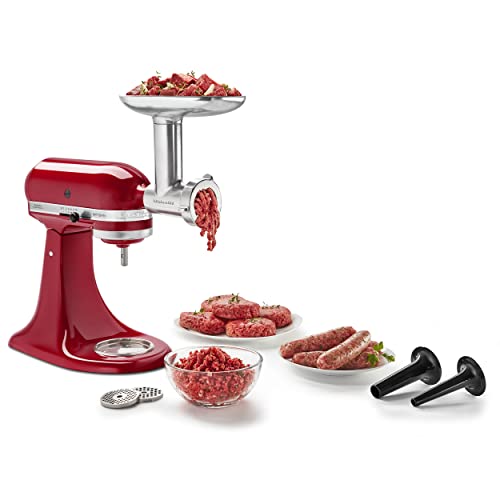
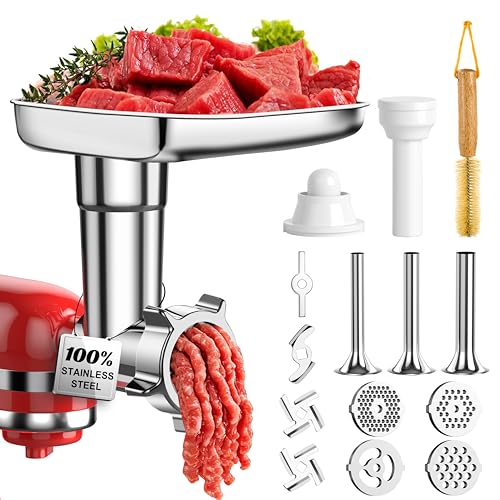


As an Amazon Associate we earn from qualifying purchases at no extra cost to you. Ratings are shown as listed on Amazon.
Compare the main choices
| Option | Compatibility | Plates and materials | Published capacity or size | Best fit |
|---|---|---|---|---|
| KitchenAid Metal Food Grinder Attachment (KSMMGA) | Designed for KitchenAid stand mixers with the compatible power hub; check the current model list before ordering. | Three grinding plates: fine, medium, and coarse. Metal grinder body and grinding components; includes food pusher and sausage-stuffing accessories. | Three plate sizes; no dependable pounds-per-minute rating to compare with dedicated electric grinders. | Small to medium batches when you already own a compatible KitchenAid mixer. |
| KitchenAid Food Grinder Attachment (FGA, plastic body) | KitchenAid stand mixers with a compatible power hub; verify model fit. | Plastic body with metal grinding components; typically supplied with fine and coarse plates. | Two plates in common configurations; capacity depends on the mixer and feed rate. | Occasional grinding when a lower-cost, compact attachment is the priority. |
| LEM BigBite #8 Grinder | Dedicated appliance; does not attach to a stand mixer. | Stainless-steel housing and metal grinding parts; plate and accessory package varies by model or bundle. | Rated up to 7 pounds per minute by the manufacturer; actual output is usually lower in home use. | Frequent batches, game processing, or cooks who want a separate grinder rather than a mixer attachment. |
| Generic stand-mixer grinder attachment | Only fits the mixer brands and models named by its manufacturer; a similar-looking hub is not proof of compatibility. | Often includes two or three plates; housing and cutter materials vary, so check the parts list. | No standard capacity rating. Compare feed opening and batch guidance rather than relying on a broad claim. | Budget shoppers willing to verify fit, replacement-part availability, and cleaning instructions carefully. |
KitchenAid’s attachments are examples of mixer-driven grinders, not universal accessories. A stand mixer supplies the power, so the same attachment may behave differently across mixer models and batch sizes. The LEM figure is a manufacturer-rated maximum, not a promise for every meat or setup; for a fair comparison, treat it as an upper bound.
Choose by kitchen and batch size
- Already own a KitchenAid mixer and grind occasionally: Choose the compatible KitchenAid metal attachment if you value a metal body and three plate options. A plastic-body version may suit lighter, less frequent use if its configuration and fit meet your needs.
- Grind a few pounds at a time: A mixer attachment is usually easier to store than a dedicated machine. It makes sense when the mixer is already on the counter and the extra setup is occasional.
- Grind often or process larger batches: Consider a dedicated grinder. It takes more storage space and costs more, but its motor is intended for grinding rather than sharing power with other mixer tasks.
- Have a different mixer brand: Buy only an attachment explicitly listed for that exact brand and model. If the manufacturer provides no clear compatibility information, choose a dedicated grinder or contact the seller before ordering.
- Need sausage stuffing: Check which tubes and plates are included. A grinder’s stuffing accessory can be convenient, but dedicated sausage stuffers generally make filling casings easier for frequent sausage-making.
Plates, feed capacity, and the details that change results
A fine plate produces a smaller grind; a coarse plate leaves larger pieces and is often a useful starting point for burgers or a first pass before a finer grind. Medium plates split the difference. Plate-hole diameters aren’t standardized across every manufacturer, so compare the included plate labels and replacement-part specifications rather than assuming that “fine” means the same size everywhere.
Feed capacity is not just the size of the hopper. A narrow opening means more trimming and smaller pieces before feeding; a shallow tray may need more frequent reloading. For a large batch, those pauses add up. Manufacturer pounds-per-minute figures can help compare dedicated machines, but they’re difficult to translate to mixer attachments and real kitchens: sinew, fat, meat temperature, and how quickly the operator feeds the grinder all affect throughput.
For home grinding, cut meat into pieces that fit the feed opening and chill the meat and metal parts beforehand if the manufacturer recommends it. Cold, firm pieces are easier to feed cleanly than soft, warm meat. Don’t force meat through with a utensil; use the supplied pusher.
Setup and cleanup: a short routine that saves trouble
- Check fit and assemble in order. Confirm the attachment is locked into the mixer hub or that the dedicated grinder is assembled as instructed. Seat the knife with its cutting edges against the plate; a reversed knife can grind poorly and strain the machine.
- Chill the parts and prepare the batch. Cut meat into manageable strips, remove tough connective tissue that could wrap around the cutter, and keep the batch cold. Work in portions that fit the tray and your available counter space.
- Feed steadily, without force. Start with a coarse plate if you plan to grind twice. Avoid overloading the tray, and stop if the motor labors or the grinder clogs rather than pushing harder.
- Disassemble promptly after use. Scrape off residue and wash parts according to the manual. Many grinder attachments have metal parts that should be hand-washed and dried immediately; dishwasher-safe claims vary by component and product revision.
- Dry before storing. Moisture left on metal parts can cause discoloration or corrosion. Keep the knife and plates dry, and store small parts together so they’re ready for the next batch.
The knife and plate are the working surfaces most likely to lose performance first. A dull or damaged knife, a plate with blocked holes, or a poor knife-to-plate fit can lead to smeared meat and slower feeding. Replacement plates and knives are worth checking before purchase—especially for lesser-known attachments—because a low initial price is less useful if the cutting parts are hard to replace.
Quick decision matrix
| Your situation | What to prioritize | Best direction |
|---|---|---|
| Small kitchen, occasional batches | Compact storage, simple setup, included coarse and fine plates | Compatible mixer attachment |
| Frequent grinding or large batches | Dedicated motor, clear capacity rating, readily available replacement parts | Dedicated electric grinder |
| First-time grinder owner on a budget | Exact mixer fit, basic plate set, accessible cleaning instructions | Compatible entry-level attachment; avoid buying on price alone |
| Several textures or two-pass grinding | At least two plate sizes and a cutter system with replaceable parts | Metal attachment or dedicated grinder with documented plate options |
Bottom line
For occasional home use, a compatible mixer attachment is usually the space-saving pick; the KitchenAid metal grinder attachment is a sensible option for KitchenAid owners who want three plate choices. For regular grinding or batches where repeated reloading would be frustrating, a dedicated grinder such as the LEM BigBite #8 is a better match. In either case, verify exact compatibility, confirm what the box includes, and check that knives and plates can be replaced before choosing.

Write Your Review
No reviews yet. Be the first to share your experience!