

Key takeaways
- Find the best saddle pads for trail riding: two English pads with pockets, plus a seat cushion and bareback pads explained, with fit and wither tips.
The best true saddle pad for trail riding in this group is the Derby Originals half-fleece-lined English pad with pockets: it goes under an all-purpose saddle, has a contoured wither relief and carries two large hook-and-loop pockets for a phone, keys or trail snacks. Be aware that four of the six listings here are not under-saddle pads at all. The Harrison Howard Trail Seat Saver is a ride-on cushion that sits on top of a Western saddle seat, and the three Harrison Howard mesh pads are bareback pads with a girth, meant for riding without a saddle. A saddle pad is the cushioning layer between saddle and horse that spreads pressure, absorbs sweat and protects the back.
Quick List
- Harrison Howard Trail Seat Saver – accessory for riders who want extra cushioning on top of a Western saddle seat
- Harrison Howard Mesh Bareback Pad (first listing) – best for riders who want to try bareback trail rides with a padded base
- Harrison Howard Mesh Bareback Pad (second listing) – best for a second size or color of the same bareback pad (confirm on listing)
- Derby Originals Trail Riding English Pad – best for an all-purpose saddle with pockets on the trail
- Derby Originals Half-Fleece English Pad – best overall under-saddle pick for trail rides with wither relief
- Harrison Howard Mesh Bareback Pad (third listing) – best for hot-weather airflow when riding without a saddle
Which One Is Right for You?
| If you… | Choose |
|---|---|
| ride in an all-purpose or close-contact English saddle on trails | Derby Originals Half-Fleece English Pad |
| want the same style with a trail-focused listing and color choices | Derby Originals Trail Riding English Pad |
| ride a Western saddle and want a seat cushion on top | Harrison Howard Trail Seat Saver |
| want to ride bareback on easy trails | Harrison Howard Mesh Bareback Pad (any of the three listings) |
| need a different size or color of the bareback pad | Second or third Harrison Howard listing |
| ride in hot weather without a saddle | Harrison Howard Mesh Bareback Pad (third listing) |
If you ride in a saddle, only the two Derby Originals listings are pads that go beneath it. The Seat Saver adds comfort for you, not for the horse’s back, and the bareback pads replace the saddle altogether. Match the product to your saddle type first, then look at pockets, thickness and wither clearance. Western riders who need a pad under the saddle will need to look beyond these listings.
All 6 Picks in Detail
1. Harrison Howard Trail Seat Saver – Accessory for Cushioning a Western Saddle Seat
As an Amazon Associate we earn from qualifying purchases at no extra cost to you.

This is an accessory rather than a saddle pad, and it belongs here only as a runner-up for comfort. The Harrison Howard Trail Seat Saver is described as a ride-on Western pad with a cushion bottom that sits on top of the saddle seat, not underneath it. Its purpose is to soften the ride for the rider on long trail days by adding shock absorption and helping to distribute pressure. It does not replace a pad under the saddle and does nothing for the horse’s back.
- Ride-on pad that sits on the seat of a Western saddle
- Cushion bottom for shock absorption per the listing
- Marketed for trail riding
- Designed to help distribute pressure on the rider
- Size, strap system and colors: confirm on listing
A seat saver is most useful for riders who spend several hours in a Western saddle on trail days, such as ranch-style rides or backcountry outings, where leather can feel hard after the first hour. Check that the straps or fit system keep the cushion from sliding on the seat, because a pad that shifts underneath you is more distracting than no pad at all. Think of it as a rider upgrade added after the horse’s own pad is sorted out.
Pros:
- Adds comfort on long trail days
- Goes on top of an existing saddle with no change to fit under it
Cons:
- It is not a pad for the horse; you still need one under the saddle
- Adding thickness on the seat can change how your seat feels in the saddle
Unlike the two Derby Originals pads, which protect the horse’s back, this pad is for the rider, so buy it only in addition to a proper saddle pad.
2. Harrison Howard Mesh Bareback Pad, First Listing – Best for a First Bareback Trail Ride

This is a bareback pad with a girth, which means you ride on it directly, without a saddle. It is a runner-up for trail riding rather than a saddle pad, and it suits experienced riders who are comfortable without stirrups and want a cushioned alternative to bare skin. Descriptions of the Harrison Howard mesh bareback line mention foam padding with a raised pressure-relief zone, a breathable 3D air mesh, a fleece underside and a wide girth with a metal buckle, but confirm the exact details of this listing before purchase.
- Bareback riding pad with girth, not an under-saddle pad
- Mesh construction described for airflow
- Padded seat with a raised relief zone per the product line description
- Girth included for securing the pad
- Size, color and foam thickness: confirm on listing
Before the first ride, set the pad on the horse in the barn and walk a few laps in the arena. Check that the girth is snug but not tight, that the buckle sits clear of the elbow and that the pad does not roll when you mount from a block. A bareback pad without stirrups changes how you get on and off, so practice mounting from a mounting block or a fence rather than from the ground.
Pros:
- Lets you ride bareback with some cushioning and a girth
- Light enough to pack for easy trail days
Cons:
- No stirrups, so it requires good balance and is not ideal for steep terrain
- Not a substitute for a saddle on long or technical rides
It sits in the same family as listings 3 and 6; pick between them by size and color on the product page.
3. Harrison Howard Mesh Bareback Pad, Second Listing – Best for an Alternate Size or Color

This listing uses the same product name as the first bareback pad and appears to be another size or color of the same design. Treat it as a bareback pad with a girth, again a runner-up for trail use, and read the selector carefully before ordering. The girth is the key safety component of any bareback pad, so inspect the buckle, the stitching and the grommets for secure attachment each time you ride.
- Bareback pad with girth, not an under-saddle pad
- Same product name as the first and third listings
- Intended for riding without a saddle
- Girth width and buckle type: confirm on listing
- Variant details (size, color): confirm on listing
Because several identical-looking listings exist, keep a note of the size and color you choose and the girth length the page states. If the girth is too short for a deep-chested horse, the pad will sit poorly and you will not be able to tighten it safely. Measure your horse’s girth line with a soft tape and compare it with the listing details before ordering, or contact the seller if the dimensions are not stated.
Pros:
- Offers another option within the same product line
- Simple setup compared with a full saddle
Cons:
- Difficult to tell it apart from the other listings by name alone
- Requires the rider to be comfortable without stirrups
It is functionally interchangeable with the first listing; the only meaningful differences will be on the product page.
4. Derby Originals Trail Riding English Pad – Best for Pockets and Color Choices

The Derby Originals Trail Riding pad is described as an all-purpose and dressage English saddle pad with pockets, available in multiple colors. It is a real under-saddle pad, the first of two in this list. For trail riders using an all-purpose or dressage-style English saddle, pockets are the main attraction: a phone, a hoof pick, a snack and a map fit without needing a saddle bag. Choose the version with the saddle shape that matches yours, since all-purpose and dressage cuts differ.
- English saddle pad for all-purpose and dressage saddles
- Pockets for trail essentials
- Available in multiple colors per the listing
- Marketed for trail riding
- Material, thickness and exact dimensions: confirm on listing
For a trail rider, an everyday English pad with pockets removes a small but real annoyance: no dangling saddle bag banging against the saddle. Colors matter less than fit, but if you ride in a group, a distinctive color helps you spot your tack at a trailhead. Look at the listing’s size options before ordering, because the pad’s length and drop should extend slightly beyond the saddle panels without hanging down onto the horse’s shoulder or loins.
Pros:
- Pockets reduce the need for a saddle bag
- Color choices let you match tack
Cons:
- English cut only, so Western saddles need a different pad
- Listing does not state the lining or thickness in the name
Next to the half-fleece version, this one emphasizes color choice and dual all-purpose and dressage fit, while the half-fleece lists explicit wither relief.
5. Derby Originals Half-Fleece English Pad – Best Overall Under-Saddle Pick for Trails

This is the strongest true saddle pad in the group for trail riding. Derby Originals describes an all-purpose English pad with pockets, a half-fleece lining and a shock-absorbing wither relief design for trail riding, schooling, jumping and close-contact saddles. Retailer descriptions give two large hook-and-loop pockets of about 8 by 8 inches, billet straps and girth loops that keep the pad from shifting, and a size of roughly 24 inches along the spine and 19 inches from spine to edge. Confirm these figures on the listing.
- All-purpose English cut, half fleece lined
- Contoured wither relief design per the listing
- Pockets on both sides (about 8 by 8 inches per retailer descriptions)
- Billet straps and girth loops to reduce slipping
- Fabric and color options: confirm on listing
Trail riding involves longer hours in the saddle than most arena sessions, so a pad that holds its place on hills matters. The billet straps and girth loops mentioned in retailer descriptions are meant to keep the pad from sliding back on a descent. Pair it with a saddle that fits well, since no pad can fix a saddle that pinches. If your horse has a sensitive back, consider a thicker pad underneath this style or ask a saddle fitter for advice.
Pros:
- Combines wither relief, pockets and strap anchors in one pad
- Suitable for trail riding and schooling in the same saddle
Cons:
- Not intended for Western saddles
- Half-fleece lining is lighter than a thick wool or memory-foam pad, so check suitability for a horse with a sensitive back
It is the better choice than listing 4 if wither clearance and anti-slip straps matter to you.
6. Harrison Howard Mesh Bareback Pad, Third Listing – Best for Hot-Weather Airflow
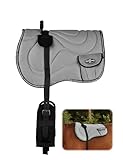
The third bareback listing shares its name with the first two. If you want a bareback pad for warm-weather trail walks, the mesh surface is the selling point, since air mesh dries quickly and lets heat escape from the horse’s back more readily than a solid fabric. Like the others, it is a runner-up and not a conventional saddle pad, so use it only if bareback riding fits your experience and your terrain.
- Bareback pad with girth, not an under-saddle pad
- Mesh surface for airflow
- Same product name as listings 2 and 3 in this guide
- Intended for easy trails and flat ground
- Size and color: confirm on listing
Hot-weather bareback riding comes with its own checklist: shorter rides, shade breaks and a thorough rinse of the horse’s back afterward, since sweat trapped under any pad can irritate skin. Keep the mesh clean by shaking out grit and rinsing the pad as the care label allows, then let it dry fully in the shade so it does not stiffen. Reserve this pad for calm, level routes rather than steep climbs.
Pros:
- Breathable surface suits summer riding
- Easy to rinse and dry after a sweaty ride
Cons:
- No stirrups or saddle structure, so it asks more of the rider
- Not recommended for steep, rocky or technical routes
It is the same family as listings 2 and 3, so the choice between them comes down to the size and color options on the page.
Specs Compared
| Product | Type | Goes under a saddle? | Pockets | Girth | Notes |
|---|---|---|---|---|---|
| Harrison Howard Trail Seat Saver | Ride-on seat cushion (Western) | No, sits on the seat | Confirm on listing | Confirm on listing | Rider comfort accessory |
| Harrison Howard Mesh Bareback (first) | Bareback pad | No, replaces the saddle | Confirm on listing | Included | Mesh, padded |
| Harrison Howard Mesh Bareback (second) | Bareback pad | No, replaces the saddle | Confirm on listing | Included | Variant of the same design |
| Derby Originals Trail Riding English | English saddle pad | Yes | Yes | Not applicable | All-purpose and dressage; multiple colors |
| Derby Originals Half-Fleece English | English saddle pad | Yes | Yes (two per retailer details) | Girth loops and billet straps | Half fleece lined; wither relief |
| Harrison Howard Mesh Bareback (third) | Bareback pad | No, replaces the saddle | Confirm on listing | Included | Variant of the same design |
How We Chose These
This guide is based on research into the six listed products, not on handling them. We read each listing name, compared it with manufacturer and retailer descriptions, and sorted the products by what they actually are: an under-saddle pad, a ride-on seat cushion or a bareback pad. For trail riding we looked at fit under the saddle, wither clearance, anti-slip straps, pockets and how clearly each listing states its dimensions. Because only two of the six are true saddle pads, we say so plainly and mark the rest as accessories or runner-ups. Where a listing does not state a value, we say to confirm it on the product page.
What to Look For
Match the Pad to Your Saddle
English pads are cut to follow the contour of an English saddle, with a spine length around 24 inches for many all-purpose cuts. Western pads are larger and usually thicker, commonly around 30 inches in length. Putting an English pad under a Western saddle will leave much of the saddle unsupported and can cause pressure points. Start with the saddle you have and choose a pad shaped for it. Also consider trail conditions: hilly ground pushes the saddle forward on descents and back on climbs, so a pad with anchoring straps or a grippy underside earns its keep, while on flat, easy paths simple fleece is usually enough. If you ride bareback, a bareback pad with a girth is its own category and is not a substitute for a saddle pad.
Wither Clearance and Pressure Relief
A pad should lift off the withers and spine rather than press on them. A contoured or cut-back wither design leaves a channel of air so the saddle does not pinch. After tacking up, lift the pad slightly into the gullet of the saddle, so you can fit two to three fingers between the pad and the top of the withers. Check the sweat pattern after a ride: dry spots suggest pressure points, and an even wet pattern suggests an even fit.
Pockets and Straps
On longer rides, pockets keep essentials within reach without a saddle bag. Choose pockets with hook-and-loop closures so contents do not fall out at a trot, and avoid overloading them, because heavy items shift and can rub the horse’s back. Billet straps and girth loops hold the pad in place and reduce slipping on hills, so check that they match your saddle’s billets.
Padding, Lining and Care
Fleece wicks moisture and cushions a thin layer, while thicker foam or wool absorbs more shock. A half-fleece lining keeps the pad lighter, which many trail riders prefer in summer. Whatever the material, shake off grit before each ride, wash according to the label and air-dry the pad. A pad that stays damp or stiff with dried sweat can cause skin irritation.
Worked Example: Is This the Right Pad?
Suppose you ride a 17-inch all-purpose English saddle on a medium-sized horse with moderate withers. You need an all-purpose cut, roughly 24 inches along the spine, with a wither channel and a place to keep a phone. The half-fleece Derby Originals pad matches each of these. If instead you ride a Western saddle, none of the pads under the saddle in this list are the right cut, and the Trail Seat Saver would only add comfort for you. If you ride bareback on flat trails, any of the three mesh pads could work, provided you are secure without stirrups.
Questions
Can I use an English saddle pad under a Western saddle?
It is not recommended. English pads are shaped and sized for English saddles and leave the larger Western saddle partly unsupported. Choose a pad made for Western saddles.
Is a bareback pad safe for trail riding?
It can be on calm horses and gentle ground, but it provides less security than a saddle, with no stirrups and a higher risk of falls on steep or uneven trails. Wear a certified helmet, check the girth and buckle every time, and start on flat, familiar routes.
What does a seat saver do?
A seat saver is a cushion that sits on top of a saddle seat to reduce fatigue and shock for the rider. It does not protect the horse’s back, so you still need a proper pad under the saddle.
How do I know if a saddle pad fits my horse?
Look for even sweat marks after riding, a clear channel over the withers and a pad that sits flat without bunching. Dry patches, rubbed hair or a pad that slides back are signs of a poor fit.
How often should I wash a saddle pad?
Brush it off after every ride and wash it every few weeks, or more often in hot weather, following the label. Dried sweat and dirt can irritate the horse’s skin.
Should I add a pad under my saddle if I use a seat saver?
Yes. The seat saver sits on top of the saddle for the rider’s comfort and does nothing to protect the horse’s back. You still need a properly fitted pad underneath the saddle for sweat absorption and pressure distribution.
Update History
- October 20, 2026 – Initial publication; product set drawn from current catalog listings.
- Check the product page for current specifications and availability before buying.
Sources
- Manufacturer product pages for Harrison Howard Equestrian and Derby Originals
- Retailer listing titles and specification fields for each listed pad
- Retailer descriptions of the Derby Originals English pad with pockets


Write Your Review
No reviews yet. Be the first to share your experience!