

Key takeaways
- Best horse fly masks: six options compared by ears, nose coverage, UV protection and fit, with sizing guidance and daily care advice for summer.
For the widest all-round protection, the Harrison Howard CareMaster Pro Luminous fly mask is the best overall pick here: its listing names a large eye space, a long nose, ears and UV protection in a full-size cut. A fly mask is a breathable mesh hood that keeps flies, gnats and debris away from a horse’s eyes, and in many designs it also shields the face from sun. The six masks below split into three families: masks with ears, masks without ears, and a long-nose style. Which is right depends on how much coverage your horse tolerates, how sensitive the eyes and ears are, and how well the mask stays put in turnout.
Quick List
- Fine-mesh fly mask with ears (unbranded) – best for a simple eared mask with adjustable fit and UV protection
- Farnam SuperMask II – best for a no-ears mask with extended coverage in a regular size
- Cashel Crusader Standard – best for a no-ears, no-nose classic in a plain gray finish
- Harrison Howard Super Comfort Stretchy – best for a stretchy, soft mask with large eye space and UV protection
- Fornyk Without Ears – best for a high-visibility mask with a writable name tag
- Harrison Howard CareMaster Pro Luminous – best for long-nose, eared coverage with UV protection
Which One Is Right for You?
| If you… | Choose |
|---|---|
| Want ears, a long nose and UV protection in one mask | Harrison Howard CareMaster Pro Luminous |
| Prefer ears covered but want a simple adjustable mask | Fine-mesh fly mask with ears |
| Want a well-known no-ears mask with extended coverage | Farnam SuperMask II |
| Need a basic no-ears, no-nose mask | Cashel Crusader Standard |
| Have a horse with big eyes that dislikes pressure around the face | Harrison Howard Super Comfort Stretchy |
| Want a brightly colored mask you can spot across a field, with space for a name | Fornyk Without Ears |
| Have a horse that hates anything on its ears | Any of the no-ears masks: Farnam, Cashel, Harrison Howard Stretchy or Fornyk |
Fit comes before features. A mask that is too tight rubs the face and leaves bald spots, and one that is too loose slips over the eyes and defeats the purpose. Check the size chart, measure your horse, and begin with the style your horse already tolerates, such as eared or non-eared, before trying something new.
All 6 Picks in Detail
1. Fine-Mesh Fly Mask with Ears – Best for a Simple Eared Mask
As an Amazon Associate we earn from qualifying purchases at no extra cost to you.
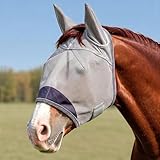
This unbranded listing describes a horse fly mask with ears, UV protection and fine mesh, with adjustable fit and a sizing range that includes pony. The ear covers help keep gnats and flies out of the ears, which are a favorite landing spot, and the fine mesh is meant to block small biting insects. It suits a horse that accepts ears on a mask and that is fairly average in head shape.
- Eared design with UV protection
- Fine mesh described as comfortable
- Adjustable fit
- Pony and horse sizing options per the listing
- Exact mesh UV rating, material and closure style: confirm on listing
Adjustable closures help you fit different head shapes, but make sure they are not so tight that they pinch behind the jaw. When trying a new mask, watch your horse for a few minutes after putting it on, and check the face and ears daily for rubs. Because the listing has limited brand detail, confirm the return terms and sizing chart before ordering.
Trial tip: introduce any new mask for a short stretch in the paddock while you are around, then lengthen the time over several days. Horses accept a mask more readily when the first experience is calm, and you can catch a poor fit before it causes a rub. Keep the original packaging details so you can return or exchange for another size if needed.
Pros
- Covers the ears
- Adjustable for fit
- Offered in multiple sizes
Cons
- Little brand information
- Some horses dislike ear covers
Compared with the CareMaster Pro, it covers the ears but not the long nose, so it is the simpler of the two eared options.
2. Farnam SuperMask II – Best for a No-Ears Mask with Extended Coverage
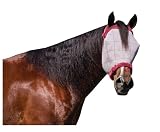
The Farnam SuperMask II is a fly mask without ears, in a regular size, marketed as providing extended coverage against mosquitoes, gnats and flies. Farnam is a familiar name in fly control products. This is a good choice for horses that dislike anything around the ears or that wear their mask under a halter where ear covers might get in the way.
- No ears
- Regular size
- Extended coverage for eyes and face per the listing
- Marketed against mosquitoes, gnats and flies
- Mesh type, UV rating and closures: confirm on listing
No-ear masks leave the ear canal exposed, so if flies in the ears are a major problem for your horse, consider adding a separate ear net or choosing an eared mask. For horses that rub their faces on fences, check the mask regularly for snags and wear.
Trial tip: a regular size is a middle-of-the-road choice, so check it against your horse’s face before turnout. If the mask sits too far forward, the eye holes will sit below the eyes and the mesh may touch them; if it sits too far back, flies can reach the lower eyelids. A quick fit check with the horse standing on a loose lead will tell you most of what you need to know.
Pros
- Familiar brand with extended coverage
- No ears for sensitive horses
- Simple, classic design
Cons
- Ears remain uncovered
- UV details are not stated in the listing name
Compared with the Cashel Crusader, it advertises extended coverage, while the Cashel is more minimal.
3. Cashel Crusader Standard – Best for a Basic No-Ears, No-Nose Mask

The Cashel Crusader Standard is described as a fly mask with no ears or nose, in gray, in a horse size. It is the most minimal design here, focusing on the eyes and the upper face. That makes it a good fit for horses that dislike heavier masks, for warm climates where less fabric is more comfortable, and for owners who want a straightforward mask without extras.
- No ears, no nose coverage
- Gray color
- Standard horse size
- Fabric type and UV protection: confirm on listing
- Closure style: confirm on listing
Without nose coverage, flies may still bother the muzzle, so some owners pair it with a fly spray applied to the lower face. As always, apply spray carefully and avoid the eyes. Gray tends to blend in at a distance, so it is less visible than neon colors in a field.
Trial tip: the plain design is easy to keep clean, since there are fewer seams and no ear or nose pieces to collect debris. Rinse it in a bucket with mild soap and hang it in the shade to dry. If your horse has a flea-bitten gray or white face, remember that sun can still affect the unprotected nose and lower face.
Pros
- Light, minimal design
- No extra coverage that might annoy a sensitive horse
- Straightforward styling
Cons
- No nose or ear protection
- Limited features in the listing name
Compared with the Farnam SuperMask II, it is the more minimal option with less claimed coverage.
4. Harrison Howard Super Comfort Stretchy – Best for Soft, Roomy Eye Space

This Harrison Howard mask is described as stretchy, with a large eye space, UV protection and a breathable, soft-on-skin feel, in navy blue, size Large, full size. The large eye space helps keep the mesh from touching the eyelashes, which matters for horses that blink at the slightest contact. The stretch material can improve comfort for horses with prominent cheekbones or sensitive skin.
- Stretchy fabric
- Large eye space
- UV protection per the listing
- Navy blue, size Large (full size)
- Ears or no-ears design and closure style: confirm on listing
Stretchy masks can feel secure without being tight, but they can also wear out sooner with rough use. After each ride or turnout, check the mask for stretched-out areas that might slide into the eyes. Rinse it regularly according to the care instructions to keep the mesh free of dirt and sweat.
Trial tip: stretchy fabric can make a mask feel forgiving between sizes, but it does not replace a proper measurement. If you notice the mask riding up or leaving gaps near the cheek, try the next size rather than tightening the closure. Pair it with a halter that sits well clear of the eye area so nothing presses the mesh against the face.
Pros
- Roomy eye area
- Soft and breathable fabric
- UV protection mentioned
Cons
- Stretch fabric may wear faster
- Ear details are not clear in the listing name
Compared with the CareMaster Pro, it is the simpler stretch option while the CareMaster adds the long nose and ears.
5. Fornyk Without Ears – Best for High Visibility and a Name Tag

The Fornyk fly mask is described as having no ears, with UV block and breathable mesh, in blue size L, plus a large eye space, no-rub design, a writable name tag, a high-visibility color and a stay-in-place fit. The name tag is genuinely useful at boarding barns, where identical masks end up in the same tack room. A bright color also makes it easier to spot a mask that has slipped or come off in the pasture.
- No ears
- UV-blocking breathable mesh
- Large eye space, no-rub design
- Writable name tag and high-visibility color
- Exact materials and closure type: confirm on listing
Write the horse’s name with a permanent marker before first use and check periodically that it is still legible. High-visibility colors can help you notice from a distance whether your horse is wearing the mask correctly, though they do not change how well the mask works.
Trial tip: a mask with a name tag is a small convenience that saves time and arguments at a shared barn. Add your phone number on the tag if the mask gets lost, and keep a spare set in a different color for the horse that always seems to misplace one. Check that the writing is waterproof after the first wash.
Pros
- Name tag helps in shared barns
- Bright color is easy to spot
- Large eye space and no-rub design
Cons
- No ear coverage
- Details of the closure are not in the title
Compared with the Harrison Howard Stretchy, it focuses on visibility and labeling rather than stretch comfort.
6. Harrison Howard CareMaster Pro Luminous – Best for Long-Nose, Eared Coverage

The CareMaster Pro Luminous is listed with a large eye space, a long nose, ears and UV protection, in mint, full size. It is the most complete coverage in this list, protecting the eyes, ears, face and a longer section of the muzzle. This is the design to consider for horses prone to sunburned noses, those that struggle with flies around the face, or any horse who tolerates a full-coverage mask.
- Long nose coverage
- Ears included
- Large eye space
- UV protection per the listing
- Mint color, full size
The long nose can feel like a lot to a horse not used to it. Introduce the mask gradually, and make sure it does not hinder grazing or drinking. Pink-skinned muzzles may need sun protection in summer, so full coverage is helpful, but still check for rubs or moisture under the mask each day.
Trial tip: with a long-nose mask, check that the nose piece sits clear of the nostrils and does not press the mesh against the muzzle when the horse lowers its head to graze. Put it on in a quiet moment and watch the horse eat and drink. A mask that interferes with either is the wrong fit regardless of its features.
Pros
- Most coverage of the group
- UV protection for the face
- Roomy eye space
Cons
- May feel warm in very hot weather
- Some horses will not accept a long nose
Compared with the unbranded eared mask, it adds nose coverage and a named large eye space.
Specs Compared
| Mask | Ears | Nose | UV protection | Size/color listed | Notable features |
|---|---|---|---|---|---|
| Fine-mesh fly mask with ears | Yes | Confirm on listing | Yes | Adjustable; pony and horse sizes | Fine mesh, adjustable breathability |
| Farnam SuperMask II | No | Confirm on listing | Confirm on listing | Regular size | Extended coverage |
| Cashel Crusader Standard | No | No | Confirm on listing | Gray, horse size | Minimal design |
| Harrison Howard Super Comfort Stretchy | Confirm on listing | Confirm on listing | Yes | Navy blue, Large, full size | Stretchy, large eye space |
| Fornyk Without Ears | No | Confirm on listing | Yes (UV block) | Blue, L | Writable name tag, high-visibility color |
| Harrison Howard CareMaster Pro Luminous | Yes | Long nose | Yes | Mint, full size | Large eye space |
How We Chose These
This guide is based on research and comparison of product listings, not on putting masks on horses. We looked at what each listing states about ears, nose coverage, eye space, UV protection, mesh, sizing and extras such as name tags. We then weighed those details against common equine care guidance, which stresses fit, visibility through the mesh, comfort around the eyes and daily checks for rubs. Where a listing name does not state a detail, such as the exact UV rating, closure or mesh material, we say so and send you to the product page. No product is described as better than its listing supports.
What to Look For
Ears, No Ears and Long Nose
Ears keep gnats and flies out of the ear canal and add UV protection to the ear tips, but some horses object to anything on or around their ears, particularly ticklish ones or those with head-shy histories. No-ear masks are lighter and easier to put on under a halter. Long-nose designs extend the mesh down the face to protect the muzzle from sun and insects, a plus for pink-skinned or sun-sensitive noses, but they add warmth and may bother horses used to a shorter mask.
Mesh, UV Protection and Eye Space
Fine mesh blocks small biting insects while letting the horse see out. UV-blocking fabric helps protect the eyes and face from sun, though it should not replace a shaded area for horses prone to eye problems. Large eye space keeps the mesh from touching the eyelashes and lets the horse blink freely. Look for padded or fleece trim around the edges where the mesh meets the skin, because that is where rubs occur. Dark colors absorb more heat, while light colors can feel cooler.
Sizing and Fit
Fly mask sizes are usually labeled pony, cob, horse and oversize, sometimes with measurements from the poll to the muzzle. Worked example: if a brand’s size chart gives a face-length range for its horse size, measure your horse from just behind the ears down the front of the face to the muzzle and see which range your number falls in. Between sizes, choose the roomier one for stretch masks and the closer fit for ones that sit stiffly. The mask should stay centered over the eyes when the horse moves, with space for you to slide a finger under the edges.
Closures and Staying On
Hook-and-loop closures are the most common and allow quick adjustment, but they can collect debris and lose grip over time. Some masks have elastic or stretch panels to keep the fit snug. Whatever the style, look for masks that stay put when your horse rolls or rubs, and consider using a breakaway halter or none at all if the mask is worn alone. If your horse is likely to lose masks, a bright color and name tag make it easier to find them.
Beyond the Mask: Fly Control in the Whole Barn
A mask protects the face, but flies breed in manure, wet bedding and standing water, so management matters just as much. Remove manure from paddocks and stalls often, keep feed areas clean, and fix leaking troughs. Fans in the barn aisle keep air moving, since flies struggle in a breeze. Fly sheets, leg wraps and topical sprays handle other parts of the body, and some owners use fly traps or feed-through products after talking to their veterinarian. Layering these methods usually works better than relying on a single product.
Safety and Daily Care
Remove the mask daily, check the eyes for discharge or irritation, and look for rubbed hair or sores. Wash the mask when it is dirty, since dirt and sweat can irritate the skin. Do not leave a torn or heavily worn mask on a horse, as loose mesh can snag. A fly mask is not a substitute for veterinary care; if your horse has squinting, tearing or swelling, contact a veterinarian. Some horses benefit from a mask with UV protection if they have light-colored eyelids or eye conditions, but ask your vet for individual advice.
Questions
Should my horse wear a fly mask with or without ears?
Choose ears if flies bother the ears and your horse accepts the extra fabric. Choose no-ears if your horse is sensitive about its ears or wears a halter that would interfere. Try the style your horse tolerates before switching.
Can a horse wear a fly mask all day and night?
Many horses wear masks during daytime turnout, when flies and sun are the problem, and some owners remove them at night. Follow the manufacturer’s guidance, and check the horse and the mask daily for wear, dirt and rubs.
Do fly masks protect against UV rays?
Some do, particularly those that state UV protection or UV block in the listing. They can reduce sun exposure to the eyes and face, but they are not complete protection. Provide shade and talk to a veterinarian if your horse has eye issues.
How do I know which size to buy?
Measure your horse’s face, from just behind the ears down to the muzzle, and compare it to the manufacturer’s size chart. Size names vary among brands, so rely on measurements rather than just the label.
How often should I wash a fly mask?
Wash it whenever it looks dirty or after heavy sweating, usually every one to two weeks in fly season. Rinse it with mild soap, let it air dry and check the mesh and stitching before reuse.
What if my horse rubs its face on the mask?
Rubbing can mean a poor fit, a dirty mask or irritation from flies underneath. Check fit and cleanliness first, and try a mask with a larger eye space and softer edges. If rubbing continues, ask a veterinarian to check for skin or eye problems.
Update History
- October 20, 2026 – Initial publication; product set drawn from current catalog listings.
- Check the product page for current specifications and availability before buying.
Sources
- Retailer listing titles and specification fields for each listed fly mask
- Manufacturer and seller product copy for Farnam, Cashel, Harrison Howard and Fornyk, where available
- General equine care guidance on fly mask fit, eye safety and daily checks


Write Your Review
No reviews yet. Be the first to share your experience!