

Key takeaways
- Introduce the new saddle with short rides and watch for signs of discomfort, such as pinned ears, tail swishing or reluctance to move forward.
- Use a pad that suits the saddle and the weather; a thick pad cannot fix a poor fit.
- Adjust stirrup length so your leg is comfortable on a longer trail and your heel stays down.
- Carry a basic tool kit on long rides, since synthetic parts and hardware can loosen over time.
- Re-inspect stitching, rivets and rigging hardware after the first few rides and then at regular intervals.
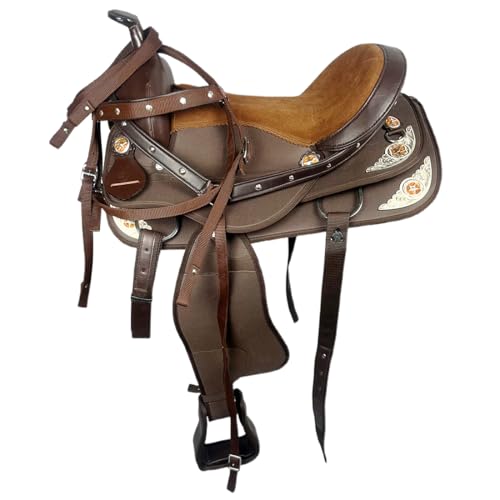
For trail riders who want a light, weather-proof western saddle, the Abetta and Big Horn synthetics are the names most often raised by owners and makers, the Wintec Western line suits buyers on a tighter budget who accept mixed owner opinions, and a semi-synthetic from a leather maker such as Circle Y suits riders who want some leather where it matters. A synthetic western saddle is a trade of durability and traditional feel for light weight, easy care and lower cost, and horse fit still decides the outcome.
Our top picks


As an Amazon Associate we earn from qualifying purchases at no extra cost to you.
At a Glance: Synthetic Western Saddles Compared
| Saddle | Best for | Stated or reported points | Limits |
|---|---|---|---|
| Abetta synthetic (for example Trail Finder) | Trail riders prioritizing light weight | The maker states 17 to 20 lb, a 1000 denier nylon shell over shock-absorbing foam, injection-molded polymer frames and waterproof construction | Maker claims; polymer frames differ from traditional wood trees |
| Big Horn synthetic (Cordura) | Trail, barrel, roping, gaited and youth riders | The maker describes leather seats and horns with Cordura skirts and fenders, 14 to 17 inch seats; one retailer lists a trail model around 20 lb | Cordura fenders do not hold a twist like leather, per one owner |
| Wintec Western Trail | Budget-conscious trail riders | Retailers describe Duraleather, memory-foam seat, cut-out fenders, wide trail stirrups and full Quarter Horse bars; listed weight varies from about 20 to 28 lb | Owner opinions mixed; one forum poster calls reviews mostly poor |
| Wintec Round Skirt | Riders wanting a round-skirt look | Retailer lists 19 lb, semi Quarter Horse bars, 5-year tree warranty | Fit on high withers should be checked with the seller |
| Circle Y semi-synthetic | Riders wanting leather components with lighter weight | One owner describes synthetic skirt and fenders with leather elsewhere | Models vary; details need confirmation with the maker |
| Schneiders Leather-Cordura Trail II | Mixed-material buyers | Retailer lists leather with Cordura and synthetic skirt and fenders | Less waterproof than full synthetic |
Details are drawn from maker websites, retailers such as Saddle Up Colorado, Stateline Tack and Schneiders, and owner discussions on HorseForum and the Chronicle of the Horse forum. Weights vary between retailers and seat sizes, and forum comments are individual opinions. Confirm weight, tree type and warranty with the seller before buying.
Why Choose a Synthetic Western Saddle
Weight
A traditional leather western saddle can be heavy. Abetta says its synthetic saddles weigh about half as much as traditional leather. Lighter saddles are easier to lift, which matters for smaller riders and those with back or shoulder concerns, and they put less load on the horse for a given ride.
Weather and care
Synthetic coverings do not need oiling and are not damaged by rain in the way that leather can be. One HorseForum owner of a Big Horn likes not worrying about leather getting wet. A wipe-down is usually enough for cleaning, according to makers.
Cost
Synthetic saddles generally sit at a lower tier than comparable leather saddles, with used examples more affordable still. They suit people starting out, owners of multiple horses, or riders who want a dedicated trail saddle.
Trade-offs
Sources describe several limits. Cordura fenders do not develop the rigid twist that keeps a stirrup aligned, according to one owner. Another source notes that synthetics still do not match leather for long-term durability. The feel can also differ from leather, and some riders prefer the traditional look and resale value of leather.
Fit and Compatibility
Tree and bars
The tree determines how the saddle sits on the horse. Quarter Horse bars suit broad, flat backs, while semi Quarter Horse bars suit moderate backs and narrower horses may need a different type. Wintec lists full Quarter Horse bars on its Western Trail and semi Quarter Horse bars on its Round Skirt, with an 8 inch gullet on the wide tree version. Big Horn saddles were typically built on Steele trees, per the maker’s guide. Match the bar style to your horse’s back width and shape.
Withers
High-withered horses can be difficult to fit. One HorseForum owner reports that a Big Horn synthetic was the closest fit they found for a high-withered horse, though that is a single report and not a guarantee.
Seat size
Western seats are measured in inches; 14 to 17 inch seats are typical in the Big Horn range. Choose a seat that gives a hand’s width between your body and the cantle.
Rigging
Rigging position affects how the cinch sits. Wintec lists 7/8 rigging for its Western Trail, and an Abetta owner uses center fire rigging. Make sure the position suits your horse’s conformation and your riding style.
Reading Owner Opinion
Synthetic western saddles attract strong opinions, and sorting them out helps. Owners who praise the category tend to emphasize light weight, no leather upkeep and good performance on trail rides in wet weather. Owners who criticize it tend to cite fit problems, a less secure feel in the stirrups and doubts about longevity. Both groups can be right about their own horses.
The HorseForum thread on this subject is a useful example. One poster praised a Big Horn synthetic for its comfort and fit on a wickedly high-withered horse. Another was blunt in dismissing Tough-1 and JT International products. A separate Chronicle of the Horse thread describes Wintec western saddles as getting mostly bad reviews, although that thread is old and reflects one person’s view. A Circle Y owner describes their semi-synthetic as lightweight and more comfortable than a Wintec at a similar level. None of these are controlled comparisons.
The practical lesson is to buy from a seller with a clear return or trial policy, bring the horse’s measurements, and ride in the saddle before committing where you can.
Preparing Your Horse and Gear
- Introduce the new saddle with short rides and watch for signs of discomfort, such as pinned ears, tail swishing or reluctance to move forward.
- Use a pad that suits the saddle and the weather; a thick pad cannot fix a poor fit.
- Adjust stirrup length so your leg is comfortable on a longer trail and your heel stays down.
- Carry a basic tool kit on long rides, since synthetic parts and hardware can loosen over time.
- Re-inspect stitching, rivets and rigging hardware after the first few rides and then at regular intervals.
Budget Tiers
Budget
Wintec Western models and used synthetics fit here. They are suited to casual trail riding and may be the right choice when you are unsure how often you will ride. Read owner opinions with care, since reports are mixed.
Mid-range
New Abetta and Big Horn saddles sit in this tier. Retailers list a new Big Horn trail model at a mid-range level, and used examples are available at lower cost.
Premium
Premium here usually means semi-synthetic or leather-Cordura blends from established makers such as Circle Y or Schneiders. These add leather components and tend to be regarded as more durable.
Care and Safety Notes
- Fit first: Ask a saddle fitter to check the saddle on your horse. A saddle that pinches the withers or shoulders can cause pain.
- Inspect gear: Check cinch, billets, stirrup leathers and rigging before every ride.
- Cleaning: Wipe synthetic surfaces and let them dry away from direct heat. Follow the maker’s instructions.
- Storage: Store on a rack, not on the horn or the ground.
- Back soreness: If your horse shows signs of discomfort, ask a vet.
- Stirrups: Choose stirrups that suit your boots and release safely.
Pick X If… Decision Table
| Pick this | If you | Because |
|---|---|---|
| Abetta synthetic | Want the lightest option | Maker states 17 to 20 lb and waterproof shell |
| Big Horn Cordura | Want a leather seat with synthetic skirts | Owners praise fit on some high-withered horses |
| Wintec Western | Are on a limited budget | Lower tier, widely stocked |
| Circle Y semi-synthetic | Want leather elements and lighter weight | Mixed-material construction |
| Full leather saddle | Want the traditional feel and long life | Durability and resale |
Alternatives
Leather trail saddle
If durability and resale matter more than weight, a leather saddle remains the traditional choice, though it is heavier and needs regular conditioning.
Used saddles
Used Big Horn and similar saddles appear on resale sites at a lower tier. Inspect trees, stitching and rigging, and arrange a fitting.
Treeless western saddles
Some riders consider treeless designs for flexibility, but fit and pressure distribution still need professional advice.
Frequently Asked Questions
Are synthetic western saddles durable?
They can serve years of trail riding, but sources note that synthetics generally do not match leather for long-term durability. Condition depends on use, care and the model.
Are synthetic saddles lighter than leather?
Yes, usually. Abetta states that its saddles weigh about half as much as traditional leather, with typical weights of 17 to 20 lb, while Wintec models are listed at roughly 19 to 28 lb depending on the model and retailer.
Which brand do owners recommend?
Opinions vary. One HorseForum thread favored Big Horn, while another poster criticized Tough-1, and a forum discussion described mostly poor reviews for Wintec western saddles. These are individual views, so treat them as leads and not conclusions.
Can I use a synthetic saddle for ranch work or roping?
Big Horn offers roping and barrel models, but heavy ranch roping stresses a saddle and many working riders prefer leather. Ask the maker about intended use and any limits.
How do I clean a synthetic saddle?
Wipe it with a damp cloth and mild soap, then dry it away from heat. Follow the maker’s instructions, particularly for leather components on blended saddles.
How do I know it fits my horse?
A professional saddle fitter should assess tree width, wither clearance and back contact. Do not rely on size labels alone, and see a vet if your horse shows pain.


Write Your Review
No reviews yet. Be the first to share your experience!