

Key takeaways
- Wipe leather after each ride and condition it every few weeks to prevent cracks.
- Use boot trees or stuffed newspaper to hold shape between rides.
- Zippers and heel counters are the first parts to fail; a cobbler can often repair them for less than a new pair.
- Rotate two pairs if you ride daily, so each can dry fully.
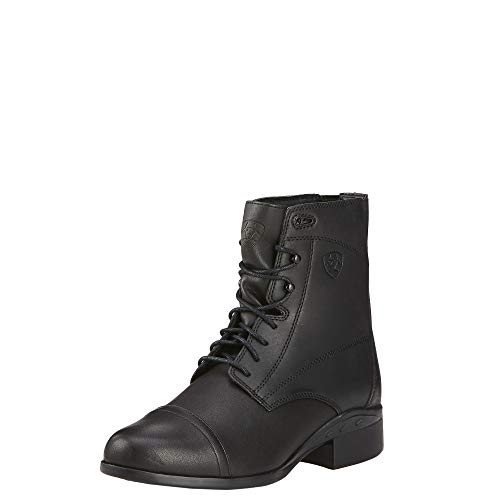
The best riding boots are the ones that match how you ride: a tall field or dress boot for the show ring, a paddock boot with half chaps for lessons, and a waterproof tall or barn boot for daily turnout and trail work. For most riders the Ariat Heritage Contour II Field Zip is the safest all-round tall boot, while the Ariat Devon IV is a dependable paddock boot for everyday schooling. The shortlist below covers each use, with sizing numbers and care notes you can check against the manufacturer’s spec sheets.
Our top picks



As an Amazon Associate we earn from qualifying purchases at no extra cost to you.
Quick Comparison of the Best Riding Boots
| Pick | Best for | Style | Key feature | Price range |
|---|---|---|---|---|
| Ariat Heritage Contour II Field Zip | Best overall tall boot | Tall field boot, zip | Full-length zipper, stretch panel | Mid to upper-mid |
| Ariat Bromont Pro Tall H2O | Best waterproof tall boot | Tall, waterproof | Waterproof leather, insulated lining option | Upper-mid |
| Ariat Devon IV | Best paddock boot | Short lace or zip | Cushioned footbed, grip sole | Mid |
| Dublin River Boots III | Best budget barn boot | Rubber and neoprene | Waterproof, easy to clean | Budget |
| Tredstep Donatello III | Best for dressage and show | Tall dress, leather | Hand-fitted leather, custom sizing options | Premium |
| Ariat Terrain | Best for trail and ranch | Pull-on work boot | Shock absorbing sole, durable upper | Mid |
Best Overall Tall Boot: Ariat Heritage Contour II Field Zip
Ariat built this boot for riders who want a classic field boot look without breaking in stiff leather for months. Per Ariat’s spec sheet, the Contour II uses a full-length zip and an elasticated panel behind the ankle so the boot forms to varied calf shapes. The footbed is cushioned and the sole is designed for stirrup grip.
The weakness is that the leather needs regular conditioning to maintain shape, and the zipper is the first point of wear on boots used daily. Check the measurement chart for calf height and circumference before ordering, since field zip boots come in regular, tall and wide-calf options.
Best Waterproof Tall Boot: Ariat Bromont Pro Tall H2O
The Bromont Pro is a good fit for riders who school year-round and cannot avoid wet arenas. The H2O line uses a waterproof membrane inside the leather, which keeps feet dry when you walk through grass, puddles or washrack spray. An insulated version exists for colder weather.
Because the lining is thicker, expect the boot to run a little warm in summer. It also takes longer to dry if water gets in over the top, so wipe the interior after muddy sessions.
Best Paddock Boot: Ariat Devon IV
The Devon IV is a common choice for lesson programs and 4-H riders. Its low heel, ankle support and grip sole suit stirrup riding, and the cushioned insole helps on long barn days. You pair it with half chaps or full chaps, which also protect the calf from the stirrup leather.
Paddock boots are not for deep mud or constant wet because the leather can stain and crack. If you have wide calves, the half chap, not the boot, is where fit often goes wrong, so measure both.
Best Budget Barn Boot: Dublin River Boots III
For feeding, mucking out and light trail rides, a rubber boot with a neoprene lining is cheaper and easier than leather. Dublin’s River Boots are built with a rubber lower and neoprene upper for flex and insulation. They hose off clean and dry fast.
They do not breathe like leather and offer little ankle support, so they are not meant for serious schooling or jumping. Think of them as a barn boot with riding capability, not a show boot.
Best for Dressage and Show: Tredstep Donatello III
Tredstep is a long-established European maker of tall dress boots, and the Donatello line is aimed at dressage riders who want a clean look and a stiff leg. Leather quality and fitting options, including custom sizing for some models, are the reasons for the premium price.
Plan on a break-in period, and use boot trees to maintain shape. Tall dress boots can be difficult to pull on without a boot jack or pull straps.
Best for Trail and Ranch: Ariat Terrain
The Terrain is a pull-on Western-style work boot with a shock-absorbing sole, designed for riders who walk as much as they ride. A moderate heel keeps your foot in the stirrup, and the upper is built to take scrapes from brush and fencing.
The sole can be too thick for sensitive stirrup feel, and it is not the right look for a show class. For everyday trail and farm work it is a practical, durable boot.
Boot Size and Height Guide
| Boot type | Typical shaft height | Fit check |
|---|---|---|
| Paddock boot | 5 to 7 in ankle height | Heel should not lift more than a finger-width when walking |
| Field boot | About 15 to 17 in | Calf circumference plus 1 in of ease, leg length from floor to back of knee |
| Dress boot | About 17 to 19 in | Stiff top should clear the back of the knee by about 1 in when seated |
| Barn or rubber boot | About 12 to 16 in | Allow room for thick socks without sliding |
Measure at the end of the day when feet are slightly larger, and wear your riding socks. Brands vary, so compare to the maker’s chart rather than assuming street shoe size.
How to Choose Riding Boots
Heel and sole. Look for a defined heel of about 1 inch for English riding, a bit taller for Western. This prevents your foot from slipping through the stirrup. A smooth sole that scuffs easily can be less safe than a lightly textured one.
Calf fit. Tall boots must be measured at the widest part of the calf. A zip boot with a stretch panel is more forgiving than a pull-on.
Weather. Waterproof membranes keep feet dry but can run warm. In hot climates, pick a leather boot with a breathable lining and use a separate rubber boot for wet days.
Safety. Whatever you choose, avoid boots with a heavy treaded sole or wide toe box that could get caught in a stirrup. Riding-specific boots are designed to release.
Care and Durability Realities
- Wipe leather after each ride and condition it every few weeks to prevent cracks.
- Use boot trees or stuffed newspaper to hold shape between rides.
- Zippers and heel counters are the first parts to fail; a cobbler can often repair them for less than a new pair.
- Rotate two pairs if you ride daily, so each can dry fully.
Which Boot Should You Buy?
Lesson riders and young riders should start with a paddock boot and half chaps, since they are cheaper and easier to fit. Adults who show in hunter or jumper classes should look at the Ariat Heritage Contour II. Dressage riders should consider the Tredstep. If you ride in wet climates, the Bromont Pro H2O is a good all-year pick. For barn work, the Dublin River Boot is the cost-conscious answer.
Decision Matrix: Matching Boots to Your Riding
| Your situation | Choose | Reason |
|---|---|---|
| Weekly lessons, growing feet | Ariat Devon IV with half chaps | Affordable and easy to resize |
| Hunter or jumper shows | Ariat Heritage Contour II | Show-ring look with zip convenience |
| Dressage competition | Tredstep Donatello III | Stiff, tailored tall boot |
| Wet climate, year-round riding | Ariat Bromont Pro H2O | Waterproof lining |
| Barn chores plus casual rides | Dublin River Boots III | Easy to hose clean |
| Trail, ranch and farm work | Ariat Terrain | Comfortable for walking, durable |
Common Fitting Mistakes
The most common mistake is buying on street shoe size alone. Tall boots should be selected by foot size, calf circumference and shaft height together. Another is buying boots that are loose at the ankle, because the heel lifts and rubs, while a tight toe box can cause numbness in cold weather. Finally, riders often forget to try boots with the half chaps or breeches they actually plan to wear.
Break in new leather gradually. Wear the boots for short sessions at home first, apply leather conditioner and flex the ankle. If you feel pinch points that do not ease after several wears, exchange for another size or width rather than hoping they stretch.
Frequently Asked Questions
Do I need tall boots to ride?
No. A paddock boot with half chaps works for most riders and is accepted in most schooling situations. Tall boots are required in some show classes.
How should riding boots fit?
Snug but not painful, with room to wiggle toes and no heel lift when walking. Tall boots should feel firm around the calf but allow movement at the ankle.
How long do riding boots last?
With regular care, leather boots can last several years of weekly riding. Budget synthetic boots wear out faster, especially at the sole and zipper.
Are paddock boots and half chaps as good as tall boots?
For daily riding, yes. They offer similar leg protection at a lower price and with more flexibility in fit. Many riders keep both.
Can I wear cowboy boots for riding?
Western boots with a defined heel are designed for stirrups. Avoid flat or heavily treaded boots, which can catch in a stirrup.






Write Your Review
No reviews yet. Be the first to share your experience!