

Key takeaways
- First-time buyer: Choose a 4- to 6-foot single figure with an integrated blower, four anchor points, and a simple rectangular storage bag. Fewer seams and accessories mean fewer failure points.
- Best value: A 6- to 8-foot generic character or snowman often costs roughly $30 to $100, depending on lighting, fabric weight, and included hardware. Check the warranty and replacement-blower availability before choosing the lowest price.
- Recognizable branded design: Gemmy Airblown Inflatable models typically offer broad seasonal selection and clear setup instructions. Prices commonly range from about $40 for smaller designs to $200 or more for large licensed scenes.
- Frequent annual use: Spend more on reinforced seams, a heavier fabric, a covered blower intake, metal or robust stakes, and a replaceable blower. These features matter more than extra lights.
- Horse-property owner: Use the smallest effective decoration, install it well away from paddocks and barns, and avoid animated mechanisms, sudden sound effects, and loose cords. Introduce any new illuminated object gradually if animals can see it from their turnout area.
Best Holiday Inflatable Decorations
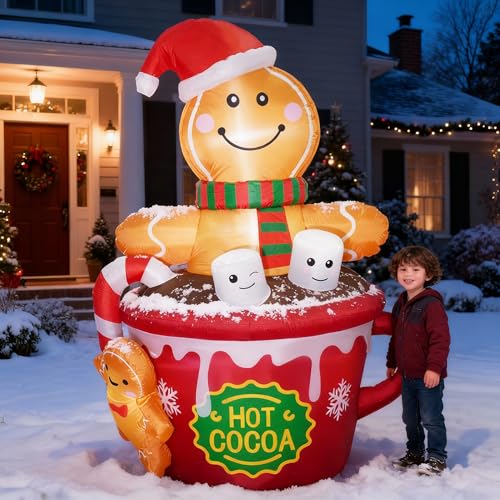
The best holiday inflatable decorations depend on your yard size: choose a compact 4- to 5-foot figure for a small entrance, a 6- to 8-foot inflatable for most suburban lawns, and a 9- to 12-foot display only when you have a wide, unobstructed area and stronger anchoring.
For most households, a 6-foot illuminated inflatable with a weather-resistant polyester shell, a 30- to 50-watt blower, four or more tether points, and included ground stakes offers the best balance of visibility, setup time, electricity use, and storage. Gemmy Airblown Inflatable decorations are among the most recognizable options, while unbranded and seasonal ranges can offer larger displays at lower prices. The important comparison is not only the character or holiday theme; it is whether the complete system suits your space and weather.
Our top picks



As an Amazon Associate we earn from qualifying purchases at no extra cost to you. Ratings are shown as listed on Amazon.
Quick picks by yard and use case
| Situation | Best decoration type | Recommended size | Why it fits |
|---|---|---|---|
| Apartment entrance, porch, or narrow path | Single character or small arch | 3 to 5 feet | Needs little clearance and is easier to store indoors |
| Small suburban front yard | One character or paired figures | 5 to 7 feet | Visible from the street without overwhelming the lawn |
| Medium lawn with a walkway | Character, sleigh, or compact scene | 6 to 9 feet | Allows a display while preserving a clear pedestrian route |
| Large rural or corner lot | Large scene, arch, or several figures | 8 to 12 feet | Provides enough scale for the display to read at a distance |
| Horse property or livestock area | Low, single inflatable away from fencing | 3 to 6 feet | Reduces loose-cord, noise, and startled-animal risks |
What to compare before buying
Height and footprint
Height is the easiest specification to notice, but footprint is often the limiting factor. A tall inflatable may need 4 to 8 feet of front-to-back space once its tether lines are installed. Measure the display area, then add at least 18 inches around the fabric body for stakes, guy lines, and safe access.
A 4-foot figure can look appropriately prominent beside a porch or mailbox. A 6- to 8-foot figure is usually the most versatile choice for a front lawn. Displays over 9 feet are more vulnerable to wind leverage: the higher the upper section, the more force can transfer to the stakes and seams. Do not choose a giant inflatable merely because it has a lower price per foot.
Blower power and inflation design
The blower must provide enough airflow to keep the fabric firm, but a larger motor does not automatically mean a better decoration. Look for a sealed or covered outdoor-rated blower, a protected intake, and a power cord long enough to reach a weather-protected outdoor outlet without an extension cord crossing a walkway.
| Inflatable size | Typical blower draw | Approximate running cost for 30 days at 8 hours/day* | Practical expectation |
|---|---|---|---|
| 3 to 5 feet | 15 to 30 watts | $1.00 to $3.00 | Quietest and easiest to run from a small outdoor circuit |
| 6 to 8 feet | 30 to 60 watts | $2.00 to $6.00 | Best all-purpose range for a front yard |
| 9 to 12 feet | 60 to 120 watts | $4.00 to $12.00 | Needs better anchoring and a clean, unobstructed intake |
*Illustrative calculation using electricity at $0.18 per kilowatt-hour. A 50-watt blower running 240 hours uses 12 kWh, costing about $2.16. Local rates and actual wattage will differ.
If electricity use matters, a timer is more effective than choosing a slightly smaller blower. Running a 50-watt unit for six hours nightly instead of all night reduces monthly use from 36 kWh to 9 kWh over 30 days.
Weather resistance
Most inflatables use coated polyester or similar synthetic fabric, but “outdoor” does not mean storm-proof. Examine the stitching at the base, zipper or access flap, light sockets, blower housing, and cable connection. Reinforced tether loops are particularly important because they receive repeated pulling in wind.
Light rain is normally manageable when the blower and connection are protected as directed by the manufacturer. Heavy rain, wet snow, ice, thunderstorms, and high winds are different. Deflate the decoration before severe weather rather than expecting stakes to hold a waterlogged or wind-loaded structure. Never operate a visibly damaged cable, wet plug, or blower with a blocked intake.
Anchoring hardware
A good package should include several plastic or metal ground stakes, tether ropes, and attachment points on the inflatable. Four stakes are a reasonable minimum for a small figure; larger scenes benefit from six or more anchor points. The supplied stakes may be adequate in firm soil, but short plastic stakes can pull out of loose, sandy, or saturated ground.
For a large display, use longer outdoor-rated stakes suited to the soil and place them at the intended tether angles rather than directly beside the fabric. Do not tie to a horse fence, gate, tree branch, or temporary post. A loose line can become a tripping or entanglement hazard, especially around children, dogs, and horses.
Best choices by experience and budget
- First-time buyer: Choose a 4- to 6-foot single figure with an integrated blower, four anchor points, and a simple rectangular storage bag. Fewer seams and accessories mean fewer failure points.
- Best value: A 6- to 8-foot generic character or snowman often costs roughly $30 to $100, depending on lighting, fabric weight, and included hardware. Check the warranty and replacement-blower availability before choosing the lowest price.
- Recognizable branded design: Gemmy Airblown Inflatable models typically offer broad seasonal selection and clear setup instructions. Prices commonly range from about $40 for smaller designs to $200 or more for large licensed scenes.
- Frequent annual use: Spend more on reinforced seams, a heavier fabric, a covered blower intake, metal or robust stakes, and a replaceable blower. These features matter more than extra lights.
- Horse-property owner: Use the smallest effective decoration, install it well away from paddocks and barns, and avoid animated mechanisms, sudden sound effects, and loose cords. Introduce any new illuminated object gradually if animals can see it from their turnout area.
Storage is part of the purchase
Inflatables are compact only after they are completely dry and folded without sharp creases. A 6-foot figure may fit in a container around 18 by 12 by 8 inches, while a large multi-piece scene can require a 24- to 30-inch storage tote. Allow additional room for stakes, ropes, the blower, repair patches, and the original instructions.
Before packing, switch off and unplug the blower, wipe mud from the base, and let every fold dry indoors or under cover. Store the fabric in a cool, dry place away from mice, tack-room dust, and direct sunlight. Do not compress the blower or leave stakes loose inside the fabric; sharp edges can create pinholes.
Setup and maintenance that extend service life
- Inspect the site. Remove stones, branches, manure, and anything that could abrade the bottom fabric. Confirm that the display cannot block a gate, walkway, driveway, or emergency access.
- Lay out the deflated decoration. Find the blower sleeve, tether loops, and light connections before inflating. This prevents pulling on a partially inflated seam.
- Secure the base first. Install the stakes and attach the lower tethers according to the instructions. Then connect the blower and lights.
- Check the shape and airflow. If the figure looks soft, inspect the zipper, blower sleeve, seams, and intake for gaps or debris. Do not compensate for a leak by using an oversized blower.
- Tighten, but do not over-tension. Guy lines should steady the figure without deforming the fabric or pulling directly against a seam.
- Recheck after the first windy night. Look for pulled loops, frayed cord, loose stakes, and water around electrical connections. Small fabric holes can often be repaired with the supplied patch material when the fabric is clean and dry.
The blower and electrical connections usually need attention before the decorative fabric does. Dust, grass, and insects can restrict the intake, causing overheating or poor inflation. Keep the intake clear and replace a noisy or intermittently running blower rather than leaving it unattended.
Bottom line
For most front yards, the best holiday inflatable decorations are 6- to 8-foot single figures or compact scenes with a 30- to 60-watt blower, four to six secure anchor points, coated polyester fabric, and manageable storage dimensions. Choose smaller for porches, livestock properties, and narrow lawns; choose larger only when the site has clear space, suitable soil, and a plan for severe weather. The most durable purchase is the one that can be dried, anchored, powered safely, and stored properly every season.

Write Your Review
No reviews yet. Be the first to share your experience!