

Key takeaways
- Jar lids are consumables. Use new, undamaged single-use flat lids unless the manufacturer specifically states otherwise. Screw bands can usually be reused if they are not rusty, bent, or badly scratched.
- Check the canner and rack. Enamel canners may chip, aluminum canners may discolor, and racks can bend. A jar should remain upright and surrounded by water.
- Replace damaged jars. Nicks on the rim, hairline cracks, and chips can prevent a seal or cause breakage during heating.
- Do not overtighten bands. Finger-tight is generally sufficient; excessive force can interfere with venting and sealing.
- Cool jars undisturbed. Leave them upright for 12–24 hours, then check the seal, wipe away residue, remove the bands for storage, and label the contents and date.
- Discard questionable jars. A bulging lid, leaking jar, spurting liquid, mold, fermentation, off odor, or failed seal is a reason not to taste the food.
The safest canning tomato recipes use tested proportions, bottled lemon juice or citric acid when required, and the processing time specified for the jar size and altitude. For a dependable pantry, choose pressure-canned crushed tomatoes for versatility, a tested salsa for ready-to-serve flavor, and acidified whole tomatoes when you want larger pieces for soups, stews, and casseroles.
The National Center for Home Food Preservation (NCHFP) and USDA guidance should take priority over family recipes or informal online formulas. Tomatoes vary in acidity, so even older, traditionally “safe” recipes may need added acid and an updated processing method.
Our top picks
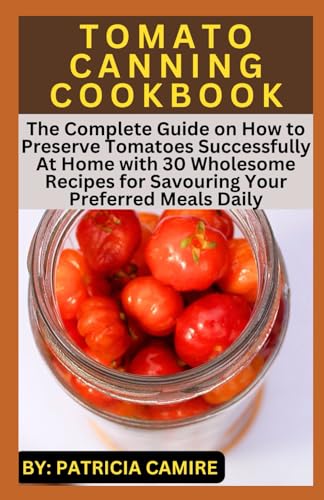


As an Amazon Associate we earn from qualifying purchases at no extra cost to you. Ratings are shown as listed on Amazon.
Quick comparison of 9 canning tomato recipes
| Recipe | Best use | Typical yield | Processing approach | Main safety point |
|---|---|---|---|---|
| Crushed tomatoes | Soups, pasta sauce, chili | About 7 quarts from 22 lb tomatoes | Boiling-water canner; about 35–45 minutes | Add bottled lemon juice or citric acid |
| Whole or halved tomatoes in juice | Stews, braises, pizza topping | About 7 quarts from 21 lb tomatoes | Boiling-water canner; about 45 minutes | Hot-pack instructions reduce floating and improve quality |
| Tomato juice | Drinks, soups, cooking liquid | About 7 quarts from 23 lb tomatoes | Boiling-water canner; about 35–40 minutes | Strain or leave pulpy; acidify each jar |
| Plain tomato sauce | Pizza, pasta, casseroles | About 9 pints from 14 lb tomatoes | Boiling-water canner; time depends on tested recipe | Do not thicken with flour, starch, meat, or dairy |
| Reduced tomato sauce | Concentrated pasta or pizza sauce | About 6 pints from 14 lb tomatoes | Boiling-water canner if using a tested formula | Reduction changes density and must be recipe-specific |
| Tomato salsa | Chips, tacos, eggs, grilled foods | About 6 pints from 10 lb tomatoes | Boiling-water canner; often about 15 minutes | Use the exact tested ratio of tomatoes, peppers, onions, and vinegar |
| Tomato relish | Sandwiches, sausages, cheese boards | About 5–6 pints | Boiling-water canner; recipe-specific | Vinegar acidity and vegetable proportions matter |
| Tomato chutney | Curries, roasted meats, cheese | About 5–6 half-pints | Boiling-water canner; recipe-specific | Use a tested chutney formula, not an improvised one |
| Tomatoes with vegetables | Ready-made soup or stew base | Varies by formula | Usually pressure canning for low-acid ingredients | Meat, beans, and many vegetables require pressure-canning instructions |
Yields are planning estimates, not guarantees. Tomato variety, ripeness, peeling, seed removal, and cooking time can change the final volume by several cups.
Best overall: acidified crushed tomatoes
Crushed tomatoes are the most adaptable choice for a first canning batch. They can become marinara, soup, chili, shakshuka, pizza sauce, or a quick braising liquid without committing you to a heavily seasoned recipe.
Use ripe, sound tomatoes. Dip them briefly in boiling water, transfer them to cold water, remove the skins and cores, and crush enough tomatoes to cover the bottom of a stainless-steel saucepan. Bring that portion to a boil, gradually add the remaining crushed tomatoes, and simmer according to the tested instructions.
For standard acidification, NCHFP guidance commonly calls for 1 tablespoon of bottled lemon juice per pint or 2 tablespoons per quart, or 1/4 teaspoon of citric acid per pint or 1/2 teaspoon per quart. Bottled lemon juice is preferred because its acidity is standardized; fresh lemon juice is less predictable.
Trade-off: Crushed tomatoes are versatile but not as visually attractive as whole tomatoes. They also require more preparation than simply packing peeled tomato halves.
Best for whole pieces: whole or halved tomatoes
Choose whole or halved tomatoes if you want pieces that remain recognizable in winter soups, stews, casseroles, and skillet meals. Roma and other meaty varieties usually hold their shape better than very juicy slicing tomatoes.
For better quality, hot-pack the prepared tomatoes in their own juice or a tested liquid. Raw-packed tomatoes may float, shrink, and release more liquid during processing. Leave the headspace specified by the tested recipe, wipe the rim, apply the lid, and process immediately.
A common sea-level boiling-water schedule for acidified whole or halved tomatoes is approximately 40 to 45 minutes, depending on the preparation and jar size. Use the exact schedule from the current NCHFP or USDA-style recipe rather than combining times from different methods.
Trade-off: Whole tomatoes give the best texture for chunky dishes, but they take longer to heat through and are less convenient for smooth sauces.
Best for everyday cooking: tomato juice
Tomato juice is efficient when you regularly make soups, stews, braises, cocktails, or rice dishes. It also uses tomatoes that are too soft or irregular for attractive whole packs, provided they are free of mold, decay, and major damage.
Quarter the tomatoes and simmer them until soft. A food mill or fine sieve removes skins and seeds, while a coarse strainer leaves more pulp. Heat the juice before filling jars, then acidify and process according to the tested juice recipe.
Trade-off: Juice stores compactly and pours easily, but it cannot replace diced or whole tomatoes when a recipe depends on texture.
Best for pasta and pizza: plain tomato sauce
A plain tomato sauce is a good middle ground between crushed tomatoes and a fully seasoned marinara. It lets you add garlic, herbs, oil, vegetables, meat, or cheese later, when you open the jar.
Simmer the tomatoes until the sauce reaches the consistency specified by the tested recipe. Do not assume that longer cooking automatically makes a safe canning formula. Concentration changes heat penetration, and adding oil, starch, meat, or extra vegetables can change the safety profile.
For the most flexible pantry, can an unthickened sauce and reduce it further in a saucepan after opening. This also prevents overcooked flavor during the canning process.
Best concentrated option: reduced tomato sauce
Reduced sauce saves shelf space and gives you a stronger tomato flavor per jar. It works especially well for pizza, lasagna, and quick pasta meals.
The important distinction is between a tested reduced sauce and an improvised sauce cooked until it “looks right.” Follow the specified reduction time, final consistency, jar size, acidification, and processing schedule. Never add flour or cornstarch before canning; stir a thickener into the sauce after opening.
Trade-off: Concentrated sauce uses fewer jars, but it takes substantially longer to cook and can scorch unless stirred frequently in a wide, heavy pan.
Best salsa: a tested tomato-pepper formula
Salsa is where improvisation becomes risky. Onions, peppers, garlic, herbs, and other low-acid ingredients dilute the tomatoes, while changing the amount of vinegar or bottled lemon juice can make the recipe unsafe.
Use a tested salsa recipe from a recognized food-preservation source. Follow its tomato weight, pepper type, onion quantity, vinegar or lemon juice amount, jar size, headspace, and processing time exactly. A typical tested salsa may process for about 15 minutes at sea level, but the correct time varies by formula and elevation.
For better texture, use paste tomatoes, drain only when the tested recipe permits it, and chop vegetables to the specified size. Do not replace vinegar with an equal volume of water, and do not add fresh avocado, oil, meat, or dairy before canning.
Trade-off: Salsa is the most convenient ready-to-eat option, but it offers the least freedom to alter ingredients safely.
Best condiment: tomato relish
Tomato relish suits sandwiches, sausages, grilled vegetables, and cheese. Its sweet-sour flavor can make a small jar of tomatoes more useful than a large jar of plain sauce.
Because relish often contains onions, peppers, sugar, and vinegar, use a tested formula with measured quantities. The vinegar should generally be labeled at 5% acidity unless the recipe specifies another standardized acid. Chop ingredients consistently so the finished mixture heats evenly.
Trade-off: Relish is flavorful and giftable, but its uses are narrower than crushed tomatoes or juice.
Best sweet-savory option: tomato chutney
Tomato chutney is useful with roasted meats, curries, sandwiches, and hard cheese. It typically combines tomatoes with vinegar, sugar, fruit, onions, and spices.
Choose a tested canning chutney rather than adapting a refrigerator chutney. Chutney recipes vary widely in acidity, solids, and cooking density. If a recipe is designed for refrigeration, keep it refrigerated; boiling-water processing does not automatically make it shelf-stable.
Trade-off: Chutney offers the most distinctive flavor, but it has a longer ingredient list and may require several hours of cooking and resting for the flavors to balance.
Best for a complete meal base: tomatoes with vegetables
Tomato mixtures containing corn, beans, carrots, celery, meat, or other low-acid ingredients need extra care. Tomato acidity does not reliably make the entire mixture safe.
Use a tested pressure-canning recipe when the formula includes low-acid foods. A pressure canner is not interchangeable with a pressure cooker, and the gauge or regulator should be checked according to the manufacturer’s instructions. Follow the specified pressure, processing time, jar size, and altitude adjustment.
Trade-off: A complete meal base saves the most weeknight effort, but it has the strictest recipe requirements and the highest equipment and preparation demands.
How to choose the right canning tomato recipe
| Your situation | Best choice | Why |
|---|---|---|
| First canning project | Acidified crushed tomatoes | Simple ingredients, broad uses, and easy quality checks |
| Limited storage space | Reduced tomato sauce | More tomato flavor in fewer jars |
| Fast weeknight meals | Tested salsa or plain sauce | Ready to season and serve |
| Chunky soups and stews | Whole or halved tomatoes | Pieces retain more visible texture |
| Frequent soup or cocktail use | Tomato juice | Easy to measure and pour |
| Gift giving | Relish or chutney | Distinctive, condiment-sized portions |
| Meal in a jar | Pressure-canned vegetable or meat mixture | Designed for low-acid ingredients when using a tested formula |
Acidity, altitude, and processing times
Tomatoes are borderline-acid foods, which is why modern guidance recommends adding bottled lemon juice or citric acid even when the tomatoes taste tart. The acid is for safety, not flavor; do not reduce it because the tomatoes taste sour.
Boiling-water processing times increase with altitude. A practical planning rule for many acidified tomato recipes is to add 5 minutes at 1,001–3,000 feet, 10 minutes at 3,001–6,000 feet, 15 minutes at 6,001–8,000 feet, and 20 minutes at 8,001–10,000 feet, but the recipe’s own altitude table takes precedence.
Begin timing only after the canner returns to a full boil. Keep jars covered by at least 1 inch of water unless the tested instructions specify otherwise. If the boil stops during processing, bring it back to a full boil and restart the timing when the recipe requires.
Worked yield calculation for planning a batch
Suppose you have 22 pounds of tomatoes and are making crushed tomatoes with an expected yield of 7 quarts. If each quart receives 2 tablespoons of bottled lemon juice, the batch needs 14 tablespoons, or 7/8 cup, of lemon juice. Buying a full cup gives a small margin for measuring loss.
If your household uses about 1 quart each week, seven quarts represent roughly seven weeks of cooking. If you use only 1 pint per week, the same batch may last about 14 weeks, but smaller jars can reduce leftovers after opening and may be a better choice for a one- or two-person household.
Ownership realities: what wears out and what causes failures
- Jar lids are consumables. Use new, undamaged single-use flat lids unless the manufacturer specifically states otherwise. Screw bands can usually be reused if they are not rusty, bent, or badly scratched.
- Check the canner and rack. Enamel canners may chip, aluminum canners may discolor, and racks can bend. A jar should remain upright and surrounded by water.
- Replace damaged jars. Nicks on the rim, hairline cracks, and chips can prevent a seal or cause breakage during heating.
- Do not overtighten bands. Finger-tight is generally sufficient; excessive force can interfere with venting and sealing.
- Cool jars undisturbed. Leave them upright for 12–24 hours, then check the seal, wipe away residue, remove the bands for storage, and label the contents and date.
- Discard questionable jars. A bulging lid, leaking jar, spurting liquid, mold, fermentation, off odor, or failed seal is a reason not to taste the food.
Frequently Asked Questions
Do all canning tomato recipes need added acid?
Current home-canning guidance generally recommends acidifying tomatoes with bottled lemon juice or citric acid because tomato acidity varies by variety, growing conditions, and ripeness. Use the amount specified by the tested recipe for the jar size. Do not substitute fresh lemon juice unless the recipe explicitly permits it.
Can I use a water-bath canner for tomato salsa?
Yes, many tested tomato salsa recipes are processed in a boiling-water canner. The recipe must specify the correct ratio of tomatoes, peppers, onions, vinegar or lemon juice, jar size, and processing time. An improvised salsa with extra vegetables or less acid should not be water-bath canned.
Are tomato sauces safe to can if I add garlic, oil, or herbs?
Not automatically. Garlic, oil, vegetables, and herbs can change acidity, density, and heat penetration, so use a tested sauce formula that includes them. For maximum flexibility, can plain acidified tomato sauce and add fresh ingredients after opening.
Can I can tomatoes in quart jars if the recipe lists pints?
Only when the tested source provides a quart schedule or explicitly permits the larger jar. A quart jar may heat differently from a pint, especially with thick sauces or chunky mixtures. Do not simply double a pint processing time.
Why do my canned whole tomatoes float?
Floating can result from raw packing, trapped air, immature or watery tomatoes, or insufficient heating before packing. Hot-packing prepared tomatoes in their own juice usually improves the result, but floating is mainly a quality issue if the jar sealed and the recipe was followed.
How long do properly canned tomatoes last?
For best quality, use home-canned tomatoes within one year and store them in a cool, dark, dry place. A sealed jar is not automatically safe if it was processed with an untested method. Before opening, inspect for leaks, bulging, mold, fermentation, or other signs of spoilage.



Write Your Review
No reviews yet. Be the first to share your experience!