

Key takeaways
- Solid spruce top: Usually provides more responsive vibration and tonal detail than a laminated top, assuming the graduation and arching are competent.
- Maple back and ribs: A traditional combination that can support projection and clarity.
- Laminated wood: Often more affordable and resistant to some handling stresses, but usually offers less complexity and dynamic range.
- Ebony fittings: Durable for fingerboards, pegs, and tailpieces, although poorly fitted ebony pegs can still slip or become difficult to turn.
- Tailpiece and endpin: Lightweight composite parts may improve practicality, while ebony or higher-quality fittings can offer a more traditional feel. Neither automatically determines sound quality.
The best cellos for most buyers are a properly set-up 4/4 or 3/4 acoustic cello from a reputable workshop, with the Stentor 1500 for a cautious beginner, the Yamaha VC5S for a more consistent student instrument, and an Eastman 80 or Jay Haide for players ready to invest in richer tone and longer-term ownership.
Our top picks

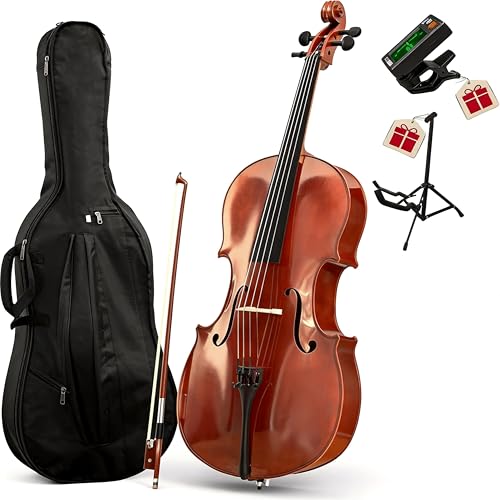

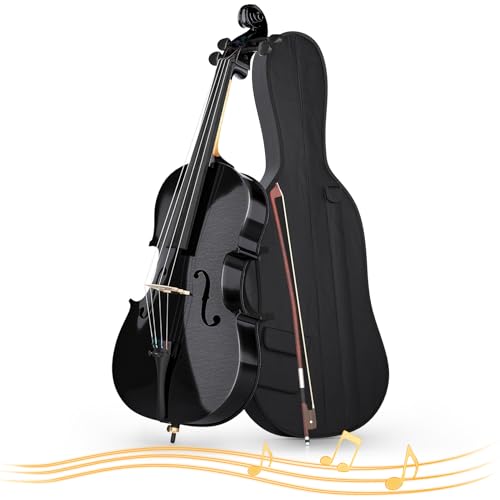
As an Amazon Associate we earn from qualifying purchases at no extra cost to you. Ratings are shown as listed on Amazon.
Best cellos by player and budget
| Player or situation | Best fit | Typical 2026 price range | Why it makes sense |
|---|---|---|---|
| First lessons, limited budget | Stentor 1500 or similar outfit | $500–$900 | Accessible entry price and usually includes a bow, case, and basic strings |
| Beginner wanting better consistency | Yamaha VC5S or comparable student cello | $1,000–$1,800 | More dependable construction, easier response, and more predictable setup |
| Serious student through conservatory preparation | Eastman 80, Jay Haide, or a carefully selected workshop cello | $2,000–$4,500 | More developed tone, better fittings, and room to grow before a professional upgrade |
| Advanced amateur or emerging professional | Eastman 305, Jay Haide a l’ancienne, Scott Cao, or equivalent | $4,000–$9,000 | Greater tonal color, projection, and response when selected and adjusted well |
| Travel, apartment practice, or amplified performance | Electric or silent cello, such as a Yamaha SVC series instrument | $1,500–$4,000 | Headphone practice and reduced acoustic volume, though it does not replace an acoustic cello for ensemble work |
Prices vary substantially with region, dealer preparation, bow quality, case type, and whether the instrument is sold as an outfit. A lower-priced cello that has been correctly adjusted can be more playable than a more expensive cello shipped without final setup.
Our top picks for the best cellos
Best budget beginner cello: Stentor 1500
The Stentor 1500 is a sensible starting point when the priority is keeping the initial cost under control. It is commonly sold as an outfit with a bow and case, which helps a new player avoid several separate purchases. Its laminated construction is less tonally complex than a hand-finished solid-wood cello, but laminate can tolerate changes in humidity better than a poorly made solid-wood instrument.
Expect a relatively direct, focused sound rather than a broad professional palette. The main buying condition is setup: ask whether the bridge has been fitted to the instrument, the soundpost positioned correctly, the pegs reamed and fitted, and the fingerboard checked for an even playing surface. If those jobs have not been completed, reserve money for a qualified luthier.
Best consistent student choice: Yamaha VC5S
The Yamaha VC5S is aimed at students who want a more predictable instrument than the least expensive outfits provide. Yamaha student cellos are valued for consistent manufacturing, practical fittings, and a response that is generally easier to manage during lessons and ensemble playing.
This is a strong choice when a beginner expects to practice several times a week and may keep the instrument for multiple years. The outfit may include a bow and case depending on the package, but confirm the exact contents rather than assuming every listing is identical. Budget separately for a better bow if the supplied bow feels unstable or makes clean articulation difficult.
Best upgrade for a serious student: Eastman 80
The Eastman 80 series occupies the important middle ground between inexpensive student instruments and advanced workshop cellos. It typically offers a solid spruce top, maple back and ribs, ebony fittings, and a more refined response than entry-level laminate instruments. The sound should have enough warmth and projection for chamber music, youth orchestra, and advanced lessons without requiring a professional-level budget.
Individual instruments differ, so this is a model family to compare rather than a guarantee of one identical sound. Listen for an even transition between strings, a clear A string, a resonant C string, and comfortable response in upper positions. A good dealer should allow a teacher or experienced cellist to compare more than one example.
Best long-term workshop-style choice: Jay Haide
Jay Haide cellos are popular with advancing students because many models combine traditional appearance with practical pricing. The a l’ancienne range is often considered when a player wants more tonal complexity and visual character than a basic student cello provides.
Look beyond the label. Check whether the bridge is correctly cut, whether the endpin operates smoothly, and whether the instrument produces a clean sound without excessive wolf tones. A cello in this price category can be an excellent long-term purchase, but selection and adjustment matter more than the brand name alone.
Best for quiet practice: Yamaha SVC series
A Yamaha SVC electric or silent cello is useful for players who practice in an apartment, travel frequently, or need headphone monitoring. It solves a volume problem rather than replacing the acoustic experience. The response, resonance, bow feedback, and interaction with a room differ from those of an acoustic cello.
Choose one as a practice complement if possible. For auditions, orchestral rehearsals, and lessons focused on acoustic tone, a conventional cello remains the primary instrument. Check the package for the required power adapter, headphones, cable, and battery or power specifications; included accessories vary by market and model.
Cello size: choose by reach, not age alone
The correct size allows the player to place the left hand without excessive stretching while keeping the bow arm relaxed. Age charts are only a starting point because torso length, hand span, and flexibility vary widely. A teacher or cello specialist should confirm the choice.
| Cello size | Approximate body length | Common player height range | Typical use |
|---|---|---|---|
| 1/8 | 48–51 cm | Under about 120 cm | Very young players |
| 1/4 | 55–59 cm | About 115–130 cm | Children with shorter reach |
| 1/2 | 61–65 cm | About 125–145 cm | Growing students |
| 3/4 | 66–70 cm | About 140–160 cm | Smaller adults and older children |
| 4/4 | 72–76 cm | Usually above about 160 cm | Most average and tall adults |
These measurements are approximate because body dimensions differ between makers. A full-size cello is not automatically better. If a player cannot comfortably reach first position or control the bow, a well-made 3/4 cello will produce better musical results than an oversized instrument.
What tonewoods and construction actually change
- Solid spruce top: Usually provides more responsive vibration and tonal detail than a laminated top, assuming the graduation and arching are competent.
- Maple back and ribs: A traditional combination that can support projection and clarity.
- Laminated wood: Often more affordable and resistant to some handling stresses, but usually offers less complexity and dynamic range.
- Ebony fittings: Durable for fingerboards, pegs, and tailpieces, although poorly fitted ebony pegs can still slip or become difficult to turn.
- Tailpiece and endpin: Lightweight composite parts may improve practicality, while ebony or higher-quality fittings can offer a more traditional feel. Neither automatically determines sound quality.
Do not select a cello by “solid wood” on the label alone. Arching, thickness, varnish, neck angle, bridge fit, and soundpost placement all affect playability. A well-adjusted instrument with modest materials is often the better purchase.
Setup quality is the hidden price difference
Before buying, inspect or ask about these details:
- The bridge feet should fit the top cleanly, and the bridge should stand upright rather than leaning.
- The strings should sit at a comfortable height above the fingerboard. Excessive height makes beginner practice unnecessarily tiring.
- The pegs should turn smoothly and hold pitch without forcing.
- The fingerboard should be properly shaped, without buzzing across ordinary playing positions.
- The endpin should lock securely and retract fully.
- The soundpost should be standing correctly and should never be moved casually by the owner.
A basic professional setup may cost roughly $150–$400, while repairs to a poorly made or damaged cello can cost much more. This changes the true price of a bargain instrument: a $650 cello plus a $250 setup is effectively a $900 purchase, before replacing strings or buying a better bow.
Accessories: what matters and what can wait
A beginner needs a bow, protective case, rosin, endpin stop, and a reliable tuner or tuning app. A music stand and a chair at suitable height are also worthwhile. Supplied bows and cases are often functional but basic. Prioritize a straight bow with good hair and a case with firm suspension, backpack straps, and weather-resistant covering.
Strings are a major upgrade point. Factory strings on inexpensive outfits may sound harsh, dull, or unstable. Replacing all four with a matched set can cost approximately $100–$400 or more, depending on the brand. Do this with a teacher or luthier because bridge position and string tension need to be monitored.
Ownership costs and maintenance
Strings may last several months for a frequent player, but heavy practice, perspiration, and abrasive rosin can shorten their life. Bow hair commonly needs replacement every 6–18 months, depending on use. Wipe rosin from the strings and top with a soft dry cloth after every session, and never use household polish or alcohol on the varnish.
Keep the cello away from radiators, direct sunlight, damp storage areas, and rapid temperature changes. A room humidity range around 40–60% is a useful general target. In dry climates, ask a luthier about a cello humidifier rather than placing an improvised water container inside the case.
Final buying decision
Choose the Stentor 1500 when budget is the overriding concern and a teacher can verify its setup. Choose the Yamaha VC5S for a dependable first serious instrument. Move to an Eastman 80 or Jay Haide when regular practice, ensemble playing, and tonal development justify the extra cost. Advanced players should compare individual instruments from Eastman, Jay Haide, Scott Cao, and respected local workshops with a teacher or professional player.
The best cellos are not simply the most expensive or the ones with the longest feature list. The winning combination is the correct size, a stable neck and body, suitable tonewoods, a comfortable setup, and enough tonal headroom for the player’s next several years.



Write Your Review
No reviews yet. Be the first to share your experience!