

Key takeaways
- Hard maple: Dense, relatively uniform, and a dependable choice for frequent cutting. It usually has a light, traditional appearance.
- Acacia: Often less expensive, visually varied, and reasonably hard. Inspect the glue joints and surface flatness carefully.
- Rubberwood: Common in budget furniture and suitable for light-to-moderate use when properly sealed.
- Walnut: Attractive and stable, but generally more expensive and somewhat softer than hard maple.
- Bamboo: Technically a grass rather than wood. It can be hard and affordable, though laminated strips and exposed end grain deserve careful inspection.
The best butcher block prep station for 2026 is a 1¾- to 2¼-inch-thick hardwood cart if you want a durable, movable work surface, while a 1¼- to 1½-inch countertop station is the better choice for smaller kitchens, lower cost, and simpler installation.
Our top picks
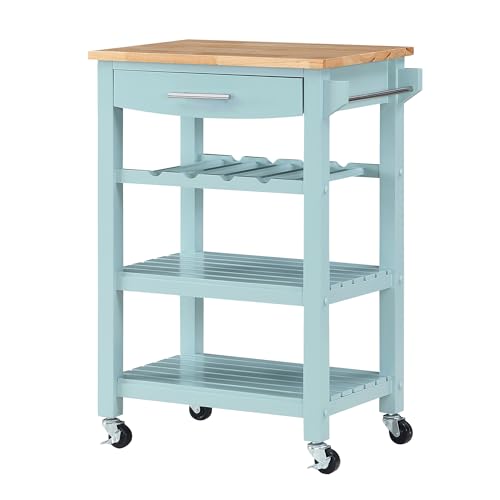

As an Amazon Associate we earn from qualifying purchases at no extra cost to you. Ratings are shown as listed on Amazon.
Quick picks by kitchen situation
| Situation | Best choice | Useful target specifications | Why it fits |
|---|---|---|---|
| Small kitchen or apartment | Countertop prep station | 24–30 inches wide, 18–24 inches deep, 1¼–1½-inch top | Uses existing counter space and can be stored vertically or in a cabinet |
| Frequent meal preparation | Heavy-duty freestanding cart | 36–48 inches wide, 24–30 inches deep, 1¾–2¼-inch top | Provides room for chopping, staging, and keeping ingredients within reach |
| Limited budget | Basic rubberwood or acacia countertop block | 24–36 inches wide, 1–1¼-inch top, open lower shelf or no storage | Costs less while still offering a useful cutting surface |
| Long-term furniture-quality purchase | Hard maple or walnut freestanding station | 36–48 inches wide, 1¾–2¼-inch top, dovetailed or mortised storage | Better repairability, stability, and appearance over years of use |
| Need to move the station often | Locking-caster cart | Four casters, at least two locking, total weight around 70–150 pounds | Can be repositioned, but remains stable while cutting when locked |
Countertop versus freestanding: the important differences
Countertop prep stations
A countertop station is usually a thick butcher-block slab with a lower shelf, knife slots, or a compact rack. It is the best butcher block prep station for renters, narrow kitchens, and cooks who already have suitable counter height. Most measure roughly 24 to 36 inches wide and 18 to 24 inches deep.
Its main advantage is efficiency: there are no wheels, legs, or assembly hardware to maintain, and it can be placed directly beside a sink or range. A countertop model is also easier to seal because you can lift it onto a workbench, apply finish to every side, and let it cure without working around a large frame.
The trade-off is limited storage and less working area. A 24-inch-wide top may hold one cutting board and a bowl, but not a full mise en place setup. Thin tops can also slide or flex unless they have rubber feet or a non-slip mat. For regular chopping, look for at least a 1¼-inch top; ¾-inch decorative slabs are better treated as serving surfaces.
Freestanding prep stations
A freestanding station is a small kitchen island or cart with its own legs, shelves, drawers, and sometimes a towel bar or drop leaf. It makes more sense when you need a dedicated preparation zone and can spare approximately 3 by 2 feet of floor space.
The thicker top is the key benefit. A 1¾- to 2¼-inch hardwood surface feels quieter and more stable under a chef’s knife, resists minor dents better, and can be sanded when the surface becomes rough. Freestanding stations also offer practical storage: a drawer for peelers and thermometers, a shelf for mixing bowls, and a closed cabinet for less attractive equipment.
Mobility is more complicated than it appears. Casters add flexibility but also add height, weight, and potential movement during cutting. Choose locking casters with a wide wheel base, and avoid relying on wheel locks alone if the floor is uneven. A stationary island is safer for heavy kneading and repeated chopping, provided it leaves at least 36 inches of walkway clearance on the working sides.
Butcher-block thickness and wood species
Thickness is more important than a glossy finish. A 1¼-inch top is adequate for normal home preparation, while 1¾ inches is a useful minimum for a substantial cart. Tops around 2 inches or more feel especially solid but make the station heavier and may raise the work surface above a comfortable height.
- Hard maple: Dense, relatively uniform, and a dependable choice for frequent cutting. It usually has a light, traditional appearance.
- Acacia: Often less expensive, visually varied, and reasonably hard. Inspect the glue joints and surface flatness carefully.
- Rubberwood: Common in budget furniture and suitable for light-to-moderate use when properly sealed.
- Walnut: Attractive and stable, but generally more expensive and somewhat softer than hard maple.
- Bamboo: Technically a grass rather than wood. It can be hard and affordable, though laminated strips and exposed end grain deserve careful inspection.
Edge-grain construction is usually the best balance of price, stability, and repairability. End-grain blocks can be very durable and knife-friendly, but they are heavier, costlier, and require more attentive oiling. Avoid selecting solely by species: poor joinery, an uneven top, or exposed unfinished edges can shorten the life of an otherwise good material.
Storage, size, and mobility trade-offs
For one cook, a 30- to 36-inch station is often enough. Two people preparing food simultaneously will appreciate 42 to 48 inches, but the additional area only helps if there is room to stand and circulate. Measure doorways, elevator interiors, and the tightest turn before buying a fully assembled cart.
Storage should match what you actually use. A shallow drawer is convenient for knives and utensils, but a shelf is better for bulky appliances. Open shelving is easy to access and clean, while a cabinet protects cookware from dust and pet hair. Wine racks, spice cubbies, and towel rails can be useful, but they should not replace a full-width lower shelf if storage capacity is your priority.
Height deserves more attention than it receives. A station around 34 to 36 inches high suits many standing prep tasks. A tall cook may prefer 36 to 38 inches, while a shorter cook may find a 36-inch cart tiring for extended chopping. If the station will double as a seated work surface, check knee clearance rather than assuming a standard counter height will work.
Sealing and maintenance: the ownership reality
Most butcher-block prep stations arrive either unfinished, factory-oiled, or coated with a film finish. The care instructions differ, so identify the finish before adding anything. Food-safe mineral oil is commonly used on unfinished cutting surfaces because it remains repairable and does not cure into a hard film. A board wax containing beeswax can add water resistance after oiling.
For a new unfinished top, use this basic process:
- Sand lightly with fine abrasive paper only if the surface feels rough; do not aggressively thin the top.
- Remove all dust with a clean, dry cloth.
- Apply food-grade mineral oil generously to the top, edges, and underside.
- Let it soak for several hours, then wipe away the excess.
- Repeat until the wood stops absorbing oil quickly, then apply a thin wax layer if desired.
- Allow the surface to dry fully before food contact.
Sealing the underside matters because unfinished wood on only one face can absorb moisture unevenly and encourage cupping. Do not flood joints, drawer openings, or the area around metal hardware. Keep the surface dry between uses, and never leave a wet towel or appliance sitting in one place overnight.
Wash with mild soap and a damp cloth, then dry immediately. Do not put the station in a dishwasher, soak it in a sink, or routinely use chlorine bleach on the wood. A light re-oiling schedule may be monthly for heavy use and every few months for occasional use, but the wood’s appearance and water absorption are better guides than a rigid calendar.
What wears out first
- Finish: Frequent washing gradually removes oil, especially around the sink-side edge.
- Wheel hardware: Casters collect crumbs and may loosen or stop rolling before the wood fails.
- Glue joints: Repeated wetting and drying can open seams if the top is not maintained on both faces.
- Drawer slides: Low-cost slides can bind when drawers are overloaded with cast-iron cookware.
- Surface flatness: A station exposed to heat, standing water, or uneven sealing can cup or warp.
These problems are usually preventable. Tighten hardware periodically, use trivets for hot pans, rotate the working area instead of cutting in one spot forever, and sand only when raised grain or knife damage cannot be handled with cleaning and fresh oil. Deep cracks, persistent movement, or a top that rocks on its frame are reasons to stop using that area for food preparation until it is repaired.
How to choose the best butcher block prep station
Choose a countertop station when your priority is low cost, easy sealing, and minimal footprint. Choose a freestanding station when you need storage, a larger work zone, and a durable surface that can serve as an island. For most frequent home cooks, the strongest all-around specification is a 36- to 42-inch freestanding cart with a 1¾-inch hard maple or acacia top, one drawer, a full lower shelf, and two or four locking casters.
Before purchasing, verify five measurements: top width, top depth, total height, clearance around the station, and the width of the narrowest route into your kitchen. Then check whether the top is truly intended for food preparation, whether replacement casters and hardware are available, and whether the manufacturer permits mineral-oil maintenance. Those details matter more over five years than decorative extras or a small difference in initial price.

Write Your Review
No reviews yet. Be the first to share your experience!