

Key takeaways
- Assemble the frame on a level surface and tighten connections according to the manual. Uneven assembly can cause rocking and extra noise.
- Before each session, check for loose legs, damaged cords or springs, tears in the mat, and gaps in the cover.
- Keep the mat dry and clean it with a soft cloth and mild cleaner compatible with its material. Avoid harsh solvents unless the manufacturer approves them.
- Store a foldable model only as directed. Do not force a hinged frame shut or fold a model that is not designed to fold.
- Use it on a stable, non-slip surface; a suitable floor mat can help protect flooring, but it does not make an unstable setup safe.
Best Mini Trampolines for Home Fitness
The best mini trampoline for home fitness is one that gives you enough usable jumping space, supports your weight with a safety margin, and fits your room when open and when stored. For most adults, a 40–48-inch model with a published capacity of at least 250 pounds is a sensible starting point; choose a foldable frame if storage is tight, or a bungee model if reducing impact noise matters more than getting the lowest price.
There is no single best pick for every home. The comparisons below focus on the trade-offs that matter in daily use: jumping surface, capacity, bounce system, noise, and storage. Product specifications can vary by model and market, so confirm the exact size and capacity before buying.
Our top picks

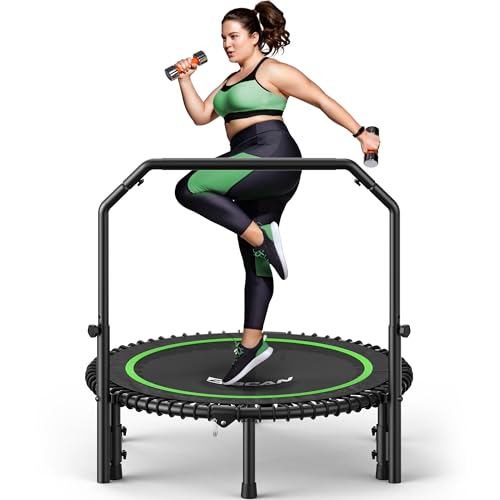
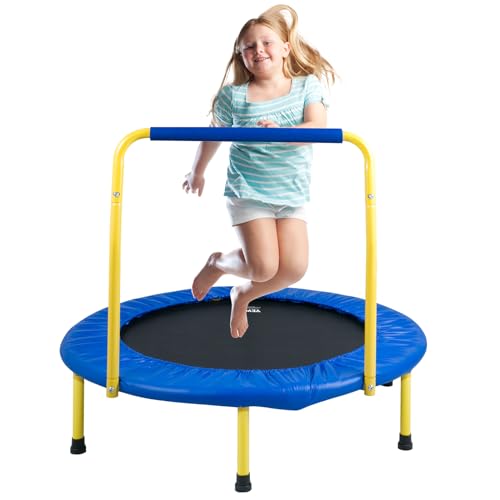

As an Amazon Associate we earn from qualifying purchases at no extra cost to you. Ratings are shown as listed on Amazon.
Quick comparison: common mini-trampoline choices
These representative specifications show how major design types differ. They are selection targets, not specifications for one named product; dimensions and capacities vary between manufacturers.
| Type | Typical frame diameter | Typical usable mat diameter | Common listed capacity | Bounce system | Noise and storage trade-off |
|---|---|---|---|---|---|
| Compact spring model | 36–40 in | 28–32 in | 200–250 lb | Steel springs | Often more spring and frame noise; usually easier to move than larger models |
| Standard spring model | 40–48 in | 32–38 in | 250–300 lb | Steel springs | More room to move; frame generally does not fold, though legs may unscrew |
| Foldable spring model | 36–40 in open | 28–32 in | 200–250 lb | Steel springs; hinged frame | Stores more compactly, but hinges add setup steps and potential wear points |
| Bungee rebounder | 40–48 in | 32–38 in | 250–350 lb | Elastic cords or bungees | Typically quieter than exposed steel springs; cords can stretch and may need replacement |
“Usable mat diameter” is the area you can actually land on, not the outside measurement across the frame. A listed 40-inch trampoline may have a much smaller jumping surface once the frame and springs are excluded. Check both numbers, especially if you plan to follow lateral or choreographed routines.
Choose by your room and routine
For a small apartment or shared room
Start with a 36–40-inch foldable model if the trampoline must be put away after each session. Verify its folded dimensions and weight: “foldable” does not necessarily mean light, quick to fold, or slim enough to fit under a bed. If you have a dedicated corner and can tolerate a larger footprint, a 40-inch bungee rebounder can be a quieter choice, but it may not fold at all.
Allow more room than the frame’s diameter. As a practical planning rule, leave about 2 feet of clear space on each side and overhead clearance appropriate to your height and movement. Avoid placing it beside furniture, glass, low lights, or a ceiling fan. A trampoline that technically fits but leaves no safe landing margin is the wrong size.
For regular workouts and varied movement
A 40–48-inch model generally gives adults more room for marching, gentle jogging, and controlled side-to-side steps. Choose the larger end of that range if you are tall, want to move beyond simple vertical bouncing, or share the equipment. Larger models take more floor space and are harder to carry, so measure the workout area before ordering.
Springs are a common, often lower-cost system, but sound can travel through the legs into a hard floor. A bungee system is worth considering in a downstairs apartment or a room near sleeping areas. Neither system guarantees silence: floor construction, frame assembly, footwear, and the force of each landing all affect noise.
For a tighter budget
Basic spring models commonly fall in the lower price range, roughly $50–$150, while sturdier or larger spring models often cost about $100–$250. Bungee rebounders and premium frames can run roughly $150–$500 or more. These broad market ranges are not price quotes; features, included accessories, and regional availability change the total.
Do not choose by price alone. A capacity that barely matches your body weight leaves less room for dynamic movement, and replacement springs or cords may be difficult to source for an obscure model. Check whether the maker sells compatible parts and provides assembly and maintenance guidance.
How to match capacity and usable space
Look for the manufacturer’s stated maximum user weight and follow it rather than estimating from frame size. As a practical shopping buffer, aim for a listed capacity at least 50 pounds above the user’s body weight, particularly if workouts include jogging or more energetic movement. This buffer is a cautious selection rule, not a substitute for the manufacturer’s instructions.
For example, a 190-pound user comparing models rated at 200, 250, and 300 pounds should generally favor the 250- or 300-pound option, provided its jumping surface and room requirements suit the user. Also check whether the listed limit applies to one user, and whether it changes with a handlebar or other accessory installed.
What wears out, and how to keep it usable
On spring models, inspect springs for stretching, corrosion, or damage and check that the protective cover remains in place. On bungee models, cords can lose tension over time; replace them with the specified compatible parts rather than mixing lengths or substituting generic elastic. Mats can also loosen or wear, while folding hinges, leg joints, and bolts are common places to check for play.
- Assemble the frame on a level surface and tighten connections according to the manual. Uneven assembly can cause rocking and extra noise.
- Before each session, check for loose legs, damaged cords or springs, tears in the mat, and gaps in the cover.
- Keep the mat dry and clean it with a soft cloth and mild cleaner compatible with its material. Avoid harsh solvents unless the manufacturer approves them.
- Store a foldable model only as directed. Do not force a hinged frame shut or fold a model that is not designed to fold.
- Use it on a stable, non-slip surface; a suitable floor mat can help protect flooring, but it does not make an unstable setup safe.
Bottom line
For most home users, a 40–48-inch mini trampoline with a usable mat of at least about 32 inches and a capacity comfortably above the user’s weight is the most versatile starting point. Pick a foldable spring model when storage is the main constraint, a bungee rebounder when quieter operation is a priority, and a compact model only when the space limitation outweighs the benefit of a larger landing area. Measure the room, confirm both diameters, and check replacement-part availability before choosing.
Mini-trampoline workouts are general exercise, not a treatment for a health condition. If you have balance concerns, joint problems, are recovering from an injury, or are unsure whether bouncing is appropriate for you, consult a qualified health professional before starting.

Write Your Review
No reviews yet. Be the first to share your experience!