

Key takeaways
- First-year equipment and consumables: $125
- Approximate cost per session in year one: $125 ÷ 260 = $0.48
The best nebulizers depend on how often treatment is needed and where it happens: choose a compressor for economical routine use, an ultrasonic unit for quiet home sessions when the medication permits it, or a vibrating-mesh nebulizer for the best combination of speed, portability, and low noise.
Our top picks

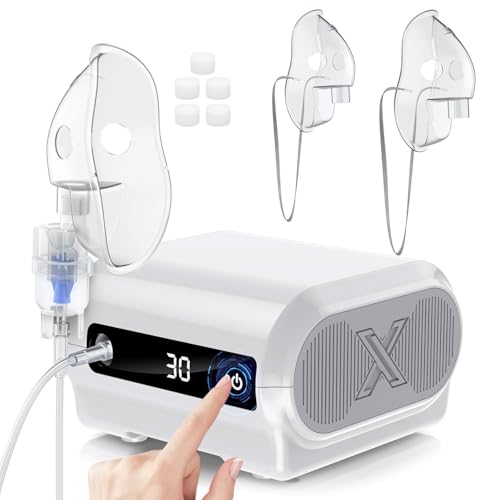

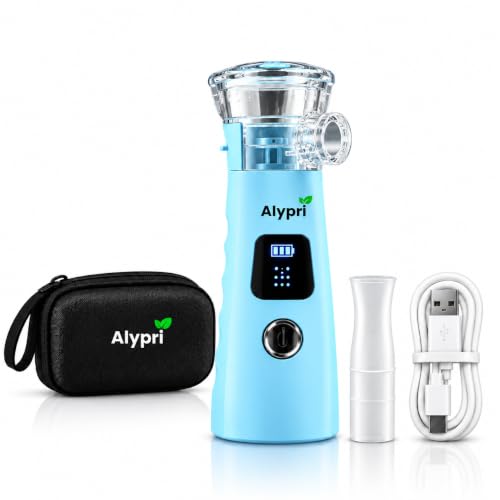
As an Amazon Associate we earn from qualifying purchases at no extra cost to you. Ratings are shown as listed on Amazon.
Best nebulizers by situation
| Situation | Best fit | Why | Main compromise |
|---|---|---|---|
| Frequent treatment at a stable, indoor location | Compressor | Low running cost, broad medication compatibility, and replaceable tubing and cups | Noisy and usually slower |
| Quiet operation is important | Vibrating mesh | Typically around 20–40 dB and often finishes a small dose quickly | Mesh can clog or fail if cleaning is neglected |
| Travel, barn calls, or treatment away from mains power | Battery-powered mesh | Compact, light, and commonly usable without an air compressor | Higher purchase price and battery replacement or charging needs |
| Lowest initial budget | Compressor | Many general-purpose units cost roughly $50–$150 | Ownership is less convenient if used several times daily |
| A medication has unusual formulation requirements | Device specified by a veterinarian | Compatibility can matter more than speed or portability | You may have fewer model choices |
For an equine setup, also consider the delivery interface. A human mouthpiece or face mask is not automatically suitable for a horse. Products such as the Flexineb E3 are designed specifically around equine delivery, while a general compressor or mesh unit may require an appropriate veterinary-approved mask, chamber, or adapter. Confirm the complete system—not just the nebulizer body—with your veterinarian.
Compressor, ultrasonic, and mesh: the head-to-head comparison
Compressor nebulizers: the practical value choice
A compressor uses pressurized air to turn liquid into an inhalable aerosol. The design is established, relatively easy to service, and generally compatible with a wide range of nebulized solutions when the prescribing professional approves them.
Typical treatment rates are about 0.2–0.5 mL per minute, so a 5 mL fill may take approximately 10–25 minutes, depending on the cup, tubing, residual volume, and medication. Many tabletop units weigh about 1.5–2.5 kg and produce roughly 50–60 dB—similar to a normal conversation or a loud refrigerator.
The key advantage is ownership cost. A compressor’s air filter, tubing, nebulizer cup, and mask are usually inexpensive to replace. The drawbacks are noise, a mains power requirement, and an air hose that can make handling more awkward around a horse.
For home respiratory care, look for a stable base, a long enough power cord, a cup with clearly marked capacity, and replacement parts that remain available. Established human-care lines from Omron and Drive DeVilbiss Medical offer examples of the compressor format, but their interfaces may not be suitable for equine use without professional guidance.
Ultrasonic nebulizers: quiet, but not universally compatible
Ultrasonic models use high-frequency vibration to create aerosol. They are often quieter than compressors and can deliver treatment quickly, with typical treatment times of roughly 5–15 minutes for a small fill. Many weigh around 0.5–1.5 kg, although tabletop versions can be heavier.
The important limitation is medication compatibility. Heat generated during operation and the way the device handles suspensions can make some medications, thicker liquids, or formulations containing larger particles unsuitable. Ultrasonic units may also be less effective with certain solutions that are not intended for ultrasonic delivery.
Do not assume that “quieter” means “better.” If the prescribed solution is not approved for that nebulizer technology, a faster session is not an advantage. Ask the veterinarian or pharmacist to confirm compatibility before buying.
Vibrating-mesh nebulizers: the convenience leader
Vibrating-mesh units push liquid through a fine perforated membrane. They are commonly the smallest and quietest option, with many portable models weighing about 100–300 g and producing approximately 20–40 dB. Treatment rates are often around 0.2–0.5 mL per minute, putting a 5 mL session in the broad range of 10–25 minutes; some models are faster with small fills.
A mesh unit is attractive for frequent use because it can run from rechargeable batteries and has no compressor hose. A model with a 2–4 hour claimed operating time may provide many short sessions, but actual runtime depends on dose size, battery age, and whether the device has an automatic shutoff.
The trade-off is maintenance. The mesh aperture is easily affected by dried medication, mineral residue, or incorrect cleaning. The mesh module or medication cup may be a proprietary consumable, and replacements commonly cost about $20–$100 depending on the design. A low-priced device can therefore become expensive if its cup lasts only a few months.
Specifications that matter more than headline speed
| Specification | Compressor | Ultrasonic | Vibrating mesh |
|---|---|---|---|
| Typical device weight | 1.5–2.5 kg | 0.5–1.5 kg | 0.1–0.3 kg portable models |
| Typical operating noise | 50–60 dB | 30–45 dB | 20–40 dB |
| Common fill capacity | 5–10 mL | 5–10 mL | 2–8 mL |
| Approximate treatment time for 5 mL | 10–25 minutes | 5–15 minutes | 10–25 minutes |
| Power source | Mains electricity | Mains or mains plus battery, model dependent | Battery, USB, or mains, model dependent |
| Most replaceable part | Air filter, tubing, cup, or mask | Medication cup or transducer assembly | Mesh cup or mesh module |
These are design ranges rather than promises for every model. Treatment time depends on fill volume, residual liquid, solution viscosity, ambient conditions, and the delivery interface. A manufacturer’s stated nebulization rate is not the same as the time a horse will need to remain calmly positioned.
Running cost: a simple ownership calculation
Suppose a compressor costs $90 and its cup, tubing, and filter replacements total $35 per year. Used five times weekly, that is about 260 sessions annually:
- First-year equipment and consumables: $125
- Approximate cost per session in year one: $125 ÷ 260 = $0.48
Now compare a $220 mesh unit with a $60 replacement cup every six months. First-year cost is approximately $340, or $1.31 per session at the same frequency. That difference may be worthwhile if avoiding compressor noise saves time and handling difficulty, but it is not necessarily economical for occasional use.
Check whether the quoted replacement part is the complete medication cup or only a small seal. Some mesh systems require the entire liquid-contact assembly to be replaced, while compressor systems often let you replace individual low-cost parts.
Cleaning and setup steps that prevent avoidable problems
- Verify the solution and interface first. Use only the solution and dose prescribed or approved for the animal and device. Confirm that the mask, chamber, and nebulizer are appropriate for the horse.
- Inspect before filling. Check the cup, seal, tubing, battery, and mask for cracks or dried residue. A damaged seal can reduce aerosol delivery and extend the session.
- Measure accurately. Add only the prescribed volume. Overfilling can spill into the compressor hose or overwhelm a small mesh cup; underfilling can increase residual waste.
- Keep the device upright. Most cups are designed to operate vertically. Tilting can interrupt aerosol production and leave medication behind.
- Rinse promptly after use. Follow the manufacturer’s instructions, usually involving a clean-water rinse of removable liquid-contact parts. Do not immerse a compressor, battery pack, or electronics.
- Disinfect on the instructed schedule. Rinsing removes residue but is not always disinfection. Use only an approved method and allow parts to dry completely before storage.
- Replace consumables at the first signs of deterioration. Reduced mist, longer sessions, sputtering, cracks, persistent residue, or a failing seal can indicate a worn cup, clogged mesh, filter, or tubing.
Common mistakes include using tap water where the instructions specify another type, pushing a brush through a delicate mesh, storing a damp cup in a closed case, and assuming a human mask will create a reliable seal on a horse. These can reduce performance or shorten component life.
What to buy in 2026
Choose a compressor if treatment is frequent, the device will stay in one place, and low running cost matters most. Choose a vibrating-mesh model if sessions occur in different locations, noise is likely to interfere with cooperation, or battery operation is essential. Consider an ultrasonic model only when its instructions specifically support the intended solution and your professional adviser agrees that it is appropriate.
Before ordering, confirm five details: the required aerosol technology, the delivery interface, the fill volume, the complete replacement-part price, and the cleaning procedure. For a horse with new, worsening, or unexplained respiratory signs, nebulizer selection should not replace veterinary assessment; the correct treatment and delivery method depend on the underlying problem and the prescribed medication.

Write Your Review
No reviews yet. Be the first to share your experience!