

Key takeaways
- Compare the best stable blankets for stalled horses, from a no-fill stable sheet to an ultra heavyweight quilt, on fill weight, shell denier and fit.
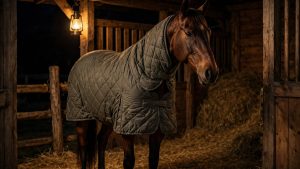
A stable blanket is the indoor layer a stalled horse wears against cold barn air, and the right one depends on three things: how cold the barn actually gets, whether the horse is clipped, and how the blanket fastens and fits. The five picks below cover the full warmth ladder, from a no-fill stable sheet that keeps a groomed coat clean, through two 100-gram light blankets and a 250-gram midweight, up to an ultra heavyweight quilt built for unheated barns in hard winter weather. Every pick is a model that is listed and selling on Amazon.com at the time of writing, and every figure comes from the maker’s published specifications or listing data. None of these blankets is waterproof, because stable blankets are made for the stall, not the field.
As an Amazon Associate, we earn from qualifying purchases.
Table of Contents
- Quick Answer
- Quick Comparison
- How to Choose a Stable Blanket
- The 5 Best Stable Blankets
- Horseware Amigo Insulator Lite 100g
- Country Pride Sentinel Channel Quilt Stable Blanket
- Country Pride Squall Ultra Heavyweight Stable Blanket
- Horze Glasgow Anti-Slip Stable Blanket 100g
- Tough-1 420D Closed Front Stable Sheet
- Checks and Safety Notes
- Frequently Asked Questions
- Conclusion
- Product and ASIN Reference
Quick Answer
For most stalled horses, the Horseware Amigo Insulator Lite 100g is the easiest recommendation: a light, breathable quilted blanket with liner loops, so it works on its own in a mild barn and becomes the base layer of a system as the weather turns. If one blanket has to handle a typical cold snap in a sheltered but unheated barn, the Country Pride Sentinel Channel Quilt pairs a 250-gram fill with a 420-denier nylon shell at a mid-range tier. The Country Pride Squall Ultra Heavyweight is the maximum-warmth pick for the coldest unheated barns. The Horze Glasgow 100g is the budget light layer with an anti-slip finish that helps it stay centered, and the Tough-1 420D stable sheet is the no-fill option for coat care, mild nights and layering under a heavier blanket.
Quick Comparison
| Product | Tier | Fill | Shell | Front | Best for |
|---|---|---|---|---|---|
| Horseware Amigo Insulator Lite 100g | Mid-range | 100g | 210D ripstop polyester | Double front closure | Layering and liner-system barns |
| Country Pride Sentinel Channel Quilt | Mid-range | 250g | 420D nylon | Open front | Everyday midweight warmth |
| Country Pride Squall Ultra Heavyweight | Premium | Ultra heavyweight class | 1200D, Squall line build | Bellyband-style wrap | Coldest unheated barns |
| Horze Glasgow Anti-Slip 100g | Budget | 100g | Not stated in the listing data reviewed | Not stated in the listing data reviewed | A light layer that stays put |
| Tough-1 420D Closed Front Stable Sheet | Budget | None | 420D nylon | Closed front | Coat care and mild nights |
How to Choose a Stable Blanket
Fill weight and barn temperature
Fill is measured in grams, and more fill means more warmth. As a working guide drawn from maker and retailer blanket charts, a sheet or light blanket carries 0 to 100 grams and suits heated barns, mild climates and layering. A midweight carries roughly 150 to 250 grams and suits moderately heated barns or the colder weeks in a sheltered barn. Heavyweight blankets start around 300 grams, and ultra heavyweight builds sit above that for unheated barns in genuinely cold climates. Clipping changes the maths: a clipped horse has lost its own insulation, so it needs the blanket a full step warmer than an unclipped horse in the same barn. Body condition, age and how much the horse moves around the stall all nudge the choice up or down a step.
Shell denier and indoor wear
Denier describes the thickness of the yarn in the shell fabric, and a higher number generally means a tougher weave. Stable blankets live an easier life than turnouts, so lighter shells are common: the 210-denier ripstop on the Amigo Insulator and the 420-denier nylon on the Sentinel and the Tough-1 sheet are typical indoor weights. The Squall line’s 1200-denier build is unusually heavy for a stable blanket and suits a horse that rubs, rolls or is hard on blankets even indoors. Ripstop weaves add a grid that helps stop a small tear from running, which matters most on the lightest shells.
Stable blanket versus turnout blanket
The two are not interchangeable. A turnout blanket has a waterproof, breathable shell made to shed rain and mud in the field. A stable blanket has no waterproof membrane, so it soaks through in wet weather and chills the horse wearing it. Keep stable blankets in the barn, and reach for a turnout any time the horse goes outside in rain or snow. The stable blanket’s advantages are indoors: softer, more breathable fabrics, quilting that wraps the body evenly, and no waterproof coating to trap heat and moisture against the coat in a warm barn.
Fit and measuring
Blanket sizes are given in inches and follow the horse, not the rug’s marketing name. Measure from the center of the chest, around the widest part of the shoulder and barrel, to the rear of the hindquarter where you want the blanket to end, and match that number to the size chart for the specific model. A blanket that is too small pulls at the shoulders and rubs the withers; one that is too big slides back, twists and can trap a leg strap against a hock. Check the fit standing square, then again with the head down, since grazing posture is where tight chests and short necks show up.
Closures, surcingles and leg straps
Front closures come in three broad styles. A closed front, like the Tough-1 sheet, has nothing to adjust and nothing to undo, which makes it quick and secure but unforgiving of an in-between size. An open front with buckles or double closures, like the Amigo and the Sentinel, lets you fine-tune the chest fit. A bellyband or belly wrap, the Squall style, covers more of the barrel and spreads pressure over a wider area. Underneath, cross or bias surcingles keep the blanket centered, and adjustable leg straps stop the rear from swinging sideways. Whatever the style, straps should be snug enough to keep the blanket in place without pressing into the skin, and checked daily.
Layering and liner systems
One blanket rarely covers a whole season, and layering is the standard answer. A no-fill sheet or a 100-gram blanket under a midweight gives midweight-plus warmth with the option to strip a layer on a mild night. Some blankets are built for this: the Amigo Insulator has liner loops that connect to the Horseware liner system, so liners of different weights clip into compatible outer blankets instead of stacking loose layers that can shift. An anti-slip finish, like the one on the Horze Glasgow, is the simpler version of the same idea, helping a light blanket stay centered when it is worn under another rug.
The 5 Best Stable Blankets
1. Horseware Amigo Insulator Lite 100g — Mid-range
The Amigo Insulator Lite is the system blanket of this roundup. Its 100 grams of thermobonded fiberfill sit inside a 210-denier ripstop polyester outer with a smooth polyester lining, in Horseware’s classic cut. That makes it a light blanket in its own right, warm enough for a heated barn, a mild climate or a horse with a full coat in a sheltered stable, and the ripstop grid gives the light shell a measure of tear resistance.
What lifts it above a basic light blanket is the hardware. A double front closure and cross surcingles keep it secure, a fillet string holds the rear, and liner loops around the neck and body let it connect to the Horseware liner system, so the same blanket can anchor a layered setup when the temperature drops. If your barn already runs Horseware turnouts and liners, this is the stable blanket that slots straight into that wardrobe. The listing verified for this roundup is the 81-inch size in navy with navy and white trim; blanket listings are size-specific, so confirm the size and colorway on the listing before ordering.
Specs
- Outer shell: 210D ripstop polyester
- Fill: 100g thermobonded fiberfill
- Lining: Polyester
- Cut: Classic cut
- Front: Double front closure
- Fastenings: Cross surcingles, fillet string
- Layering: Liner loops, compatible with the Horseware liner system
- Listing shown: 81 in, Navy with navy and white trim
2. Country Pride Sentinel Channel Quilt Stable Blanket — Mid-range
The Sentinel is the straightforward midweight of the group, sold by Big Dee’s Tack and Vet Supplies under its Country Pride house brand. A 420-denier nylon shell wraps 250 grams of poly-fill in a channel quilt, which puts it squarely in the weight band most sheltered, unheated barns need for the coldest ordinary weeks of winter. The open-front design makes it easy to get on and off a horse that is blanketed daily.
The detail list is practical rather than fancy: fleece protection at the withers where rubs start, bias surcingles under the barrel, and adjustable leg straps to keep the rear of the blanket from swinging. Channel quilting, where the fill is stitched into long parallel tubes, is the traditional stable-blanket construction and keeps the insulation evenly spread across the body. The listing verified here is the 78-inch size in black. Note that the figure of 250 grams in the maker’s data is the fill weight, not the weight of the whole blanket.
Specs
- Outer shell: 420D nylon
- Fill: 250g poly-fill
- Construction: Channel quilt
- Front: Open front, midweight design
- Wither: Fleece wither protection
- Fastenings: Bias surcingles, adjustable leg straps
- Seller: Big Dee’s Tack and Vet Supplies
- Listing shown: 78 in, Black
3. Country Pride Squall Ultra Heavyweight Stable Blanket — Premium
The Squall Ultra Heavyweight is the maximum-warmth end of the scale, and the second Country Pride blanket in this roundup, from the maker’s heavier Squall line rather than the Sentinel range. Big Dee’s own blanket guidance groups the Squall Heavyweight and Squall Ultra Heavyweight as the choices for unheated barns in cold climates, and the Ultra is the heaviest stable blanket the range offers. The Squall line is built around a 1200-denier shell with channel quilting and a nylon lining, a build closer to turnout weight than to a typical indoor blanket, with a bellyband-style wrap and elastic leg straps holding it in place.
That combination suits a clipped horse, an older horse, or any horse wintering in a barn that tracks outdoor temperatures on the coldest nights. One caution on the data: the exact fill weight in grams for this Ultra listing is not stated in the listing data reviewed, and published figures for the Squall heavyweight build vary between secondary sources, so treat it by its class, the heaviest in the range, rather than by a gram number, and confirm the current specification on the maker’s own product page if the exact figure matters to your blanketing chart. The listing verified here is the 76-inch size in navy.
Specs
- Class: Ultra heavyweight, the heaviest weight in the Squall range
- Outer shell: 1200 denier (Squall line build)
- Construction: Channel quilted, nylon lining (Squall line build)
- Closure: Bellyband-style wrap, elastic leg straps (Squall line build)
- Fill: Not stated in the listing data reviewed
- Best use, per the maker: Unheated barns in cold climates
- Listing shown: 76 in, Navy
4. Horze Glasgow Anti-Slip Stable Blanket 100g — Budget
The Glasgow is Horze’s light stable blanket, with 100 grams of fill in a light, breathable build that the maker also positions as an under-blanket for layering. Its distinguishing feature is an anti-slip surface, aimed at the most common light-blanket complaint: a rug that rotates or slides back overnight and ends up pressing on the withers or hanging off one shoulder. A blanket that stays where it was put is worth more than a warmer one that migrates.
Faux fur at the withers pads the point where the blanket rests on the highest part of the back, a thoughtful touch at a budget tier. At 100 grams it is a cool-weather and shoulder-season blanket rather than deep-winter wear on its own, and it earns its place either in a mild barn or as the stable base layer under a heavier rug. The listing verified here is the dark blue 78-inch size. Horze does not state a shell denier for this model in the listing data reviewed, so judge the shell by its class, a light stable fabric, rather than a number. If you are cross-shopping sizes, note that a sibling colorway of this model has been listed as discontinued by one retailer, so confirm the exact size and colorway you select is the live listing.
Specs
- Fill: 100g
- Material: Light, breathable stable fabric
- Wither: Faux fur wither padding
- Surface: Anti-slip finish to help the blanket stay centered
- Use: Standalone light blanket or under-blanket for layering
- Outer shell denier: Not stated in the listing data reviewed
- Listing shown: 78 in, Dark Blue
5. Tough-1 420D Closed Front Stable Sheet — Budget
The Tough-1 entry is the sheet at the bottom of the warmth ladder: a 420-denier nylon shell with no fill at all. A stable sheet is not about warmth. It keeps a groomed coat clean, flat and dust-free before a show, takes the edge off a cool night in a mild barn, protects a clipped coat from stable grime, and works as the base layer under a filled blanket when the weather turns. Every blanketing wardrobe needs one, and this is the budget way to fill that slot.
The closed front is the defining choice. With no buckles to set, it goes on fast and cannot be adjusted, so sizing has to be right: measure carefully and follow the maker’s size chart, because a closed front that is a size out will either gape or pull. The 420-denier nylon is the same shell weight as the Sentinel’s, respectable for a sheet that will be washed and worn constantly. The listing verified here is the 72-inch size; JT International, the company behind Tough-1, offers the model across a range of blanket sizes under the same listing family. Lining and hardware details beyond the shell and front style are not stated in the listing data reviewed.
Specs
- Outer shell: 420 denier nylon
- Fill: None (no-fill stable sheet)
- Front: Closed front
- Use: Coat care, mild nights, base layer under filled blankets
- Brand: Tough-1 (JT International)
- Lining and hardware details: Not stated in the listing data reviewed
- Listing shown: 72 in
Checks and Safety Notes
Blanket listings are size- and colorway-specific, so the first check is always the variant: confirm the size in inches and the color on the listing itself match the horse and the product you intended, because the same model name covers many listings. Second, check what the fill figure refers to. On the Sentinel, the 250 grams in the maker’s data is the insulation weight; on the Squall Ultra, no gram figure is published in the Amazon listing data at all, so do not let a secondary source’s number stand in for the maker’s own page. Third, when the blanket arrives, run a hand over every strap, surcingle and buckle before the first night, and re-check weekly: a stretched elastic leg strap or a torn surcingle is how a blanket ends up twisted around a stalled horse.
On safety, no U.S. Consumer Product Safety Commission recall covers horse stable blankets, and no recall covers any of the five blankets in this roundup. Recent blanket recalls in the CPSC database concern human products, including heated throws and children’s weighted blankets, which are a different product class from equine stable blankets; they are worth knowing about only so a search for blanket recalls does not confuse the two. The real risks in this category are fit and condition. Never turn a horse out in wet weather wearing a stable blanket, since none of these shells is waterproof and a soaked blanket chills rather than warms. Check daily that the blanket has not shifted, that leg straps are clipped and adjusted, and that there are no rubs starting at the withers or shoulders. Take any blanket with a torn shell, exposed fill or damaged straps out of service until it is repaired.
Frequently Asked Questions
What fill weight does a stalled horse need in winter?
Match the fill to the barn and the coat. Maker and retailer charts put sheets and light blankets at 0 to 100 grams for heated barns, mild climates and layering; midweights at roughly 150 to 250 grams for moderately heated barns or colder weeks in a sheltered barn; and heavyweight and ultra heavyweight blankets for unheated barns in cold climates. A clipped horse generally needs one step warmer than the chart suggests for a full coat, and thin or older horses often do better a step up as well.
Can a stable blanket be used as a turnout blanket?
No. Stable blankets have no waterproof membrane, so rain soaks straight through and the wet blanket pulls heat away from the horse. They are also built with softer shells than turnouts and are not made for field wear, mud and fencing. Use a stable blanket in the barn and a waterproof turnout blanket outside; several of the picks here, such as the Amigo Insulator, are designed to layer under a compatible turnout system instead.
How do I measure my horse for a stable blanket?
Stand the horse square and measure with a soft tape from the center of the chest, around the widest point of the shoulder and barrel, to the back of the hindquarter where you want the blanket to finish. That measurement in inches is the blanket size for most makers, including the 72, 76, 78 and 81-inch listings in this roundup. Always check the specific model’s size chart, and be especially careful with closed-front styles like the Tough-1 sheet, which have no adjustment at the chest.
Can stable blankets be layered instead of buying a heavyweight?
Yes, and for changeable weather it is often the better setup. A no-fill sheet or a 100-gram blanket under a midweight covers a wide temperature range, and layers can be stripped as the barn warms. Purpose-built systems make it neater: the Amigo Insulator’s liner loops connect to the Horseware liner system so added layers clip in rather than sliding around, and an anti-slip finish like the Horze Glasgow’s helps a light blanket stay centered under another rug. Whatever the combination, check that stacked straps are not creating pressure points.
Conclusion
Build the wardrobe around the barn, not the calendar. The Tough-1 sheet covers coat care and mild nights, the Horze Glasgow and the Amigo Insulator cover the 100-gram light layer, with the Amigo adding a liner system that grows with the season, and the Country Pride Sentinel brings a proper 250-gram midweight for ordinary cold weeks. When the barn is unheated and the nights are at their coldest, the Squall Ultra Heavyweight is the maximum-warmth answer. Any of the five beats a shivering horse in a cold stall; the right pick is the one whose fill, shell and closures match how your barn actually rides out the winter.
More from Amazon
Programs that pair well with the guide above. Offers and eligibility are set by Amazon and may change.
Set up recurring deliveries of everyday items on eligible products. Terms and savings are set by Amazon.
Explore Subscribe & SaveFree shipping on eligible items, Prime Video and more. Eligible new members can start with a free trial.
Start a Prime free trialAudiobooks and podcasts to listen to on the go. Eligible new members can start with a free trial.
Try Audible freeRead from a large library of eBooks and audiobooks on any device. Check Amazon for current plans.
Explore Kindle UnlimitedAs an Amazon Associate we earn from qualifying purchases.
Write Your Review
No reviews yet. Be the first to share your experience!